
News detail
At This Smart Wearables Event, Wi-Fi HaLow Stole the Spotlight!
Wi-Fi is probably all too familiar to everyone. In our current lives, whether we are arriving home, arriving at the office, or staying at a hotel while out, the first thing we may…
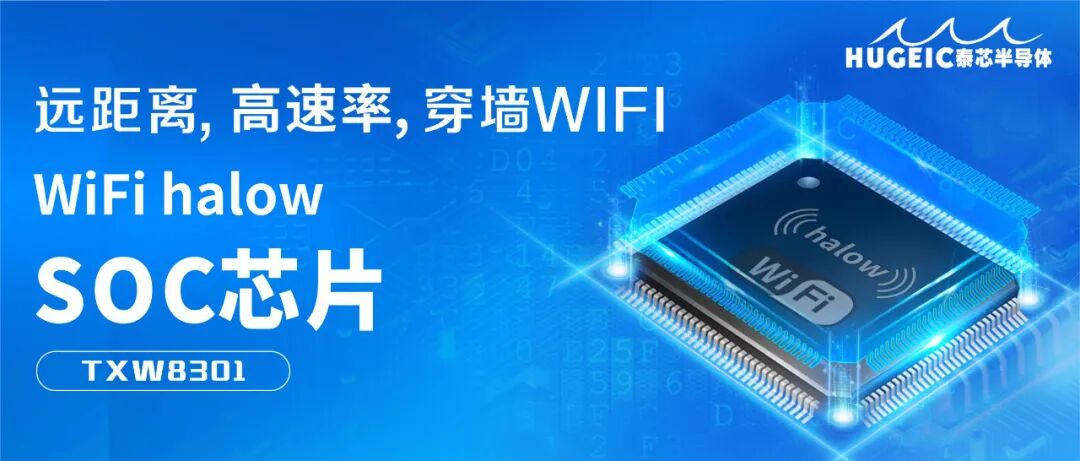
Wi-Fi may be all too familiar to everyone. In our current lives, whether we arrive home, arrive at the office, or stay at a hotel while traveling, the first thing we may do is turn on our phones and connect to Wi-Fi. Wi-Fi has become an indispensable networking tool in today's daily life.
Wi-Fi is a wireless local area network technology based on the IEEE 802.11 standard. Together, member companies of the Wi-Fi Alliance have worked to create a technical standard that enables global interoperability and forward compatibility while ensuring performance and security. With advantages such as relatively low deployment cost and high transmission rates, Wi-Fi has become one of the most widely used short-range wireless communication technologies. With the spread of the latest-generation Wi-Fi 6 standard, the user experience has been further improved.
The Internet of Everything has been one of the hottest concepts in recent years, covering various application scenarios such as the industrial internet, internet of vehicles, smart wearables, and smart homes. In response to the challenges raised by such market demands—including greater coverage distance, lower power consumption, and a larger number of connected devices—the Wi-Fi Alliance will soon launch a tailor-made Wi-Fi HaLow certification program.
Wi-Fi HaLow
On July 29, 2021, the first '2021 China Smart Wearable Summit' was successfully held. It received support from 42 high-quality supply chain companies, service providers, and brand owners in the smart wearable industry, and 17 industry leaders delivered smart wearable-themed presentations. Among them, the Wi-Fi Alliance gave the opening speech titled 'Wi-Fi Empowers the Development of Smart Wearables and the IoT Market.'
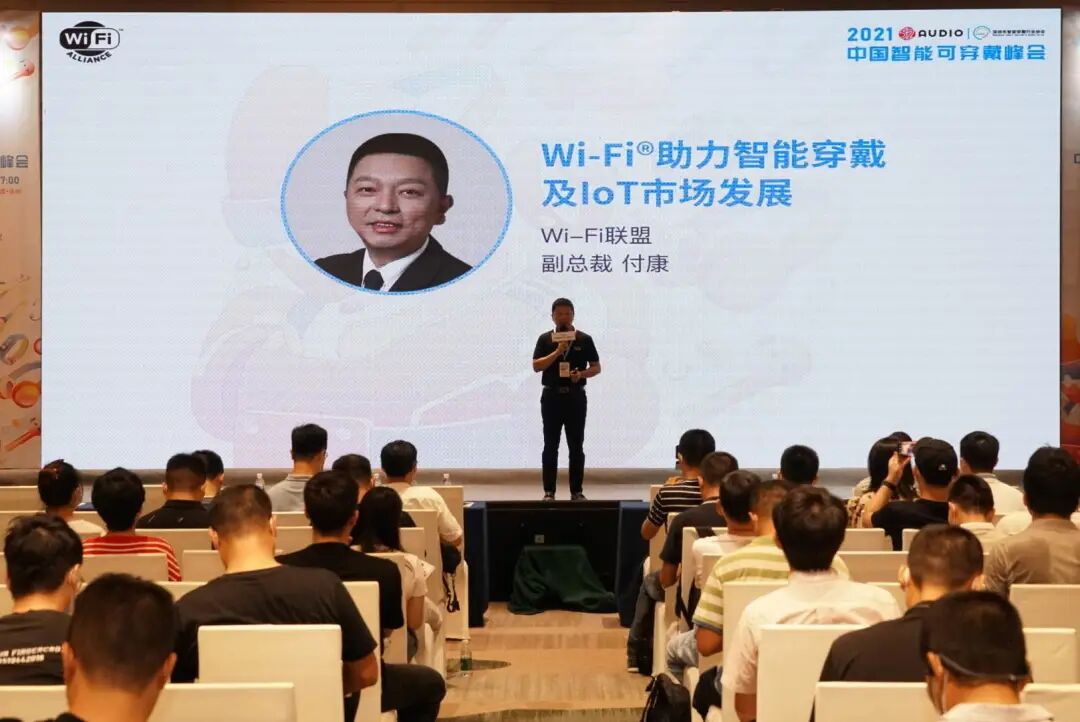
At the event, Mr. Fu Kang, Vice President of the Wi-Fi Alliance, shared his views on the challenges and prospects facing the smart wearables and IoT markets, and interpreted the forthcoming Wi-Fi HaLow certification program. Wi-Fi HaLow is tailor-made for IoT application scenarios and is also suitable for the rapidly growing smart wearable device market in recent years.
1. What Is Wi-Fi HaLow?
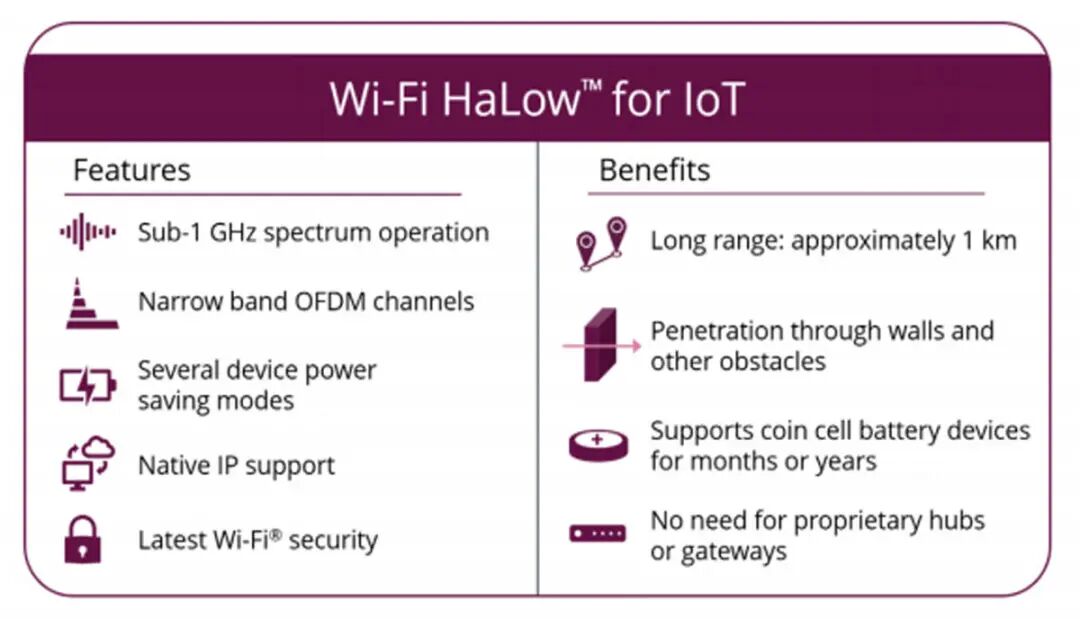
Wi-Fi HaLow is a certification standard based on IEEE 802.11ah technology and a low-power Wi-Fi technology tailor-made for the IoT market. By operating in frequency bands below 1 GHz, it expands the scope of Wi-Fi applications, enabling Wi-Fi to provide longer-distance and lower-power connections. It meets the unique needs of the Internet of Things (IoT) and supports many new application scenarios, including industrial, agricultural, consumer electronics, low-power smart wearables, smart buildings, and smart cities.
2. What Advantages Does Wi-Fi HaLow Technology Offer in the Smart Wearables Market?
As part of the Wi-Fi technology portfolio, Wi-Fi HaLow mainly targets application scenarios requiring long distance, low power consumption, and high security. The consumer electronics market mainly focuses on smart wearable products with extremely high requirements for low power consumption.
The smart wearables market has entered a period of rapid development in recent years, becoming a new 'blue ocean' in the consumer electronics market. As products continue to iterate and upgrade, their functions become increasingly rich, and they begin to operate independently, higher requirements are placed on computing power, network access capability, and data throughput, thereby enabling functions such as online OTA upgrades and app downloads and updates. In this context, support from Wi-Fi technology is even more necessary.

Compared with the Bluetooth connection method currently used more often by smart wearable products, the biggest application bottleneck of traditional Wi-Fi technology is power consumption. In terms of power consumption, because Wi-Fi HaLow uses a lower frequency (700-900M) and a narrower channel occupancy width, its overall power consumption is at the same level as current short-range wireless communication technologies such as Bluetooth and ZigBee, achieving a breakthrough from mains-powered applications to low-power application scenarios supported by coin-cell batteries. In terms of performance, devices supporting the Wi-Fi HaLow standard have a maximum transmission distance of 1 kilometer, and a single node can connect to more than 8000 devices. Combined with further improved anti-interference capability, coverage, and wall penetration, it can provide stable, secure, and convenient wireless connections for devices.
Devices adopting the Wi-Fi HaLow standard do not require additional gateway support for networking, apart from a Wi-Fi router. As long as products have passed Wi-Fi Alliance certification, they can achieve forward, backward, and cross-brand interoperability. In terms of security, the latest WPA3 standard is adopted to meet enterprise-level security requirements.
3. The industry chain for low-power Wi-Fi application scenarios is becoming increasingly mature
IoT and smart wearable devices place more comprehensive requirements on wireless connectivity technology, and Wi-Fi HaLow offers advantages such as low power consumption, low latency, fast connection, expanded node capacity, and improved security and reliability.
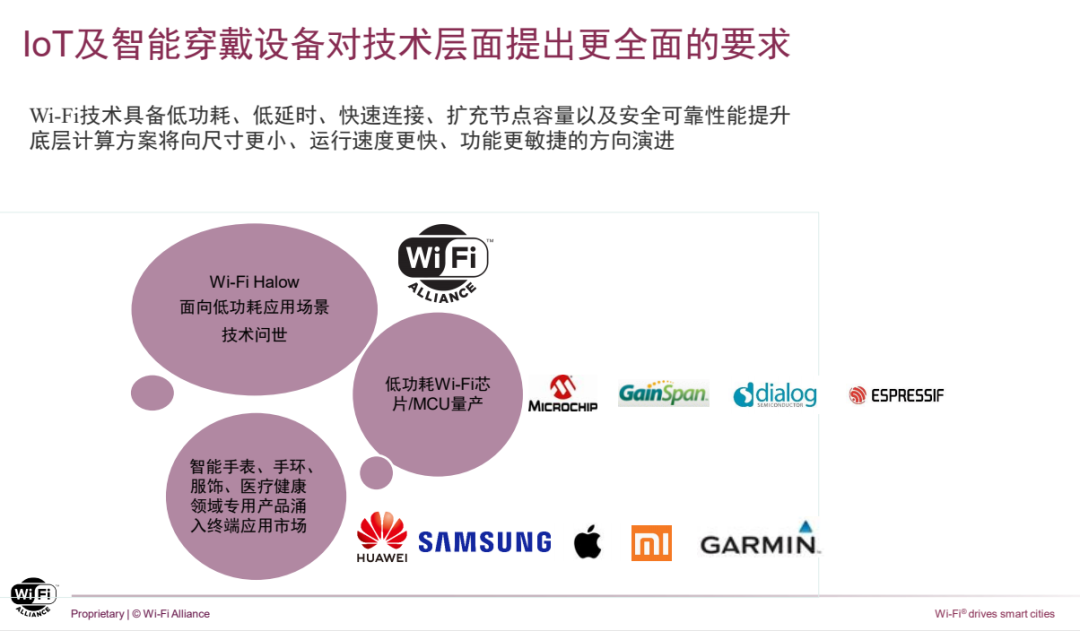
At present, Wi-Fi Alliance members Microchip, GainSpan, Dialog, and ESPRESSIF have achieved mass production of low-power Wi-Fi chips/MCUs. Huawei, Samsung, Apple, Xiaomi, GARMIN, and other manufacturers, which are also Wi-Fi Alliance member companies, provide the market with more distinctive choices of various smart terminals.
Future Consumer Electronics Connectivity Technology
From the evolution of Wi-Fi technology standards promoted by the Wi-Fi Alliance, the composition of the Wi-Fi Alliance's board members and domestic member companies, and the degree of market adoption of Wi-Fi technology, it is clear that Wi-Fi holds an important position in the current wireless communications market. Each technological transformation of Wi-Fi drives the industry's development and enhances the user experience for consumers of terminal products.
With the rapid development of smart wearable products in the consumer electronics market, product shipments continue to grow. There will still be huge room for growth in the future. The Wi-Fi Alliance believes that this market has grown large enough to warrant dedicated attention and to work with its members to develop application technologies in this field. Therefore, Wi-Fi HaLow came into being.
The Wi-Fi HaLow standard addresses the relatively high power consumption of traditional Wi-Fi products and further improves metrics such as coverage range, number of connected nodes, and penetration performance. Just as with current consumer electronics such as mobile phones, tablets, and computers, Wi-Fi will also be fully applied to IoT and smart wearable scenarios in the future.
To specifically determine which short-range wireless transmission method is better, one must make a choice based on product positioning, application scenarios, and the degree of ecosystem development; the technology itself has no absolute advantages or disadvantages. The optimal option is that, as technologies related to smart wearable products continue to upgrade, multiple wireless communication technologies are integrated without increasing product size, giving users the choice and further improving system power consumption and battery life.
About the Application of Zhuhai Taixin Semiconductor's Wi-Fi HaLow Technology
The Zhuhai Taixin Semiconductor TXW8301 chip is a chip developed based on Wi-Fi HaLow IEEE802.11ah technologydevelopment, achieving low power consumption (heartbeat connection power consumption maintained below 200uA), long distance (can simultaneously transmit 4 channels of 1080P video at 1200 meters in open outdoor areas), strong penetration (can easily penetrate 4 solid walls or 4 floors), and stable access (up to 8191 connections).
At present, the Zhuhai Taixin Semiconductor TXW8301 chip has been widely used in fields such as security surveillance, baby monitors, reversing cameras, drones, industrial IoT, and smart agriculture,and stable supply in large volumes.

1. Low-power wireless battery camera, designed to last longer
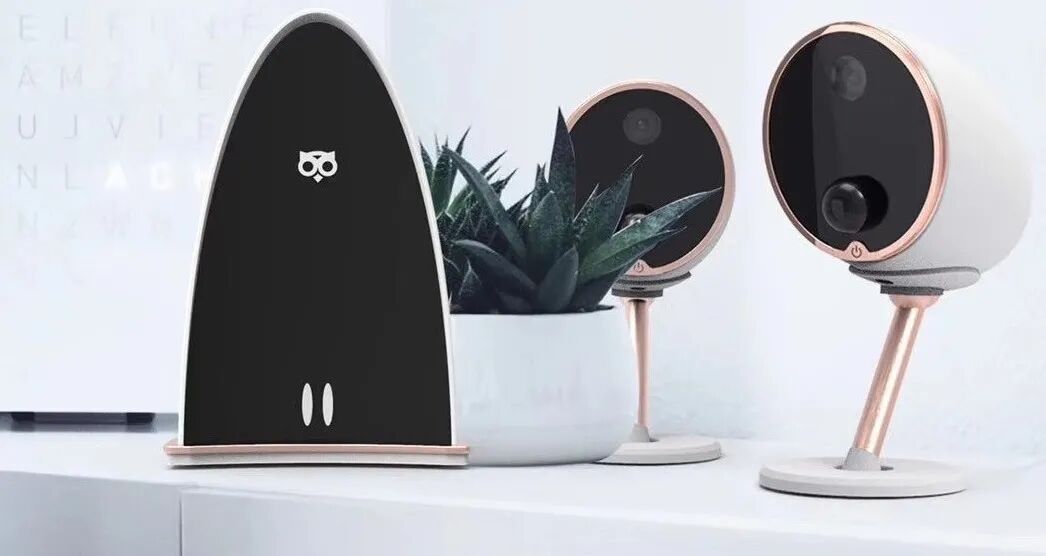
With low power consumption,ultra-strong penetration, and ultra-long distance,the renownedTaixin TXW8301chip
after being integrated into the design,
the camera accesses the network via WiFi Halow
By switchingbetween 1MHz/2MHz/4MHz/8MHz
it dynamically adjusts the WiFi coverage range
Combined with the TWT resource scheduling function,the AP can set a wake-up protocol with each device
WiFi keep-alive standby power consumption is 200uA, and the camera body battery can remain on standby for more than six months
2.Super wall-penetrating wireless WiFi extender solves high latency and instability
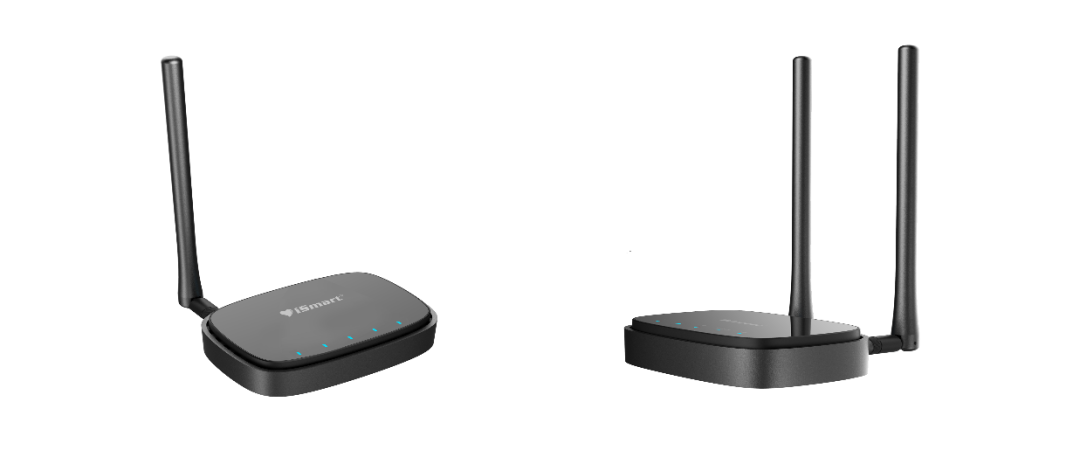
The difficulty of villa WiFi coverage does not lie in the device installation location
but in the penetration capability of the selected equipment
known for low power consumption, ultra-strong penetration, and ultra-long distanceTaixin TXW8301chip
after integration into the design
linked via Wi-Fi HaLow technology
the sub-unit transmits to the device via standard Wi-Fi signals
transmission in open areas can reach 1200 meters
indoors, it can easily penetrate 4 floor slabs
plug and play, no complex configuration required
reduces installer skill requirements
increases profits for engineering companies
III. Dual-mode Baby monitor, caring for the important him/her
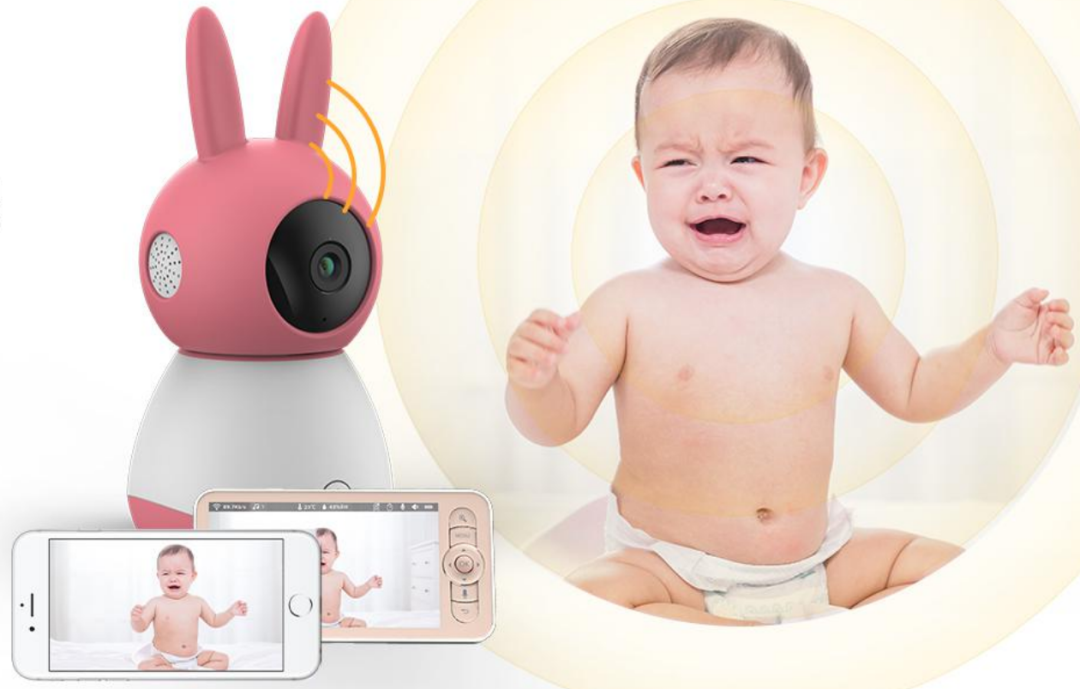
introduction of the three-child policy
caregivers face increasing pressure to watch over him/her
known for low power consumption, ultra-strong penetration, and ultra-long rangeTaixin TXW8301chip
after integration into the design
perfectly solves the issues of previous baby monitoring products
weak penetration, unstable signals, and high power consumption—the problems parents criticize most
In addition, the parent unit can be handheld and mobile.
Can be used in combination with 4 monitor units.
Plug and play, with no complex configuration required.
We won’t be afraid even if four children are allowed in the future!
Note: This article is reproduced from , this article is reproducedfor the purpose of conveying more information; the copyright belongs to the original author.

Zhuhai Taixin Semiconductor Co., Ltd.
Zhuhai Taixin Semiconductor Co., Ltd. was founded in 2016 and is a high-tech enterprise integrating IC design and wireless intelligent communication solutions. We have successively launched long-range low-power long-range IoT WIFI chips, low-power motor controller chips, and product solutions. The company adheres to a market-oriented and technology-centered approach, providing customers with high-quality chips and product technical solutions.
The company's core product: WIFI communication chips for long-range low-power IoT. The chip can be used in product fields such as smart homes, security monitoring, UAV image transmission, smart meter reading, smart door locks, smart grids, smart hospitals, and logistics robots.