
News detail
Industry News | Wi-Fi HaLow Market Brief
Introduction: On January 4, 2016, the Wi-Fi Alliance announced the launch of Wi-Fi HaLow™, a new low-power, long-range Wi-Fi technology. According to Wi

Introduction
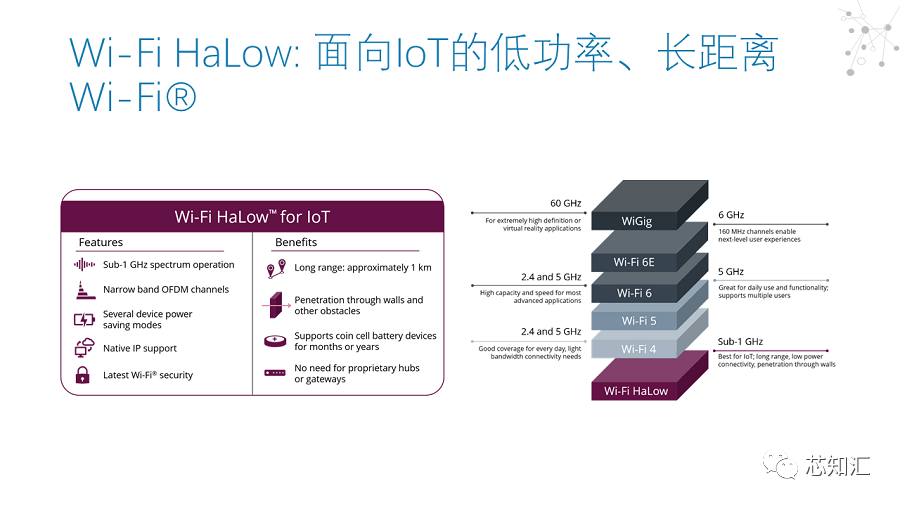
On January 4, 2016, the Wi-Fi Alliance announced the launch of Wi-Fi HaLow™, a new low-power, long-range Wi-Fi technology. According to the Wi-Fi Alliance official website, Wi-Fi HaLow™ refers to products using IEEE 802.11ah technology. By operating in sub-1 GHz bands, these products expand the scope of Wi-Fi applications and enable Wi-Fi to provide longer-range and lower-power connections. Wi-Fi HaLow meets the unique needs of the Internet of Things (IoT) and can support various use cases in industrial, agricultural, smart building, and smart city environments.
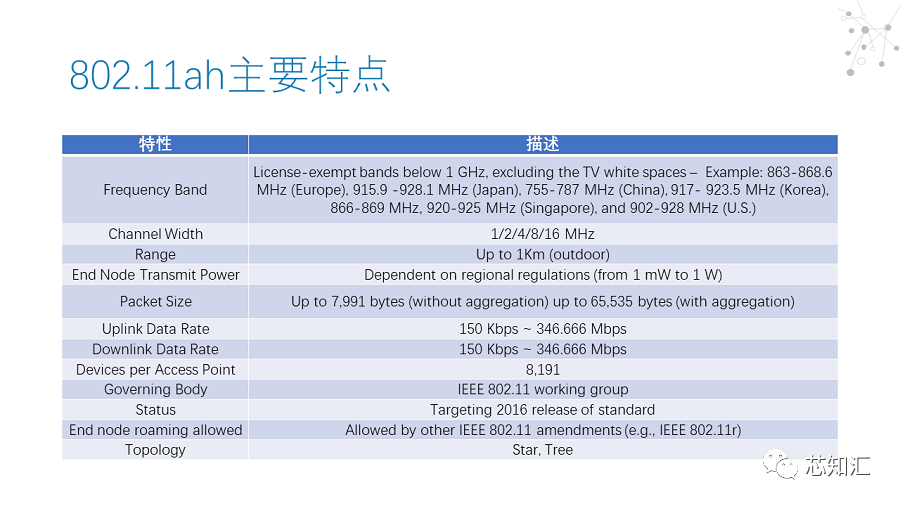
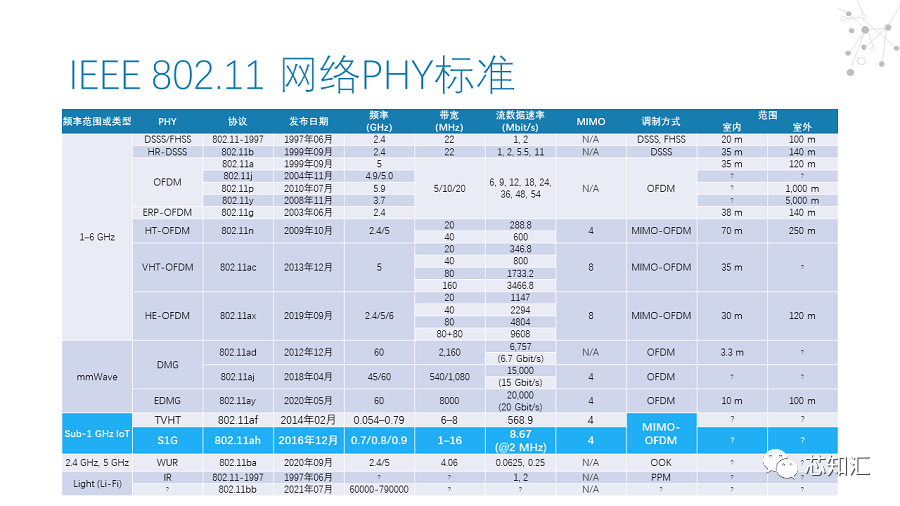
IEEE 802.11ah is an amendment to the IEEE 802.11-2007 wireless networking standard and was approved in 2016. It operates in sub-1 GHz license-exempt bands, supports transmission distances of up to 1 km, and has a minimum data rate of 100kbps.
Wi-Fi HaLow Use Cases
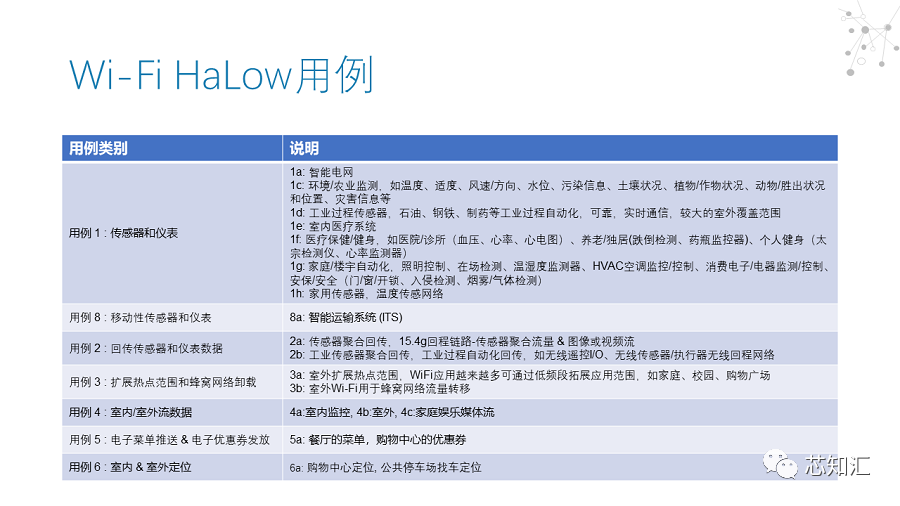
According to the IEEE 802.11ah TGah Task Group document “Categories of TGah Use Cases and Straw Polls” dated 2011-03-15, 802.11ah use cases are divided into the following categories:
Use Case 1: Sensors and Meters
Use Case 8: Mobile Sensors and Meters
Use Case 2: Backhauling Sensor and Meter Data
Use Case 3: Extending Hotspot Coverage and Cellular Offload
Use Case 4: Indoor/Outdoor Streaming Data
Use Case 5: Electronic Menu Push & Electronic Coupon Distribution
Use Case 6: Indoor & Outdoor Positioning
Wi-Fi HaLow Frequency
The 802.11ah Wireless LAN Medium Access Control (MAC) and Physical Layer (PHY) Specifications Amendment 2 operates in sub-1 GHz license-exempt bands. The sub-1 GHz bands used by Wi-Fi HaLow vary due to market regulatory requirements. The United States currently uses 902 MHz to 928 MHz. Australia and New Zealand use 915 MHz to 928 MHz. Europe has allocated 7 MHz between the 800 MHz and 900 MHz bands. To enable globally harmonized access for Wi-Fi HaLow, the Wi-Fi Alliance advocates that Wi-Fi HaLow operate in the 915 MHz to 925 MHz range.
According to footnotes 5.138, 5.150, and 5.280 to Article 5 of the ITU-R Radio Regulations, the ISM band 902–928 MHz is restricted to ITU Region 2. Region 2 refers to the entire American continent (including Greenland) and some islands in the eastern Pacific. The International Telecommunication Union Radio Regulations divide the world into three regions (ITU Regions); mainland China, Hong Kong, Macao, Taiwan, Singapore, and Malaysia are all located in Region 3.
Relevant Wi-Fi HaLow materials indicate that in China, Wi-Fi HaLow uses the 755–787 MHz band. However, according to MIIT Notice No. [2020] 50, the “Notice of the Ministry of Industry and Information Technology on Adjusting the Frequency Use Plan for the 700 MHz Band,” the frequency use plan for the 702–798 MHz band has been adjusted for mobile communication systems, and the 703–743/758–798 MHz bands are planned for mobile communication systems using frequency division duplex (FDD). The 700 MHz golden band will provide low-band spectrum resources for 5G development. In the 2019 “Catalogue and Technical Requirements for Micro-power Short-range Radio Transmission Equipment,” the 779–787 MHz band is also no longer included.
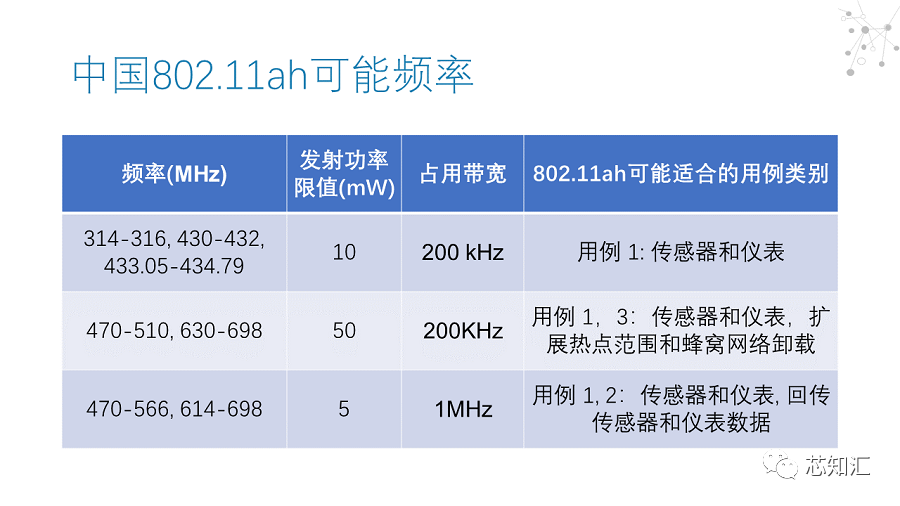
According to the 2019 No. 52 “Catalogue and Technical Requirements for Micro-power Short-range Radio Transmission Equipment” published by the MIIT, and in combination with materials submitted by China to the IEEE SGah Working Group in 2011, the possible frequencies for IEEE 802.11ah in China are:

Wi-Fi HaLow Market
License-Exempt Bands
The Wi-Fi Alliance has used unlicensed spectrum, such as the globally harmonized 2.4 GHz and 5 GHz spectrum, to build a huge wireless access market. According to the Wi-Fi Alliance, it commissioned a new market study showing that the economic value provided by Wi-Fi was nearly US$2 trillion in 2018 and is expected to grow to nearly US$3.5 trillion by 2023. The United States accounts for one quarter of the economic value provided by Wi-Fi; in 2018, the Wi-Fi economic value provided by the United States was US$499 billion, and it is expected to grow to nearly US$1 trillion by 2023. It remains unknown how much economic value Wi-Fi HaLow will bring in sub-1 GHz license-exempt bands.
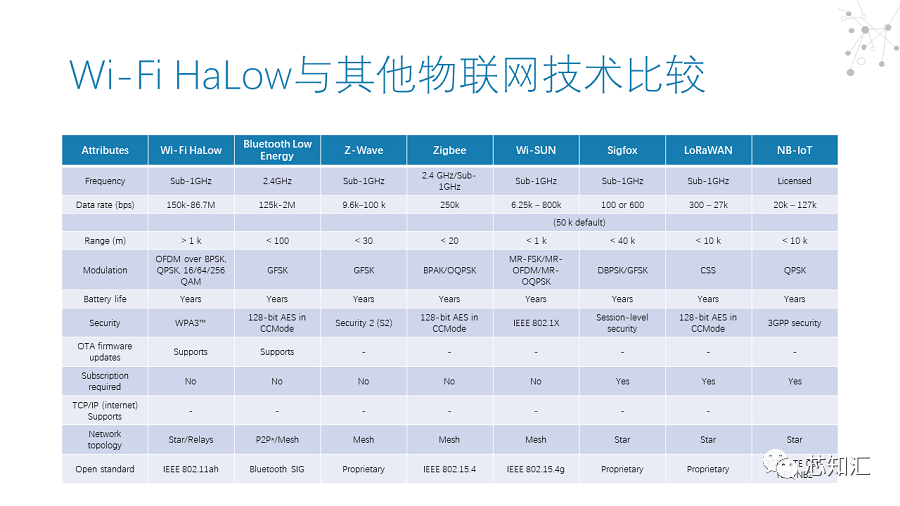
In addition to developing toward high data rates and high bandwidth, the Wi-Fi Alliance is entering the sub-1 GHz unlicensed band market through Wi-Fi HaLow. License-exempt bands reduce spectrum usage costs, allow spectrum resources to be shared, improve spectrum utilization to a certain extent, and promote the application and development of wireless technology products. However, spectrum sharing also causes mutual interference among radio equipment, which places higher demands on wireless communication technologies. Wi-Fi HaLow uses OFDM modulation, which follows the modulation used in previous Wi-Fi versions and employs forward error correction (FEC) coding to improve the link budget of received signals under interference and noise. Wi-Fi HaLow provides longer-range and lower-power connections, expands the application scope of wireless access, and addresses application issues such as high cost and high power consumption in large-scale deployment of 2.4 GHz Wi-Fi wireless access. Native support for IP makes it easier to connect to the Internet. With the spread of IPv6, more and more devices will have IPv6 access capability, and Wi-Fi HaLow will be a good choice. Wi-Fi HaLow has better and longer network coverage than 2.4 GHz Wi-Fi and can realize some use cases that Wi-Fi cannot. Wi-Fi HaLow also provides new options or supplements for devices in other license-exempt bands. Wi-Fi HaLow certification also ensures device interoperability and security, promoting the industrialization of Wi-Fi HaLow.
Market Size
According to an Allied Market Research report, the global Wi-Fi module market was valued at US$31.36 billion in 2018 and is projected to reach US$59.14 billion by 2024, with a compound annual growth rate (CAGR) of 11.2% from 2018 to 2024. The global Wi-Fi module market is segmented by type, application, and region. By type, the market can be divided into router-solution Wi-Fi modules and embedded Wi-Fi modules. The router-solution Wi-Fi module segment held the largest share in 2018, accounting for nearly three-fifths of the market. However, the embedded Wi-Fi module market is expected to register a CAGR of 12.3% during the forecast period. By application, the market can be segmented into smart appliances and smart grids, handheld mobile devices, medical and industrial test instruments, and routers. The smart appliances and smart grids segment held the largest share in 2018, accounting for nearly two-fifths of the market. However, the handheld mobile devices segment is expected to achieve the fastest CAGR of 13.1% during the forecast period. By region, North America held the largest share in 2018, accounting for more than two-fifths of the market. However, Asia-Pacific is expected to have the fastest CAGR of 13.3% during the forecast period.
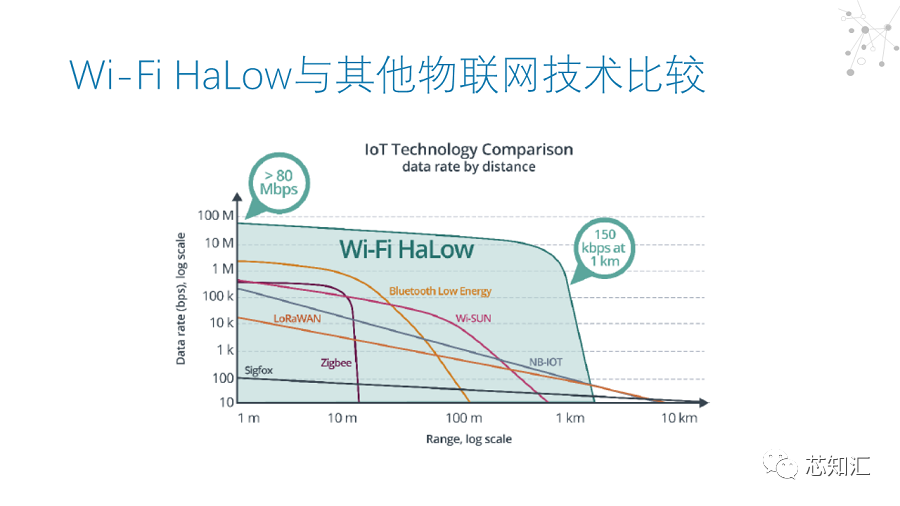
The Wi-Fi HaLow standard has significant advantages over existing 802.11 Wi-Fi technologies in terms of large-scale connectivity, low-power sensor networks, and coverage. Each Wi-Fi HaLow access point (AP) can support up to 8,191 connected devices and can access IP networks without a proprietary gateway. At a distance of 1 km, the data rate can reach 150 kbps. This greatly expands the application scope of existing Wi-Fi products. According to an ABI Research report, shipments of Wi-Fi HaLow integrated circuits will reach 11 million units in 2020.
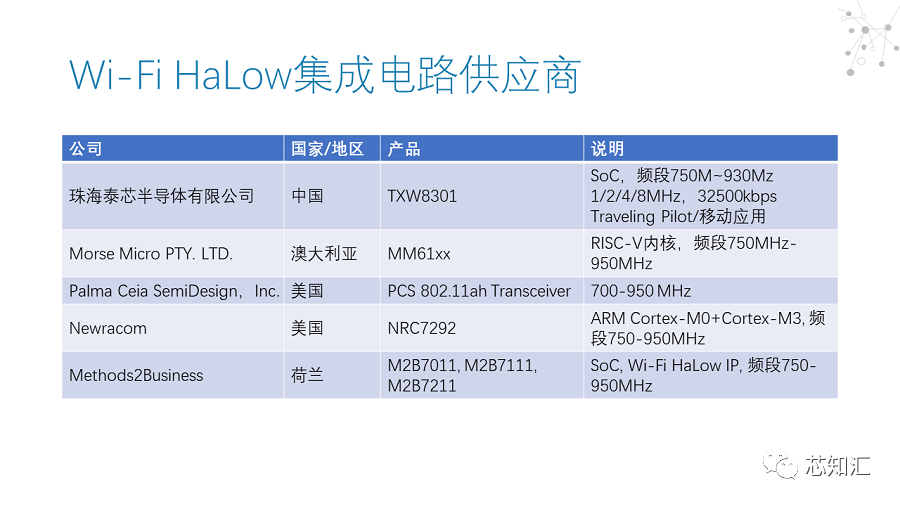
Key Wi-Fi HaLow Integrated Circuit Suppliers
Morse Micro Inc.
Newratek
Palma Ceia SemiDesign, Inc
Methods2Business
Zhuhai Taixin Semiconductor Co., Ltd.
...

This article is reposted from Xinzhihui.

Zhuhai Taixin Semiconductor Co., Ltd.
Founded in 2016, Zhuhai Taixin Semiconductor Co., Ltd. is a high-tech enterprise integrating IC design and wireless intelligent communication solutions. We have successively launched long-range, low-power WIFI chips for the Internet of Things, low-power motor controller chips, and related product solutions. The company adheres to a market-oriented and technology-driven approach, providing customers with high-quality chips and product technical solutions.
The company's core product is a long-range, low-power WIFI communication chip for the Internet of Things. This chip can be used in smart home, security surveillance, drone image transmission, smart meter reading, smart door locks, smart grids, smart hospitals, logistics robots, and other product fields. It has been successfully adopted by core enterprises such as Hikvision, TP-Link Technologies, Fullhan Microelectronics, and Cainiao Network Technology of Alibaba Group.