News detail
When the Brain Begins to “Speak”: Brain-Computer Interfaces, Installing a “Chinese Chip” for Thought — Taixin TXW8601

This is not something that exists only in science fiction.
This is the brain-computer interface
(Brain-Computer Interface, BCI)
the future it is creating
01
What is a brain-computer interface?
In other words, a brain-computer interface is a bridge
Brain → Machine
When the brain cannot directly control the body (such as when the central nervous system is damaged)
it can, through a brain-computer interface,
control physical entities such as robotic arms and exoskeletons
and “act” again
Brain → Digital World
Between human thought and the digital world
establish the most direct human-computer interaction channel
Machine → Brain
feed signals back to the brain
to stimulate and train the brain
One of the initial key research goals of brain-computer interfaces
is to help patients who have lost movement or communication abilities due to disease or trauma recover some functions
02
How do brain-computer interfaces “understand” the brain?
According to different methods of neural signal acquisition
brain-computer interfaces can generally be
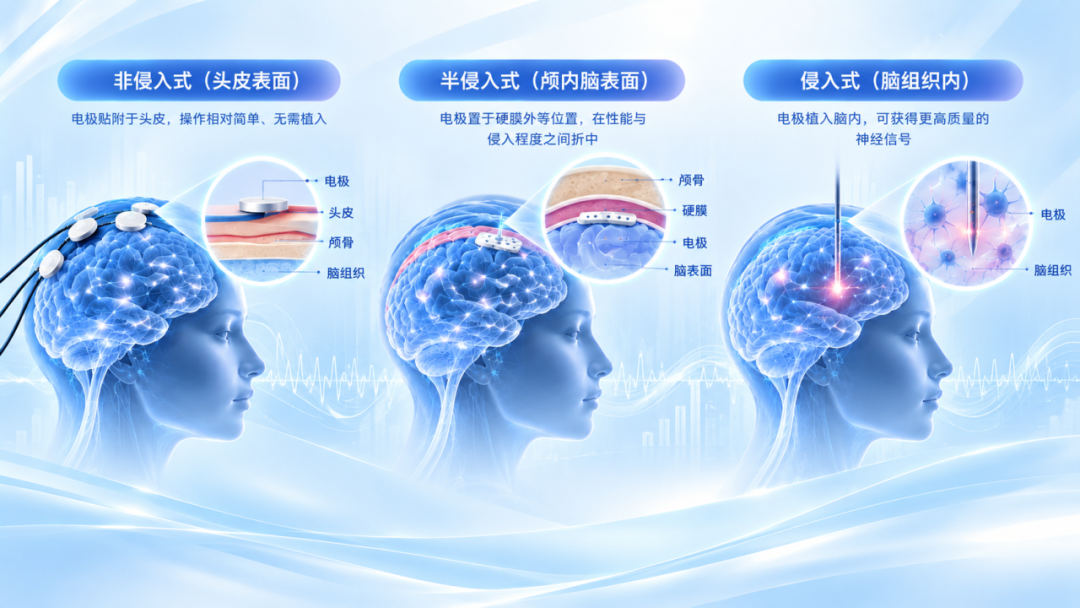
are divided intonon-invasive, semi-invasive, and invasive
three categories
technical routes | Main Characteristics | Typical Challenges |
Non-invasive | Electrodes are attached to the scalp; the procedure is relatively simple and requires no implantation. | Signal amplitude is weak, and spatial resolution and signal-to-noise ratio are relatively low. |
Semi-invasive | Electrodes are placed in locations such as the epidural space, striking a balance between performance and degree of invasiveness. | It still requires surgical intervention and demands long-term stability. |
Invasive | Electrodes are implanted in the brain, enabling higher-quality neural signals. | It faces challenges such as surgical trauma, biocompatibility, and long-term use. |
Each of the three routes has its own focus, but they all point to the same technical bottleneck:How can massive, weak, high-speed neural signals be processed and transmitted in real time with low power consumption?
03
Key Technologies of Brain-Computer Interfaces
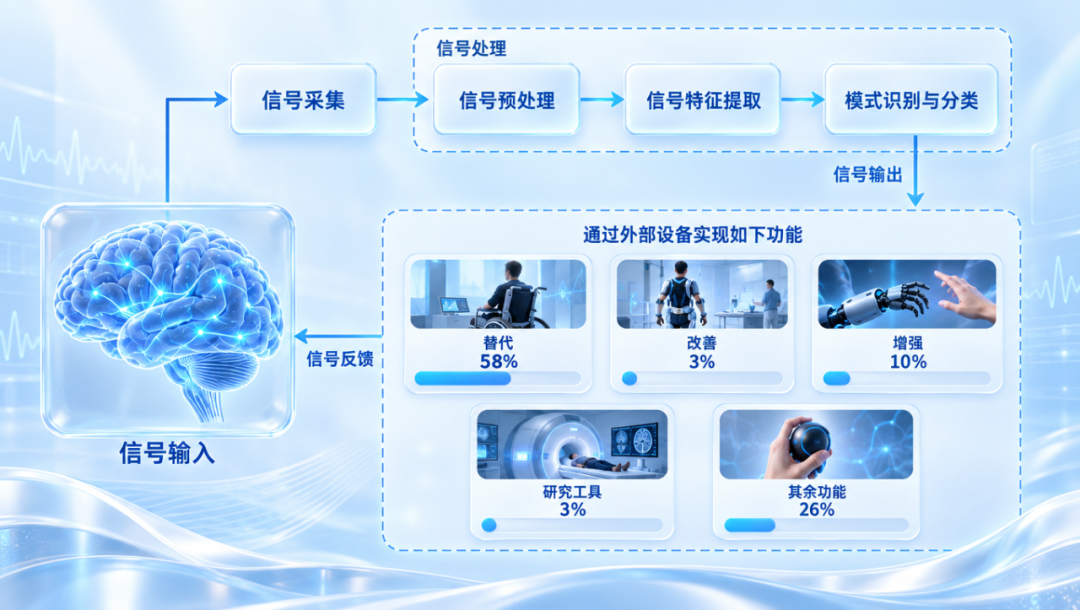
A complete brain-computer interface system, from neural activity to device response, usually must clear four hurdles:
Signal Acquisition
Whether it is invasive micro/nano electrodes or head-mounted EEG caps, precise electrodes and front-end circuits are required.
Signal Processing (Decoding)
The amount of raw neural signal data collected is staggering—taking invasive approaches as an example, hundreds of channels with sampling at tens of thousands of times per second per channel means a torrent of data at hundreds of megabits per second. Decoding these signals into machine commands depends on brain-computer interface chips performing real-time processing at the edge.
Control Output
The decoded commands drive external devices such as robotic arms, cursors, and exoskeletons.
Feedback Loop
The device status is then fed back to the brain through tactile and other means, forming a complete closed loop.
▼ Schematic of a general brain-computer interface workflow
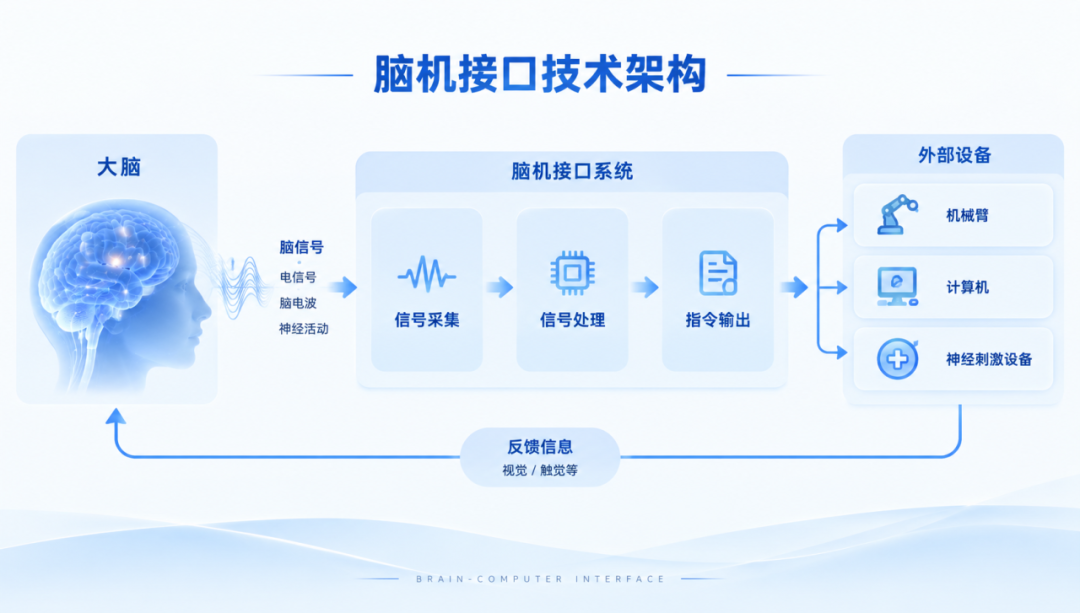
Between "acquisition" and "output,"the chip is the central nervous system of the entire system—it determines whether brain-computer interfaces can be made smaller, more power-efficient, and more practical. This is precisely the main battlefield for chip design companies, and preciselythe key connection point for Taixin Semiconductor's participation in brain-computer interface technology innovation.
04
A relay of a "chip":
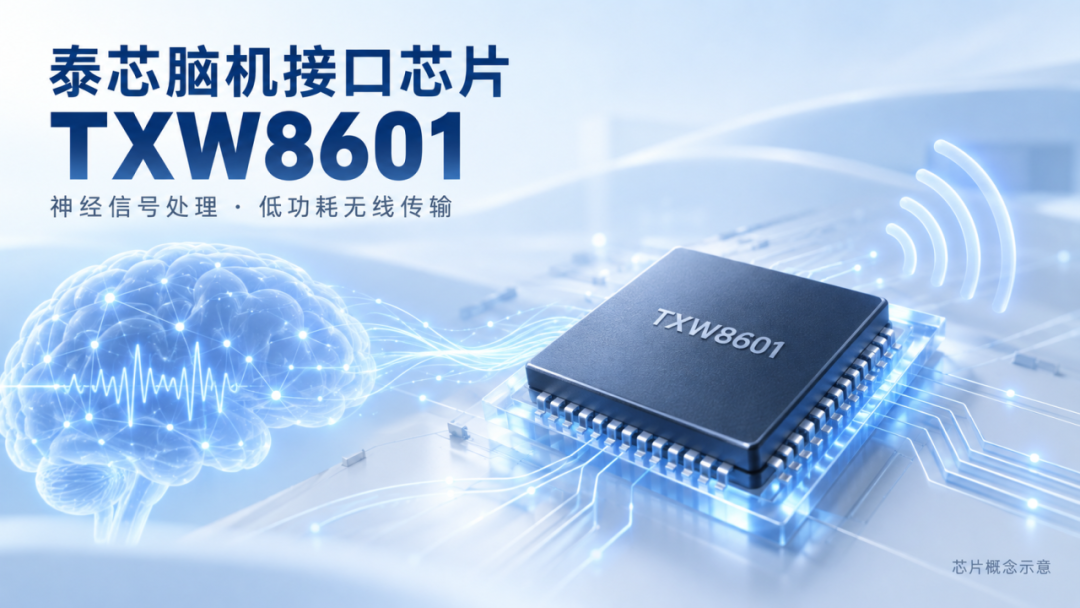
TXW8601 Brain-Computer Interface Chip
From neural signal acquisition to device control, the practical deployment of brain-computer interfaces requires the coordinated advancement of electrodes, chips, algorithms, and systems. Among these, the multichannel neural signals of high-throughput brain-computer interfaces place higher demands on data processing efficiency, wireless bandwidth, and power consumption.
To meet this need
Taixin introduces
a new brain-computer interface product
TXW8601
Focusing on
High-Throughput Neural Signal Processing and Low-Power Wireless Transmission
To connect the signal acquisition end
and provide support for downstream analysis applications
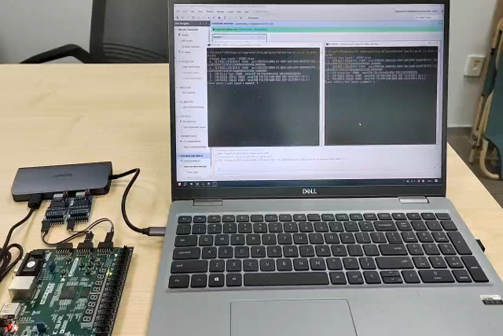
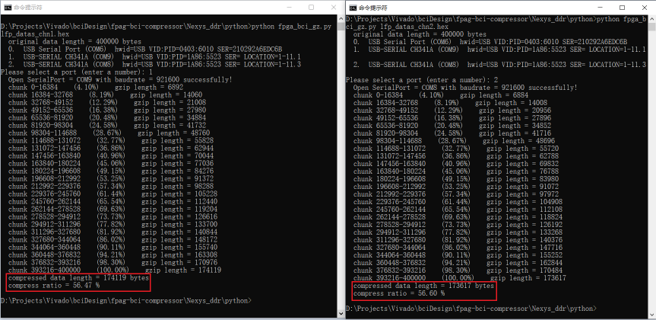
In response to the above technical requirements, Taixin is advancing functional verification across SoC architecture design, neural signal compression and spike detection, and via SoC samples and experimental platforms.
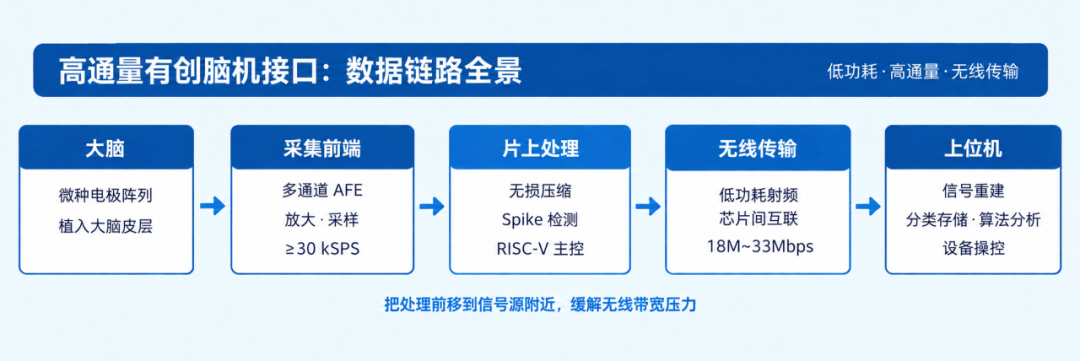
▲ Schematic of the data link for a high-throughput invasive brain-computer interface chip
TXW8601-related R&D and Verification Progress
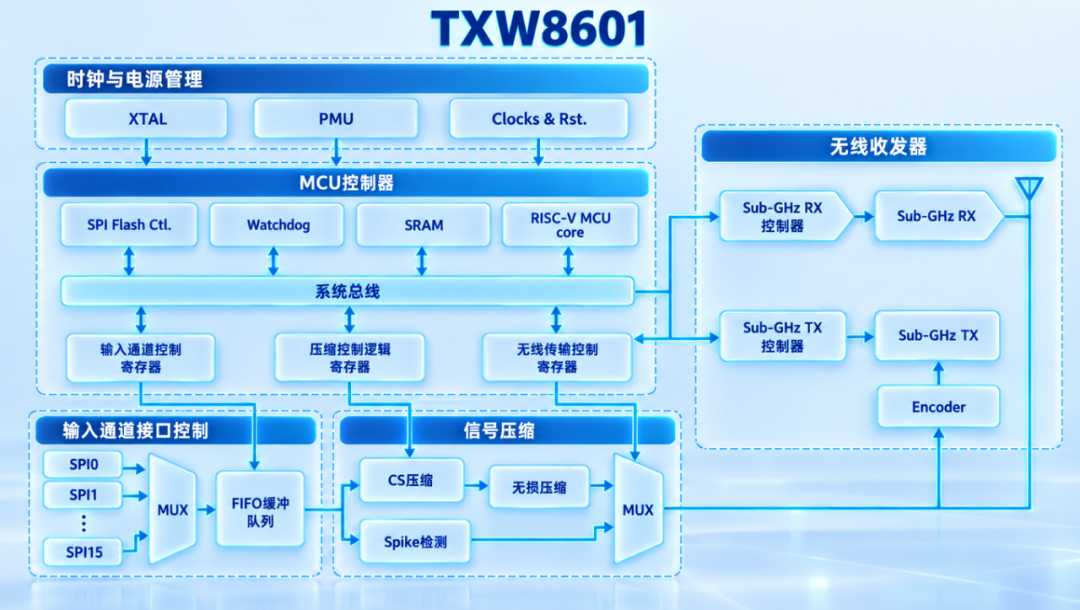
▲ Architecture and logic design of the TXW8601 SoC


05
Applications of brain-computer interfaces:
From essential medical needs to every industry
In recent years, national-level projects such as the 'China Brain Project' have continued to advance, with policy and capital working together. Brain-computer interfaces have accelerated from the laboratory to broad markets including medical rehabilitation, consumer electronics, and intelligent interaction, and an industry chain covering upstream electrodes and chips, midstream algorithms and systems, and downstream applications and services is taking shape.
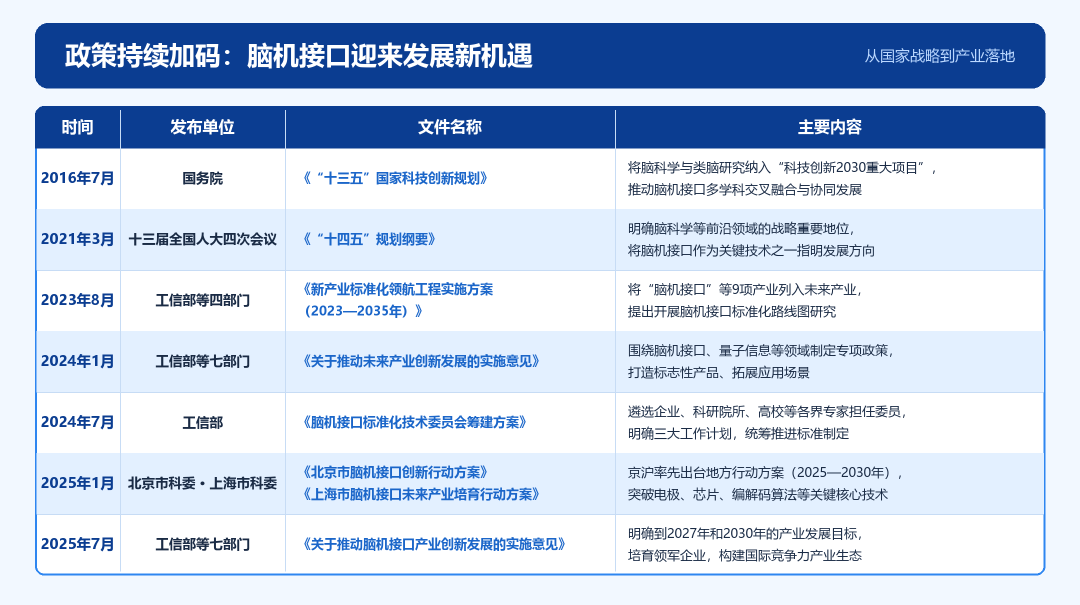
▲ Domestic policy support for brain-computer interfaces
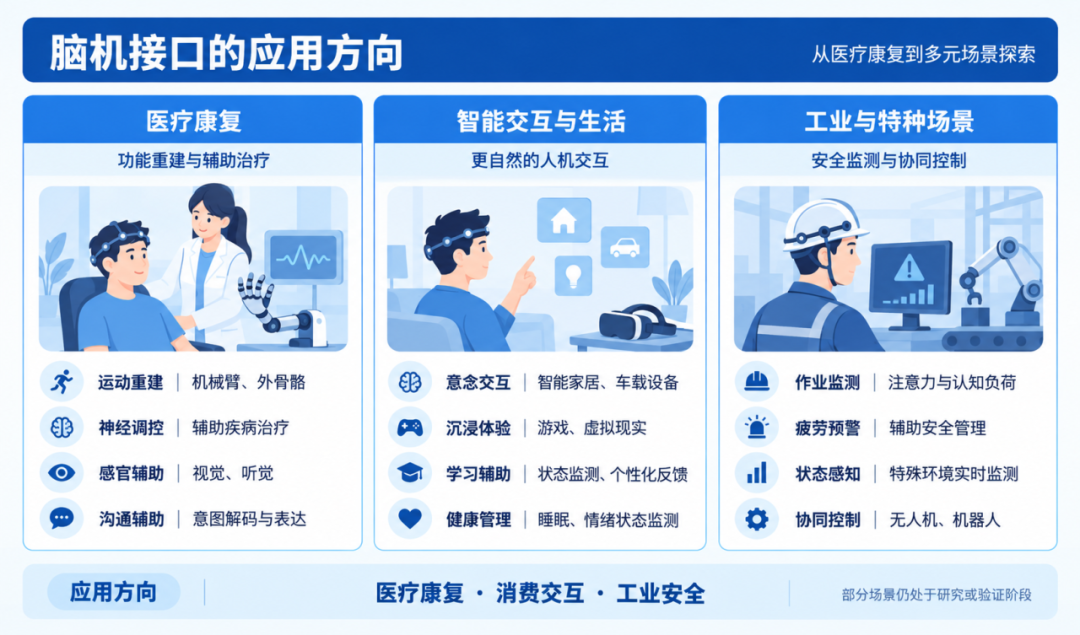
▲ Main application directions and industry landscape of brain-computer interfaces
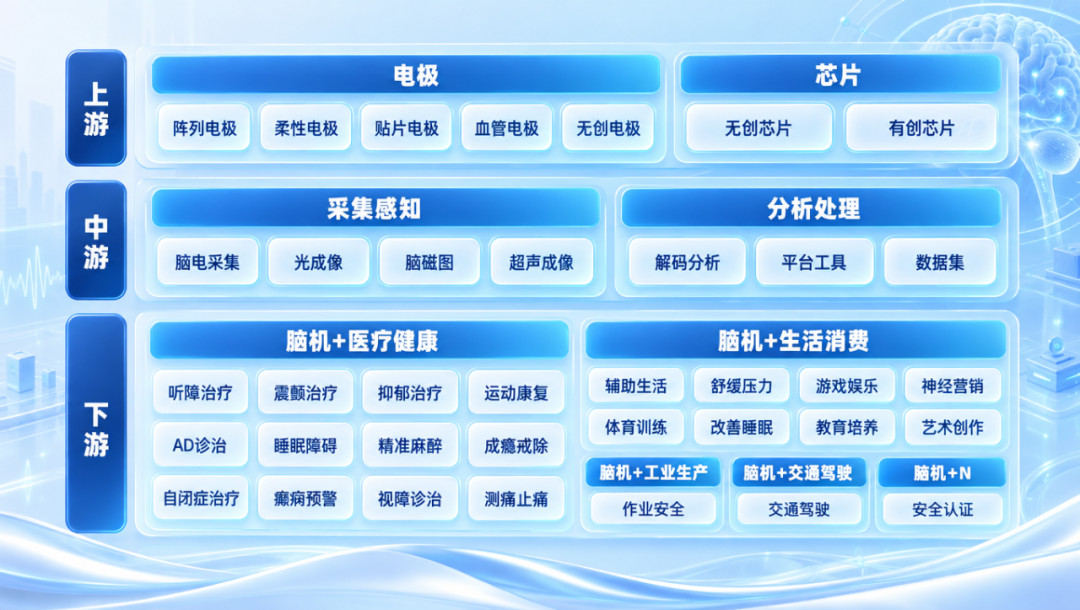
▲ The brain-computer interface industry chain
06
Intelligent connectivity of everything starts with a 'chip'
From wireless connectivity to brain-computer interfaces
TXW8601
Embodies Taixin's new exploration of the boundaries of chip applications
In the future, Taixin will work with industry chain partners
to continuously advance technology validation and system collaboration
For brain-computer interfaces
to develop toward high throughput, low power consumption, and wireless operation
Provide chip support

Zhuhai Taixin Semiconductor Co., Ltd. was founded in November 2016. It is a national-level specialized, refined, distinctive, and innovative 'Key Little Giant' enterprise focusing on chip design in the AIoT field, and has been listed among 'China IC Unicorns.' With outstanding technological strength, the company's products have twice won the prestigious 'China Chip' industry award.
The company is deeply engaged in core technologies for wireless communications and audio/video processing, with full-stack independent R&D capabilities in baseband, protocol stacks, and RF circuits. As one of the world's first companies to achieve Wi-Fi HaLowTMchip mass production, Taixin has established a first-mover advantage in long-range IoT with its ultra-strong penetration and ultra-low power consumption. Meanwhile, the company was among the first to launch audio/video SoC chips integrated with NearLink technology, fully empowering cutting-edge audio/video scenarios such as AI glasses, high-definition drone image transmission, and video doorbells with low latency and strong anti-interference performance.
In terms of technology layout, the company has made forward-looking arrangements for LTE Cat.1 chips, further improving its medium-rate IoT technology landscape and successfully building a dual-technology-driven system of 'wireless + cellular.' Its product matrix fully covers ultra-long-distance, low-power, multi-protocol convergence, and complex industrial-grade scenarios, broadly empowering diverse fields such as consumer electronics, security surveillance, smart homes, embodied robots, Internet of Vehicles, and Industrial Internet. It has also gained recognition and large-scale shipments from many leading customers, including Hikvision.
As an active promoter of the industry ecosystem, Taixin Semiconductor is a full member of the Wi-Fi Alliance, SparkLink Alliance, Wi-SUN Alliance, and RISC-V Alliance. Going forward, the company will continue to uphold its corporate culture of “diligence, innovation, pragmatism, and growth,” and through continuous technological innovation and application expansion, deliver high-performance, stable, reliable, and cost-effective one-stop AIoT chips and solutions to global customers, helping drive the thriving development of the era of ubiquitous intelligent connectivity.

Company Profile /Company Introduction