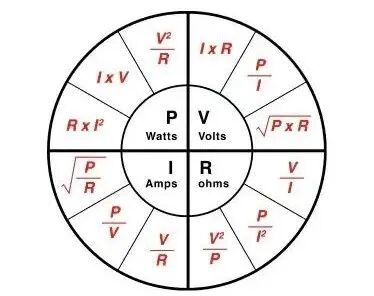
Ohm's law calculation: calculates the relationship among current, voltage, resistance, and power in a resistive circuit.

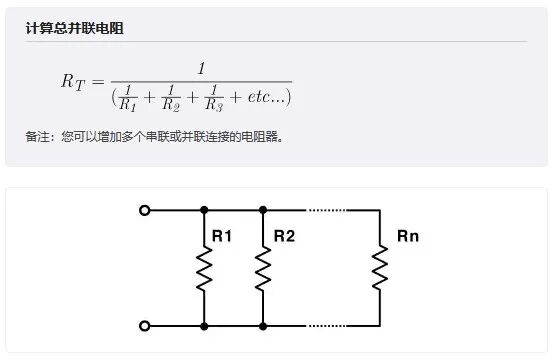
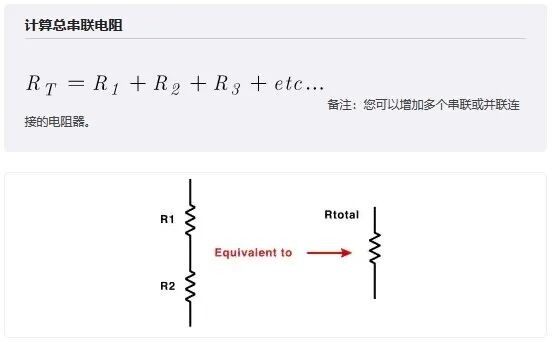
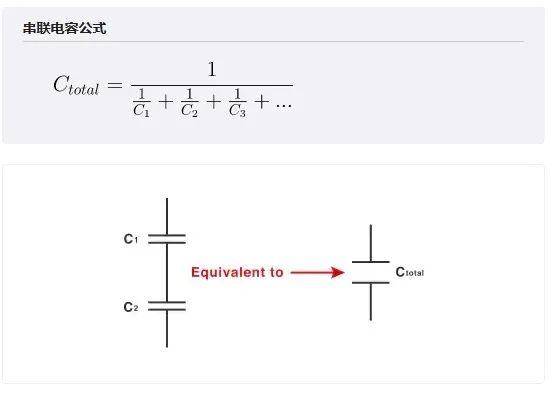
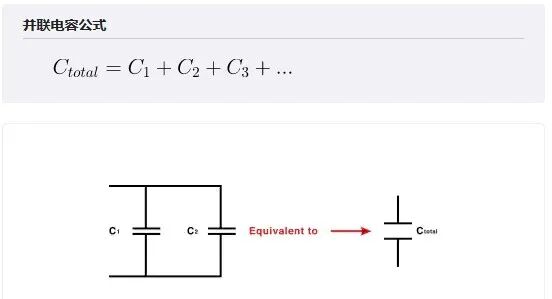
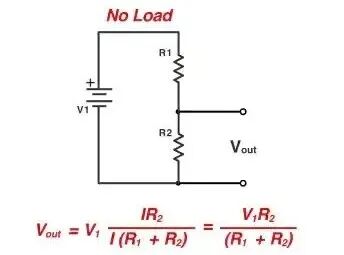
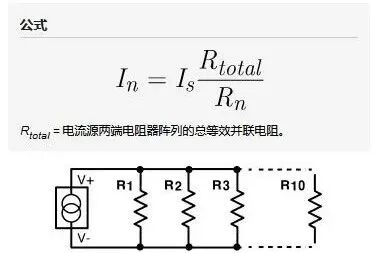
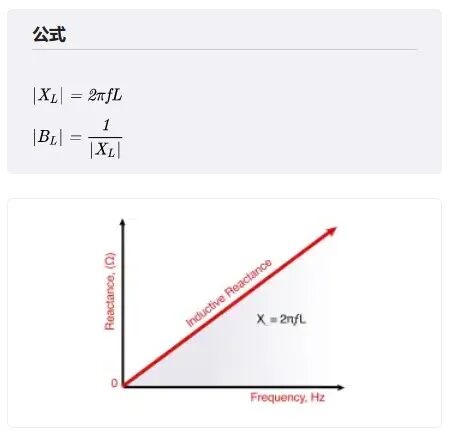
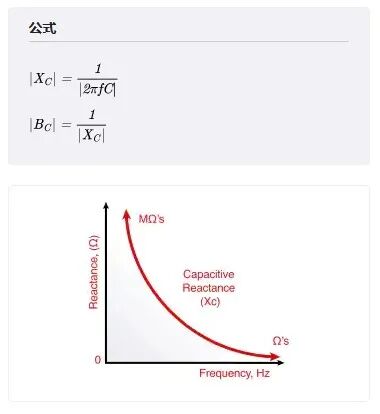
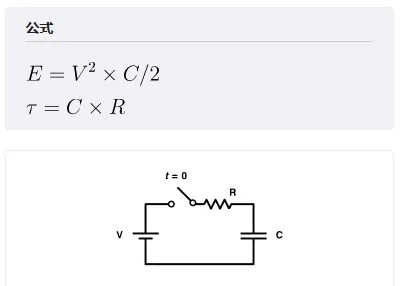
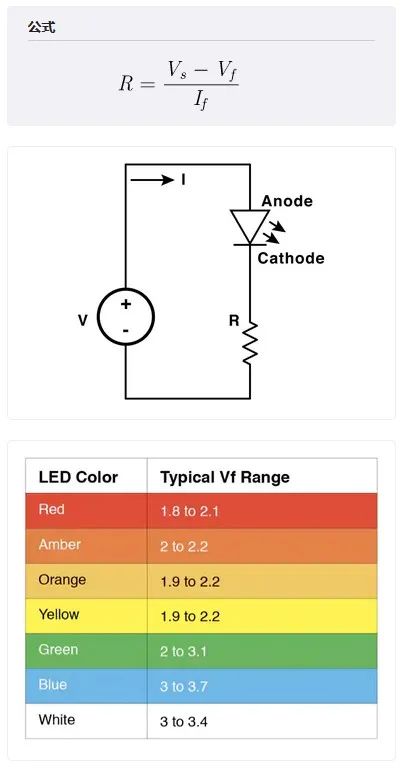
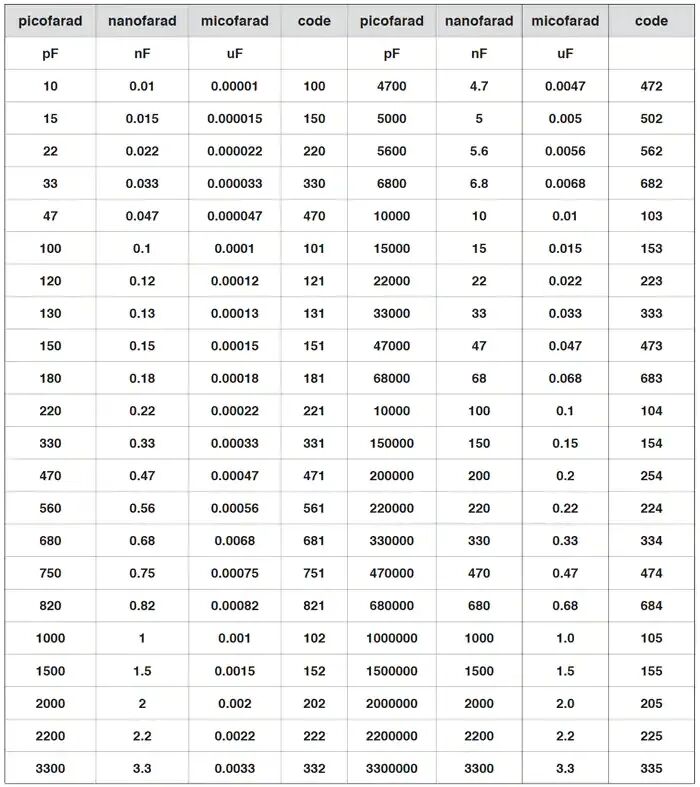
Calculates the relationship among current, voltage, resistance, and power in a resistive circuit.▶ Explanation of Ohm's Law:Ohm's law explains the relationship among voltage, current, and resistance; that is, the current through two points of a conductor is directly proportional to the potential difference between those two points.A law describing the relationship among the voltage difference between two points, the current flowing through those two points, and the resistance of the current path. The mathematical expression of this law is V = IR, where V is the voltage difference, I is the current in amperes, and R is the resistance in ohms. If the voltage is known, the greater the resistance, the smaller the current.Calculates the total resistance of multiple resistors connected in series or parallelCalculates the total capacitance of multiple capacitors connected in series or parallelResistor Voltage Divider CalculationCalculates the output voltage of a resistor voltage divider circuit for a given combination of resistance values and supply voltage.What is a voltage divider?A voltage divider is a passive linear circuit that produces an output voltage (Vout) that is a fraction of its input voltage (V1). Voltage dividers are used to adjust signal levels, bias active devices and amplifiers, and measure voltage.Ohm's law explains the relationship among voltage, current, and resistance; that is, the current through a conductor between two points is directly proportional to the potential difference between those two points.This is a law describing the relationship among the voltage difference between two points, the current flowing through those two points, and the resistance of the current path. The mathematical expression of this law is V = IR, where V is the voltage difference, I is the current in amperes, and R is the resistance in ohms. If the voltage is known, the greater the resistance, the smaller the current.Current Divider – Resistance CalculationCalculates the current flowing through up to 10 parallel resistors connected to a current source:Calculates the magnitude of reactance or admittance of an inductor or capacitor at a specified frequency.(1) Inductive Reactance/Admittance(2) Capacitive Reactance/AdmittanceRC Time Constant CalculationCalculates the product of resistance and capacitance, also known as the RC time constant. This value appears in equations describing the charging or discharging of a capacitor through a resistor and represents the time required for the voltage across the capacitor to reach approximately 63% of its final value after the voltage applied to the circuit is changed. This calculator also calculates the total energy stored when the capacitor is charged to a specified voltage.How to calculate the time constant:The time constant (T) can be determined by the values of the capacitance (C) and load resistance (R). The energy (E) stored in the capacitor is determined by two inputs, namely voltage (V) and capacitance (C).LED Series Resistor CalculatorCalculate the resistance required to drive one or more LEDs connected in series from a voltage source at a specified current level. Note: When selecting a resistor for this purpose, to avoid excessive resistor temperature, choose a resistor with a power rating between 2 and 10 times the power value calculated below.Capacitor Conversion TableConvert capacitance measurements between units of different magnitudes, including pF, nF, μF, and F.Battery life calculation formula:Battery life = Battery capacity (mAh) / Load current (mA)Estimate battery life based on the battery's nominal capacity and the average current consumed by the load. Battery capacity is usually measured in ampere-hours (Ah) or milliampere-hours (mAh), although watt-hours (Wh) are occasionally used.To convert watt-hours to ampere-hours, divide watt-hours by the battery's nominal voltage (V), as shown in the following formula:An ampere-hour (also called amp-hour) is a unit of electric charge equal to a current flowing for a period of time. One ampere-hour equals a current of one ampere flowing for one hour. A milliampere-hour, or milliamp-hour, is one-thousandth of an ampere-hour, so a 1000 mAh battery is equivalent to a 1 Ah battery. The above results are only estimates; actual results will vary due to battery condition, age, temperature, discharge rate, and other factors. If the battery used is a new high-quality battery operating at room temperature and the operating time is between 1 hour and 1 year, this estimate will be closest to actual results.PCB Trace Width CalculationCalculate the width of a copper printed circuit board conductor or 'trace' required to carry a given current using the formula provided by the IPC-2221 standard, while keeping the trace temperature rise below a specified limit. In addition, if the trace length is known, the total resistance, voltage drop, and power loss caused by trace resistance are also calculated. The results obtained are estimates; actual results will vary with application conditions. Note also that traces on inner layers of the board require significantly greater width than traces on the outer surfaces, so use the result appropriate to your situation.How to Calculate Trace Width?First, calculate the area:Area [mils^2] = (Current [Amps] / (k * (Temperature Rise [°C])^b))^(1/c)Then, calculate the width:Width [mils] = Area [mils^2] / (Thickness [oz] * 1.378 [mils/oz])For IPC-2221 inner layers: k = 0.024, b = 0.44, c = 0.725For IPC-2221 outer layers: k = 0.048, b = 0.44, c = 0.725where k, b, and c are constants derived from curve fitting the IPC-2221 curves.Common values:Thickness (1 oz),Ambient temperature (25°C),Temperature rise (10°C).Note: This article is reprinted from EE Times-China, and the purpose of reposting thisarticle is to convey more information; the copyright belongs to the original author.
Zhuhai Taixin Semiconductor Co., Ltd.
Zhuhai Taixin Semiconductor Co., Ltd. was founded in 2016 and is a high-tech enterprise integrating integrated circuit design and wireless intelligent communication solutions. We have successively launched long-range, low-power IoT Wi-Fi chips, low-power motor controller chips, and product solutions. The company adheres to a market-oriented and technology-driven approach, providing customers with high-quality chips and product technical solutions.
The company's core product: long-range, low-power IoT Wi-Fi communication chips. These chips can be used in product fields such as smart home, security monitoring, UAV image transmission, smart metering, smart door locks, smart grids, smart hospitals, and logistics robots.