News detail
Focus on the Two Sessions | Highlights of Science and Technology Innovation at the Two Sessions: Enhancing the Self-Reliance and Controllability of Industrial and Supply Chains—How Can the Chip Industry Break Through?
The 2021 Government Work Report lists 'optimizing and stabilizing industrial and supply chains' as one of the key tasks for the new year, and emphasizes enhancing the self-relianc…
In the 2021 Government Work Report, 'optimizing and stabilizing industrial and supply chains' was listed as one of the key tasks for the new year, and enhancing the self-reliance and controllability of industrial and supply chains was emphasized.
During the Two Sessions, 'chips' became a high-frequency buzzword among the many proposals from deputies and members, who put forward corresponding solutions to chip-related issues.
Focusing on the topic of enhancing the self-reliance and controllability of the chip industry's industrial and supply chains, the reporter interviewed several NPC deputies, CPPCC members, and industry experts to explore in depth how to break through the 'bottleneck' technologies in the chip industry.

Integrated circuits included in the 14th Five-Year Plan
This year's Government Work Report still emphasizes the importance of scientific and technological innovation: taking self-reliance and self-strengthening in science and technology as a strategic support for national development; improving the national innovation system; accelerating the building of strategic scientific and technological strength led by national laboratories; waging a tough battle on key core technologies; and formulating and implementing a ten-year action plan for basic research. Among this year's key tasks, 'optimizing and stabilizing industrial and supply chains' is included, with particular emphasis on 'enhancing the self-reliance and controllability of industrial and supply chains.'
At present, the wave of chip supply cuts is intensifying. The development of the integrated circuit industry has become a focus of public attention and a hot spot for capital, and the urgency of enhancing the self-reliance and controllability of the chip industry's industrial and supply chains is growing.
The reporter found that the draft Outline of the 14th Five-Year Plan, which has a programmatic role, mentions the integrated circuit industry in many places. For example, it states: 'We should strengthen R&D in integrated circuit design tools, key equipment, and key materials such as high-purity targets; achieve breakthroughs in advanced integrated circuit processes and distinctive processes such as insulated gate bipolar transistors (IGBTs) and micro-electromechanical systems (MEMS); upgrade advanced storage technologies; and develop wide-bandgap semiconductors such as silicon carbide and gallium nitride.' It also states: 'We should accelerate key technological breakthroughs in high-performance resins such as metallocene polyethylene and electronic high-purity materials such as photoresist for integrated circuits.'
In addition, it is necessary to 'focus on key fields such as high-end chips and accelerate R&D breakthroughs and iterative applications in basic theories, basic algorithms, equipment, and materials' and to 'focus on key fields such as integrated circuits, artificial intelligence, industrial internet, and energy storage, and establish a number of national industry-education integration innovation platforms and joint postgraduate training bases. Build 100 high-level, specialized, and open industry-education integration training bases.'
Bu Rixin, a partner at Chuangdao Investment Consulting, said in an interview: 'The inclusion of integrated circuits in the draft Outline of the 14th Five-Year Plan as a key encouraged development area will play the most influential guiding role in industrial development—from guiding local industrial support to financial capital's industrial investment and to strengthening the endogenous driving force of industrial development, it will all play a positive guiding role.'
In fact, it is not hard to see from the wording of the 14th Five-Year Plan that the integrated circuit-related technologies to be strengthened in the next five years are concentrated in relatively upstream segments such as materials and equipment—precisely the areas most vulnerable to bottlenecks.
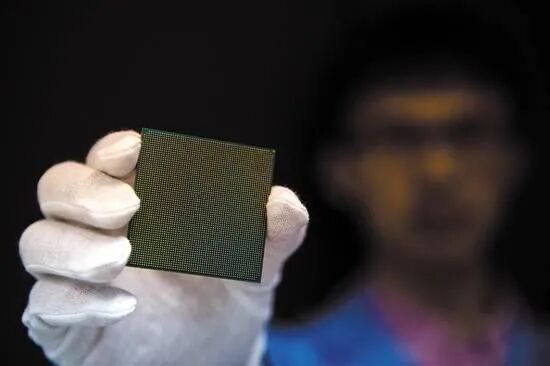
Where Are the 'Bottlenecks'?”
From the perspective of the chip industry chain, the segments roughly include EDA design, chip design, materials, equipment, wafer foundry, and packaging and testing. Several industry insiders pointed out to the reporter that the integrated circuit industry is already competitive on the design side, but fields such as upstream equipment, materials, and EDA software remain constrained by others.
Zhang Zhihe, chief consultant at Shanghai Zhuandian Information, told the reporter that the most mature and competitive part of the domestic industry chain is currently the back-end packaging and testing segment; IC design is also a relatively well-developed field in China, with HiSilicon, which has the strongest design capability, having reached international advanced levels such as 7nm and 5nm; the wafer manufacturing segment is gradually narrowing the gap with the international advanced level, but its accumulation of downstream customers and capacity for advanced processes remain relatively limited.
In the materials segment, Zhang Zhihe pointed out that some high-purity gas chemicals have gradually begun to be replaced by domestic products, and nearly half of the products can now be fully or partially localized; however, there is still a relatively large gap in some core raw materials, which is related to the weak domestic basic chemical engineering capabilities.
The most upstream EDA-assisted manufacturing and design software is recognized as one of the weakest links in the domestic semiconductor industry chain. Public information shows that the EDA market is highly monopolized by foreign companies, with the three major vendors Synopsys, Cadence, and Mentor occupying 90% of the EDA market share.
Liu Weiping, chairman of domestic EDA vendor Empyrean, has publicly stated that this situation is partly related to the early development of these leading vendors and partly to the inherent characteristics of the EDA industry. 'As a large algorithm-intensive software system, EDA also has the characteristics of a long R&D cycle, long industrialization cycle, long investment cycle, slow returns, and the need for continuous capital investment. In addition, EDA requires the establishment of an industry ecosystem, full support from upstream and downstream of the industry chain, a higher dependence on talent, and M&A integration as an important means of industrial development.'
Even though it is difficult, as a basic support, EDA is a technology that China must develop as it strives to develop integrated circuits. In recent years, domestic EDA companies such as Empyrean, Cellixsoft, Xpeedic, Semitronix, ProPlus, and Primarius have emerged.
The most critical 'bottleneck' remains semiconductor equipment.
According to Gartner data, U.S. companies hold a leading position in the semiconductor equipment field, with a global market share of as high as 40%, and have strong monopolistic strength in key segments such as etching, deposition, ion implantation, and process control.
'For example, for high-end lithography machines, theoretically speaking, lithography machines for nodes below 90nm still cannot be localized; for special thin-film deposition equipment and some etching process equipment with relatively high process capability requirements, the mainstream products used at present are still from overseas vendors,' Zhang Zhihe said.

Path to Breakthrough
To escape the predicament of being 'bottlenecked' by others, leading companies in the domestic chip industry have begun to take action.
The reporter noted that since the end of last year, several A-share companies have begun to extend their industry chain reach upstream. Companies including Maxscend, GalaxyCore, and NCE Power have successively announced financing plans to build or jointly build upstream production lines, with the main purpose of achieving control over key manufacturing links and independent supply.
A relevant person from Maxscend told the reporter, 'Previously, the company was more focused on the design segment, with manufacturing and packaging and testing outsourced. Now we want to take upstream segments into our own hands and achieve self-reliance and controllability of the supply chain.'
Actions by enterprises alone are clearly not enough; top-level design is needed to coordinate the overall path.
Chen Hong, an NPC deputy and chairman of SAIC Motor, said, 'It is very difficult to promote the localization of automotive-grade chips relying on market forces alone. It is necessary to form a strategy led by the government, with the joint efforts of vehicle manufacturers, to provide focused support to leading chip companies.'
Chen Hong suggested introducing support policies focused on automotive-grade chips, including R&D and production line investment subsidies at all levels and subsidies for first-set applications, to reduce corporate investment and product prices; and encouraging insurance companies to design product liability insurance to guarantee the application of domestic chips in complete vehicles and reduce application risks for vehicle, system, and chip companies.
Zeng Qinghong, an NPC deputy and chairman of GAC Group, also suggested increasing targeted support for the automotive electronics industry chain and formulating and implementing special incentive measures for automotive semiconductors and key electronic components; accelerating the construction of a domestic automotive-grade semiconductor standards system and the implementation of an industrial roadmap for key automotive electronic components.
Financing support is also crucial. Deng Zhonghan, a CPPCC National Committee member and academician of the Chinese Academy of Engineering, suggested that the state should actively guide relevant 'national team' industrial investment funds and coordinate with the National Integrated Circuit Industry Investment Fund Phase II to continue increasing investment support for the integrated circuit industry. Qualified localities can be encouraged to support the accelerated development of local integrated circuit enterprises through investment and financing means; pilot programs can be carried out in economically developed provinces and municipalities, where local special investment funds and loan risk compensation mechanisms can be established to support local integrated circuit enterprises in financing and listing, support them in obtaining commercial loans through multiple channels, and focus on supporting 'bottleneck' enterprises.
The reporter learned that the National Integrated Circuit Industry Investment Fund Phase II has focused its investments on integrated circuit equipment and materials, echoing the need to address bottleneck links. Companies such as Changchuan Technology, Ninestar, and SMIC have received investment from Big Fund Phase II. In addition, EDA companies such as Empyrean Technology and Primarius Technologies have successively entered pre-IPO tutoring; with subsequent support from the capital market, the industrialization of R&D and design software will accelerate.
Zhou Yumei, member of the National Committee of the Chinese People's Political Consultative Conference (CPPCC) and researcher at the Institute of Microelectronics, Chinese Academy of Sciences, suggested making breakthroughs in talent cultivation: "I hope more outstanding students will apply to integrated circuit programs and join the industry. I believe that, with the advantages of our country's new system for mobilizing resources nationwide, and by making greater efforts on key and bottleneck issues, we will certainly achieve greater breakthroughs."
Overall, domestic semiconductor equipment and semiconductor materials companies are continuously improving their in-house R&D capabilities, and industrial policies have brought major favorable developments. Although it is impossible to completely eliminate reliance on U.S. technology in a short period, self-developed technologies are growing rapidly, ushering in a wave of domestic substitution.
Zhang Zhihe believes, "From an enterprise perspective, although there is support from certain external objective factors, including government subsidies, greater attention from capital, and more open financing channels, ultimately the people engaged in this industry need to maintain a calm and stable mindset. It takes a long time to build a niche segment well, make it refined, and make it strong. This is the most fundamental basis for the domestic semiconductor industry chain to ultimately occupy an important position in the world."
Bu Rixin also pointed out, "The industrial fields included in the draft outline of the 14th Five-Year Plan are all areas worthy of long-term attention from the capital market and investors. Once a breakthrough is made, there will be explosive growth. However, it should be noted that all these companies face risks of long cycles, large investment, and high uncertainty. They are suitable for long-termist investment rather than short-term speculative hype."
This article is reposted from 21st Century Business Herald. Please contact us if there is any infringement.

Zhuhai Taixin Semiconductor Co., Ltd.
Zhuhai Taixin Semiconductor Co., Ltd. was founded in 2016 and is a high-tech enterprise integrating integrated circuit design and wireless intelligent communication solutions. We have successively launched long-range, low-power IoT Wi-Fi chips and low-power motor controller chips and product solutions. The company adheres to a market-oriented and technology-centered approach, providing customers with high-quality chips and product technical solutions.
The company's core product is a long-range, low-power Wi-Fi communication chip for the Internet of Things. This chip can be used in product fields such as smart home, security monitoring, UAV image transmission, smart meter reading, smart door locks, smart grids, smart hospitals, and logistics robots.