News detail
Industry Observation | Behind the Largest Chip Shortage in History!
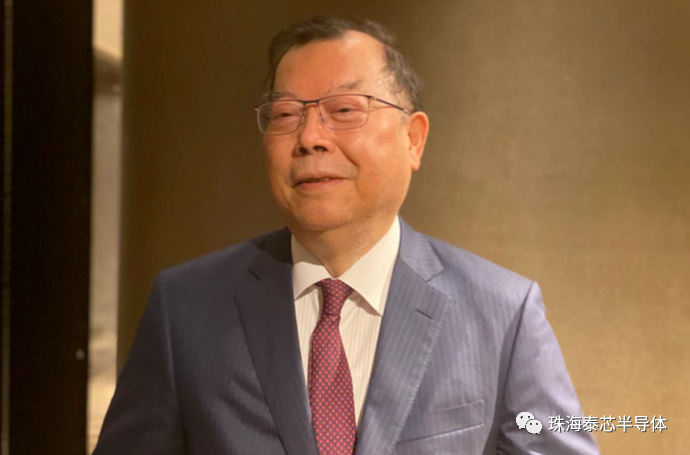
Recently, Taiwan's Apple News Network invited Huang Chongren, founder of Taiwan's Powerchip Group, to discuss the reasons behind the current wave of the largest shortage in semico…
Huang explained that from 2016 to 2019, the global wafer foundry business was stable, and only TSMC's advanced processes kept growing. However, the demand triggered this time all comes from mature processes at 40nm and above. In addition, mainland China's development was hit by the trade war and fell short of expectations, causing global mature-process capacity to be severely undersupplied.
Huang also said that the extent of this shortage far exceeds expectations. Three months ago, it was already known that there would be a materials shortage. Every day he has to take many calls from bosses asking for capacity. Previously they asked for thousands of wafers, then it became hundreds, and starting last week it became tens. It is conceivable that even capacity for tens of wafers is being fought over, which shows how tight the shortage is.
When will the supply-demand imbalance in wafer manufacturing capacity ease? Huang exclaimed, 'It is really difficult!' Previously, at a meeting with Wang Meiguang, Taiwan's 'Minister of Economic Affairs,' to discuss automotive chips, all five of our manufacturers said they had no capacity to squeeze out. Taiwan's status in the semiconductor industry has once again drawn attention from countries around the world amid this pandemic outbreak and the severe shortage of automotive chips.
First, Huang said, looking at semiconductor production worldwide across six major regions—the United States, Japan, Taiwan region of China, mainland China, Singapore, and the European Union—Taiwan is the cheapest and most competitive. TSMC has focused on advanced processes below 14nm in recent years. TSMC is dominant in advanced-process technology, and its customers are mainly NVIDIA, AMD, Xilinx, Qualcomm, Apple, and HiSilicon/Huawei, so capacity planning is easy.
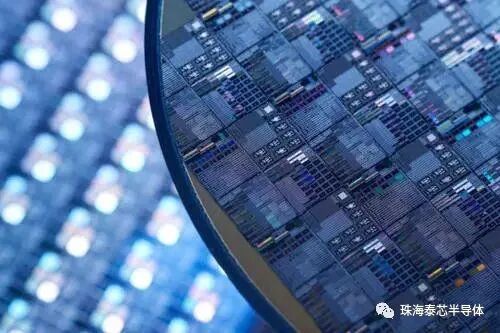
Taking AMD as an example, Huang said that after AMD changed its strategy and outsourced manufacturing to TSMC, it successfully caught up with Intel. After all, the investment cost of building a 12-inch fab is too high.
Second, Huang said that during 2016–2019, the global wafer foundry business was stable, and only TSMC's advanced processes continued to grow. Therefore, almost no one expanded capacity for mature processes at 40nm and above in the past. There had been hopes that mainland China's capacity would rise, but it was suppressed by the U.S. government and no new capacity emerged. Now everyone is also unwilling to expand mature-process capacity at old 8-inch fabs.
From the demand side, Huang further said that applications such as 5G, AI, and automotive electronics have only just begun to develop. For example, in the 4G era there were at most 500 million information connections, while in 5G there are as many as 60 billion information connections. Therefore, there are as many as 60 billion devices, all of which require various ICs, memory, and so on. The power management chips alone in a 5G phone are 2–3 times more numerous than in a 4G phone.
Huang explained why capacity is so severely short: the several-fold increase in power management chips alone has filled the 8-inch capacity of UMC, Vanguard International Semiconductor, and others, further crowding out display driver ICs and causing display driver IC orders to shift to mainland China.
Another big business is CIS sensors. Huang said that in order to compete with Sony for CIS sensor market share, Samsung shifted DRAM production equipment to CIS sensors. With nearly 30 years of experience in the semiconductor industry, Huang said bluntly, 'I am very accurate about DRAM prices. As soon as I saw Samsung and SK Hynix shifting consumer memory production lines to CIS sensors, I knew DRAM would be in shortage.'
Huang sighed that just meeting the demand from 5G and AI is already very difficult, let alone automotive chips. Major automotive chip makers including Infineon, STMicroelectronics, NXP, and Renesas cut orders first. TSMC had told customers not to cut orders; once an order is cut, the next customer fills the gap, and the capacity can no longer be released. Now millions of cars worldwide cannot be shipped. In fact, the chips cost only a few hundred yuan, but the cars are worth millions of yuan; yet they cannot leave the factory because of chips.
Huang said bluntly that this shortage is unlike earlier demand-driven shortages in laptops, monitors, and TVs; it also comes as trends such as 5G, AI, and automotive automation arrive. Who should sacrifice now? In the global wafer shortage, every manufacturer is willing to accept price increases. When everyone is fighting for capacity, 'price decides the winner,' and bidding for capacity has become the current phenomenon.
Huang is optimistic about the prospects of Taiwan's wafer foundry industry. He said, 'The shortage is hard to solve. Now everything is in shortage; the only thing not in shortage is NAND Flash.' From the perspective of wafer foundries, profits will not only rise, but prices will also be systematically pushed up. In the past, according to Moore's Law in semiconductors, prices would definitely fall; now it is the reverse. This year's average price will rise a lot compared with last year.
How should mainland China's development of the semiconductor industry be viewed?
Huang Chongren, founder of Powerchip Group, believes that it is highly difficult for mainland China to develop semiconductors.
Huang said that the semiconductor industry is extremely sophisticated, and mainland China has not achieved the same precision as Taiwan. What mainland China has succeeded in is LEDs, solar energy, and panels, which are standardized, but semiconductors are not. 'Developing semiconductors requires a complete team; it is not enough to just spend money and build fabs!' Huang hit the key point in one sentence.
He said, take TSMC veteran Chiang Shang-yi as an example. Chiang Shang-yi, known as 'Father Chiang,' simply did not have a team. TSMC could succeed because of consistent strategy and execution from beginning to end; the entire team is complete. You cannot build it up by casually recruiting people.
In addition, Huang also disclosed that Fujian Jinhua, which was technically supported by UMC, had a complete team and a high possibility of development. Micron also noticed this at the time, so it decided to launch a major infringement lawsuit.
According to reports, from 1996 to 2010, UMC accumulated nearly 15 years of DRAM manufacturing experience, and its internal DRAM team once had more than 150 people. With this solid and stable team, UMC gained extensive DRAM knowledge and experience. Chien Shan-jie, now one of UMC's co-presidents, served in 1996 as a RAM process development manager for DRAM products. In addition to traditional DRAM technology, in 2009 UMC successfully developed its own embedded DRAM process technology, which is much more complex than manufacturing standard DRAM. In its cooperation with Jinhua, the R&D team members responsible for the DRAM project numbered nearly 300. It can be seen that Micron's lawsuit against Jinhua and the subsequent U.S. government sanctions look more like 'self-rescue' actions launched out of fear of a competitor's growth.
As for Samsung's recent active investment in CIS capacity and advanced-process deployment, Huang said bluntly, 'I am not afraid of Samsung, because Samsung is an IDM. Its largest division is still memory. When it has its own products, all resources and benefits go to its own products, and external customers will not get the best products.'
For example, Huang pointed out that Samsung adopted EUV also for its own memory. Graphics chip giant NVIDIA (nVidia) once planned to place orders with Samsung for a while because prices were 25% cheaper, but it turned out that the products were still not as good as those made by TSMC. In the past, people would tremble at the mention of Samsung. Now, looking ahead 3–5 years, whether TSMC or Taiwan's wafer foundry industry, both are very stable.
This article is reposted from NetEase News. If there is any infringement, please contact us.

Zhuhai Taixin Semiconductor Co., Ltd.
Zhuhai Taixin Semiconductor Co., Ltd. was founded in 2016 and is a high-tech enterprise integrating IC design and wireless intelligent communication solutions. We have successively launched long-range, low-power IoT Wi-Fi chips, low-power motor controller chips, and product solutions. The company adheres to being market-oriented and technology-centered, providing customers with high-quality chips and product technical solutions.
Core products: long-range low-power IoT Wi-Fi communication chips. The chips can be used in smart home, security monitoring, drone image transmission, smart meter reading, smart door locks, smart grids, smart hospitals, logistics robots, and other product fields.