News detail
[Industry News] A Year of Dramatic Changes in the Semiconductor Industry as the Chip Shortage Intensifies
In 2020, the semiconductor industry could be described as a year of dramatic changes. Under the impact of the COVID-19 pandemic, the market first declined and then rebounded, turning from a once pessimistically forecast negative growth into positive growth of 5.1%. The capital market also shifted into a higher gear: the Philadelphia Semiconductor Index rose from 1,800 points at the beginning of 2020 to 2,800 points by the end of the year, an increase of more than 1,000 points. China's semiconductor industry also delivered a remarkable performance, maintaining a full-year growth rate in the double digits and achieving substantive breakthroughs in some key areas.


The performance of the semiconductor industry has traditionally been 'positively correlated' with the global economy—that is, when the global economy grows, the semiconductor market grows in tandem, and when the global economy contracts, this is also reflected in the semiconductor market. However, 2020 was somewhat unusual. Hit by the COVID-19 pandemic, market analysis firms lowered their forecasts for the semiconductor industry early in the year, generally expecting negative growth. Gartner forecast a decline of 0.9%, and McKinsey forecast a decline of 5%.
Yet, unexpectedly, the semiconductor market was already performing better than expected by mid-year. Although demand for smartphones, automobiles, and other products remained weak at that time, the 'stay-at-home economy' had begun to show its effects: demand for tablets and small and medium-sized TVs kept rising, while demand for chips used in data centers and cloud servers grew even faster. By year-end, a 'chip shortage' wave swept through the semiconductor sector. From power management chips and display driver chips to MOSFET power semiconductors and MCUs, widespread shortages emerged. The 'chip shortage' wave extended upstream: not only was TSMC's sub-10nm advanced process capacity in high demand, but supply of 8-inch legacy process capacity was also severely insufficient, putting the semiconductor supply chain to the test.

Several factors have contributed to this situation:First, the 'stay-at-home economy' triggered by the COVID-19 outbreak accelerated global digital transformation. Demand for cloud services, servers, laptops, gaming, and healthcare continued to rise, while 5G, the Internet of Things, automobiles, artificial intelligence, and machine learning developed rapidly—all of which drove market demand for semiconductor products.Second, the COVID-19 pandemic disrupted global supply chains, exacerbating the imbalance between supply and demand.Relatively speaking, China resumed work and production earlier, giving Chinese manufacturers more market opportunities, but this also intensified domestic supply tightness.In addition, panic stockpiling and profit-driven speculation also worsened the chip shortage.
Electronics manufacturers such as Panasonic and Yamaha have warned that they are facing chip shortages that are slowing production of audio equipment and cameras.
In addition,WiFiand Bluetooth chips are also in notably short supply. A source at a Japanese electronic component supplier said delays are expected to exceed10weeks.
China Economic Weekly conducted a special interview survey of relevant companies regarding the chip shortage. A principal executive of a kitchen and bathroom appliance company in Zhongshan, Guangdong, noted:“It is not just automobiles that are short of chips—even gas water heaters are affected! The display control chip for gas water heaters (i.e., the mainboard chip) has been rising in price sinceDecember. Units originally priced at1.2yuan have risen to1.6yuan; units originally priced at1.55yuan have risen to2.25yuan, and the increases are said to last one to two years. The impact is enormous; without thesechips, the devices cannot even be powered on.”
The chip shortage has also affected graphics card manufacturers NVIDIA,AMDand sales of Sony and Microsoft's next-generation game consoles.NVIDIACorporationCFOColette·Kress predicted that, because current market demand far exceeds the supply of graphics card chips, combined with industry-wide capacity constraints and long cycles, it may take several months for product supply to meet demand.
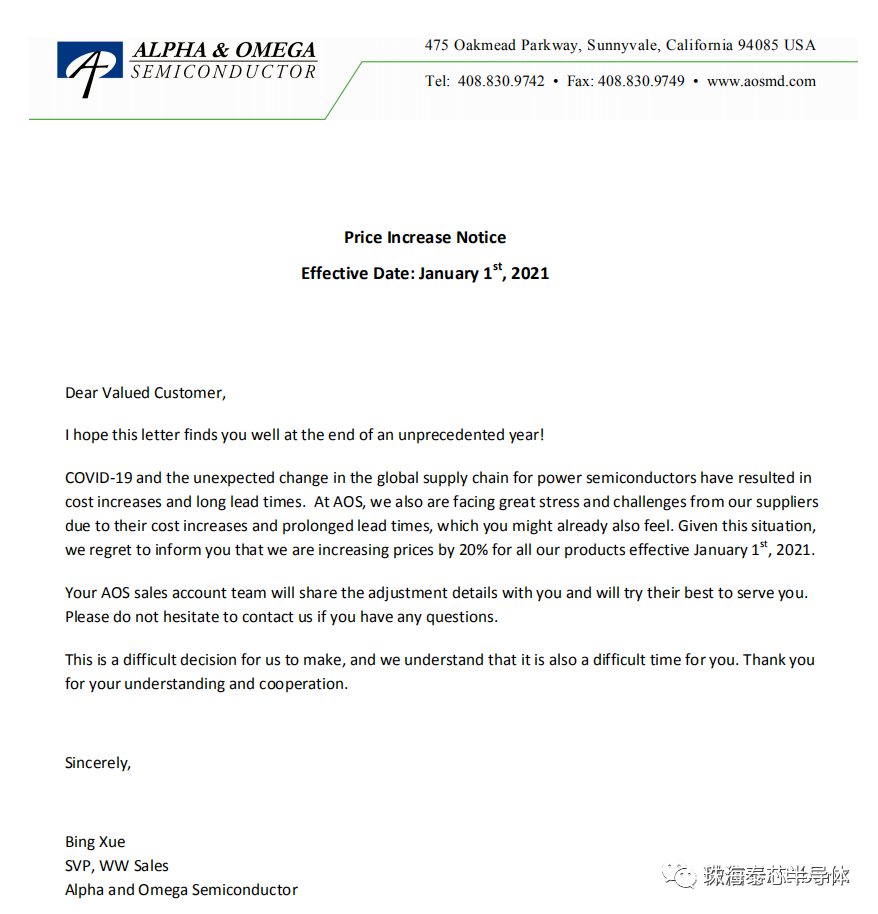
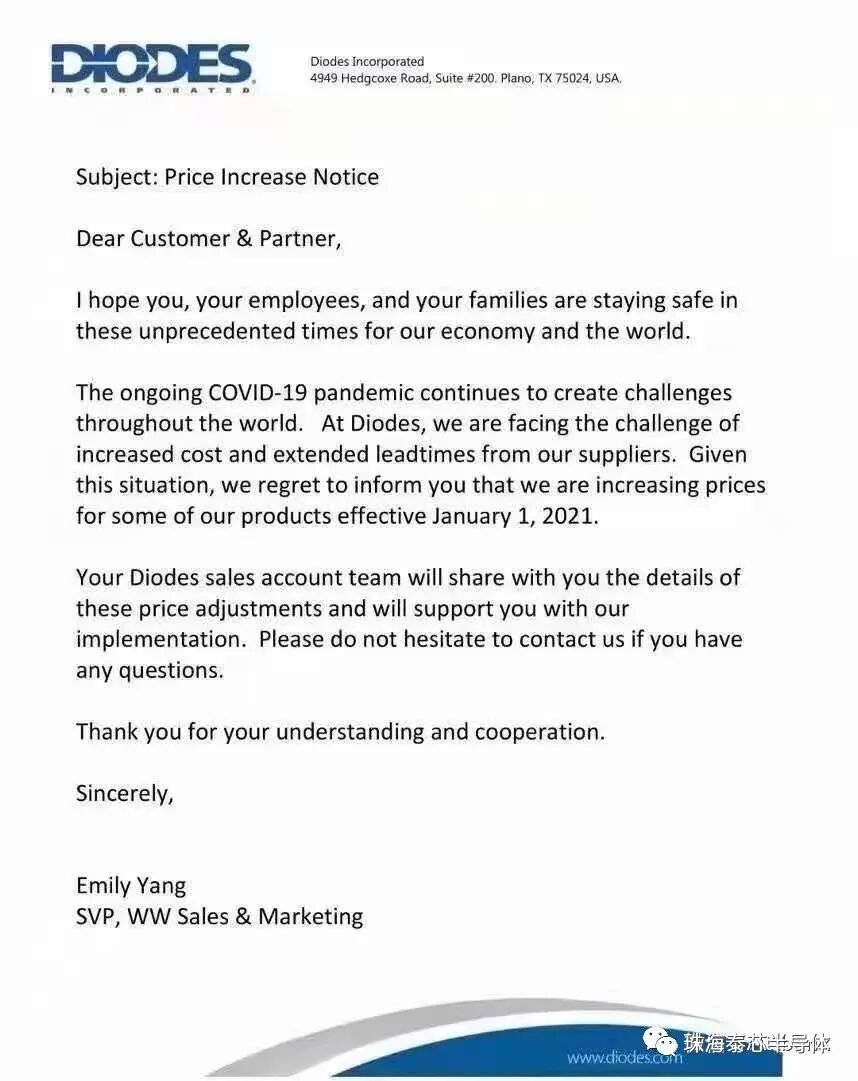
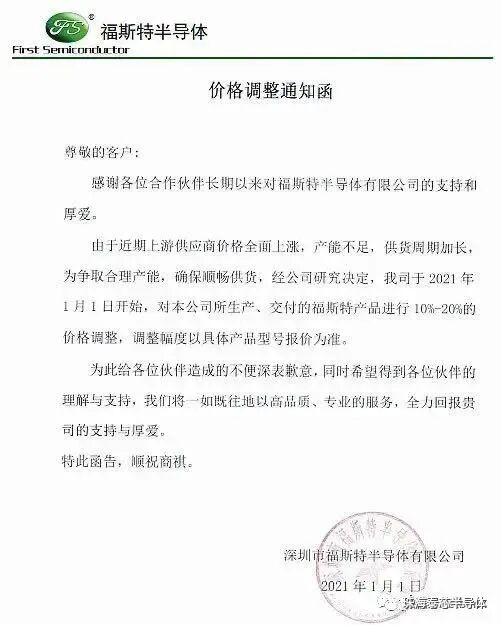
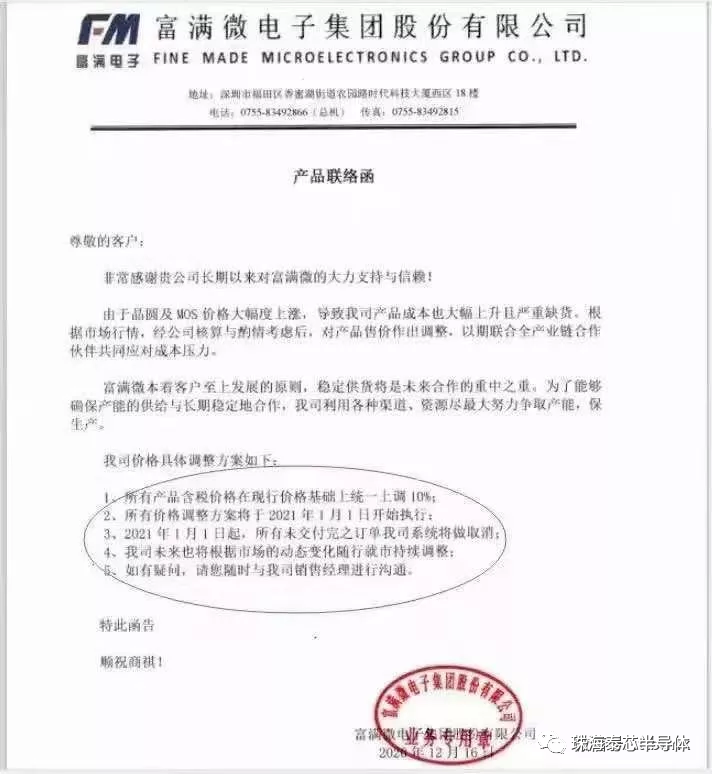
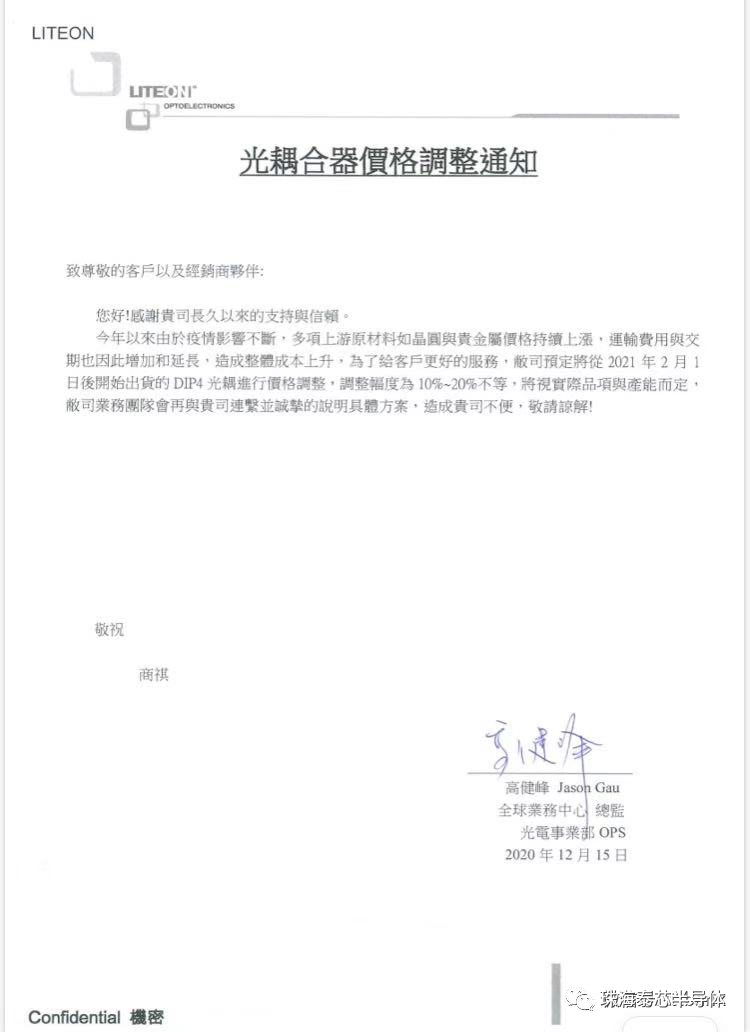
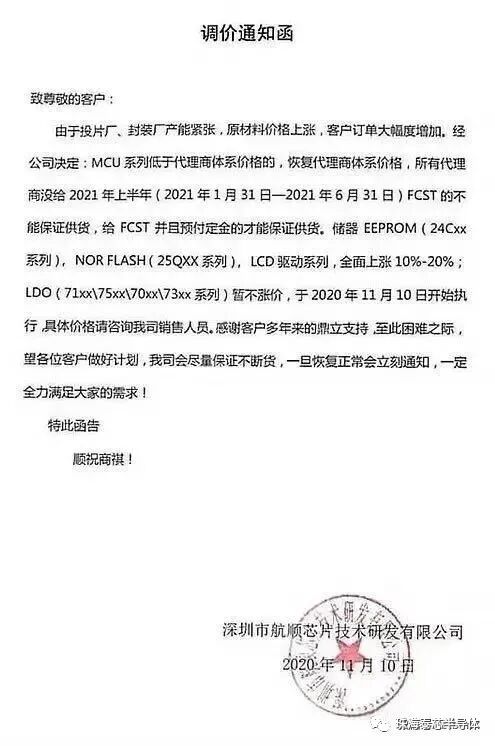
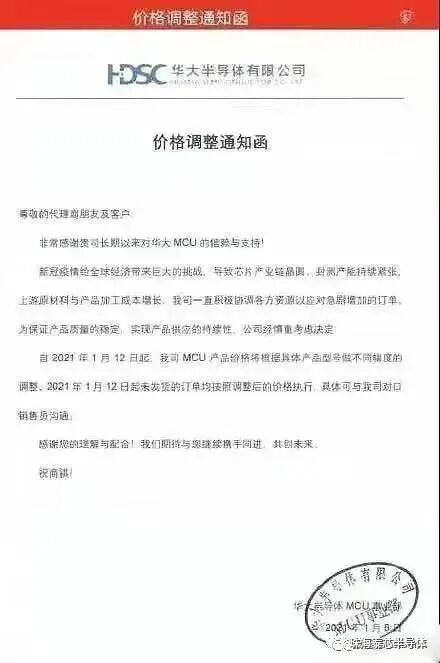
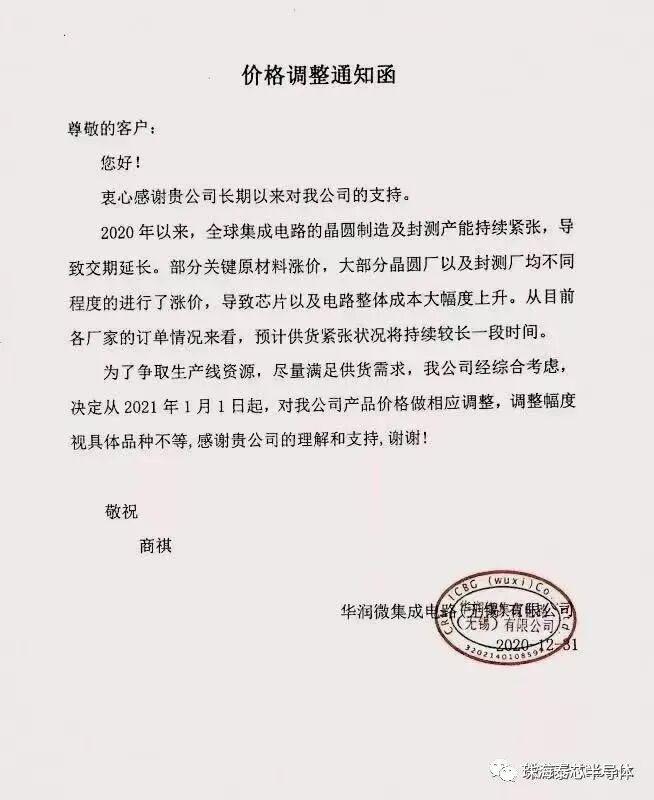
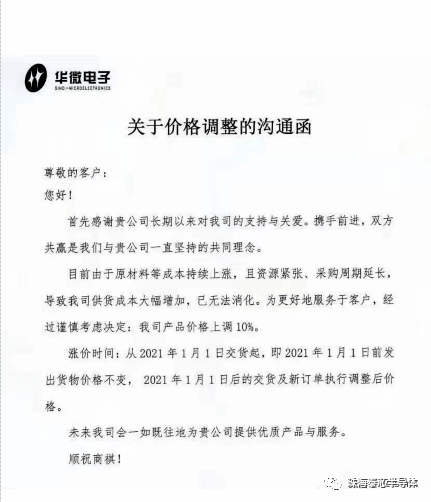
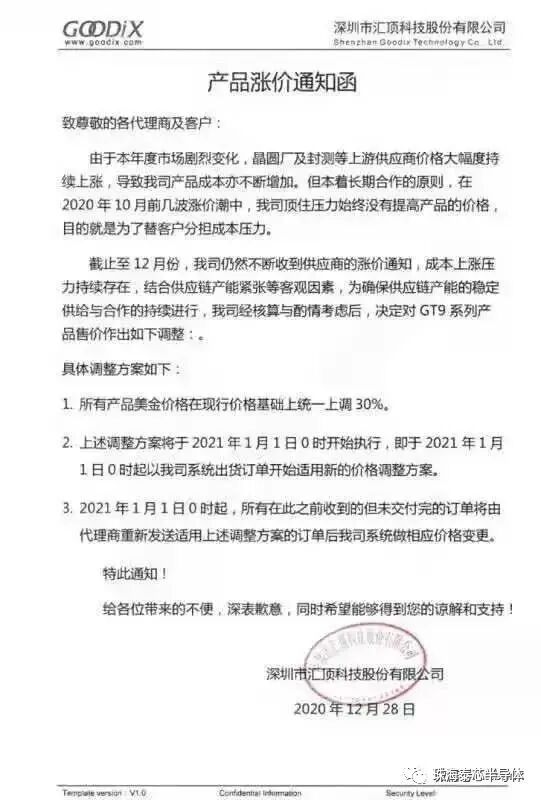
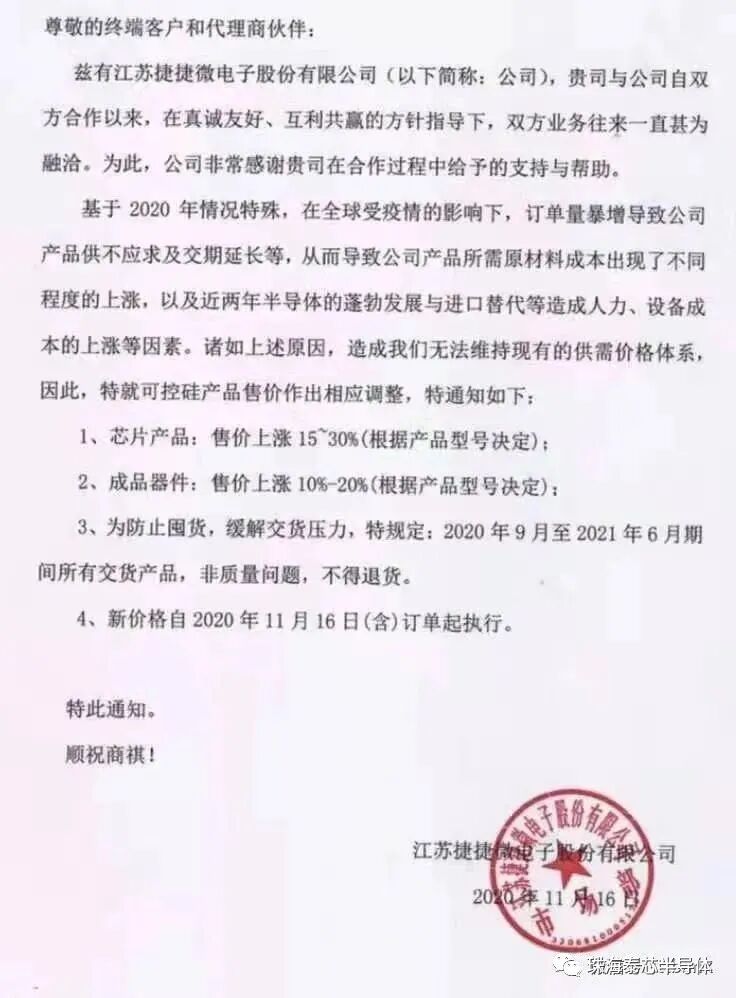
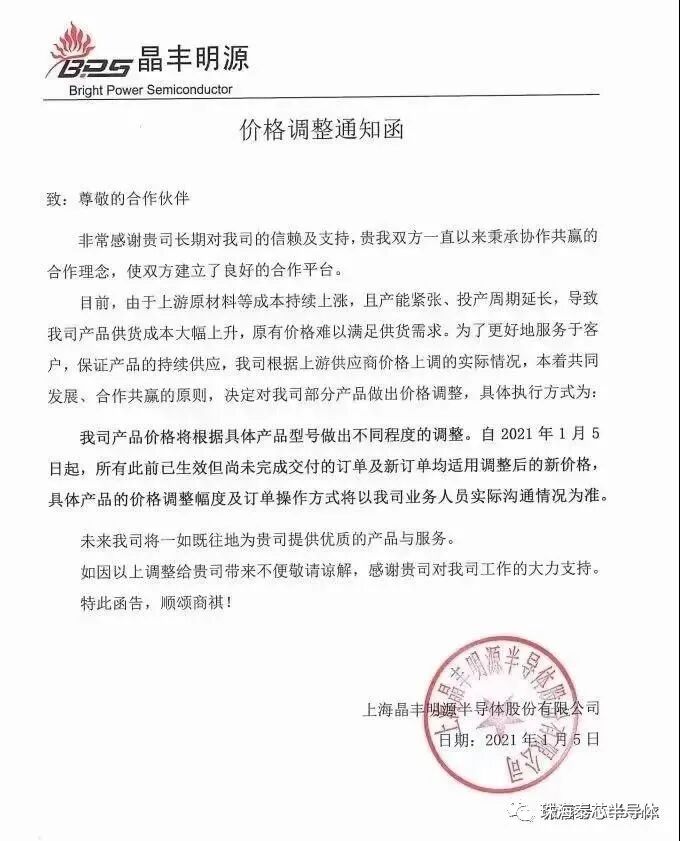
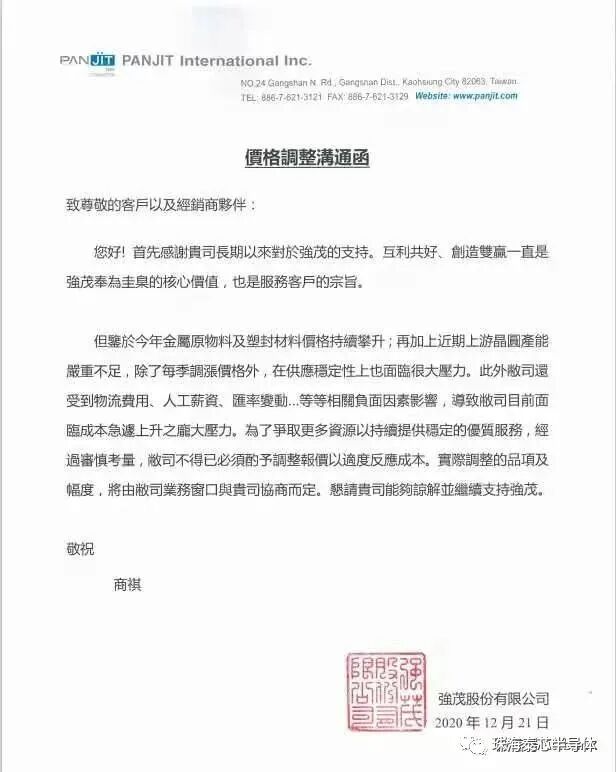
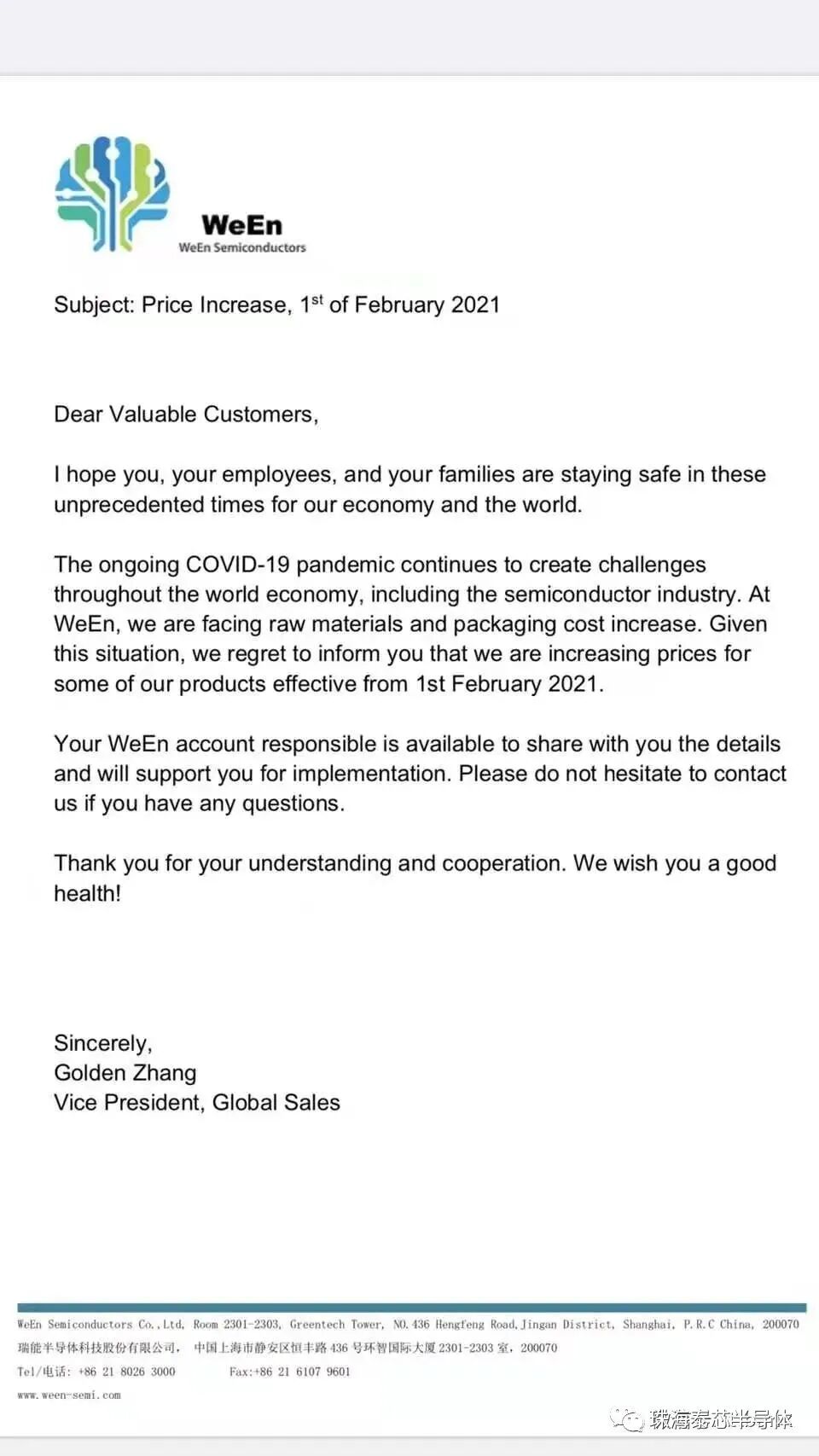
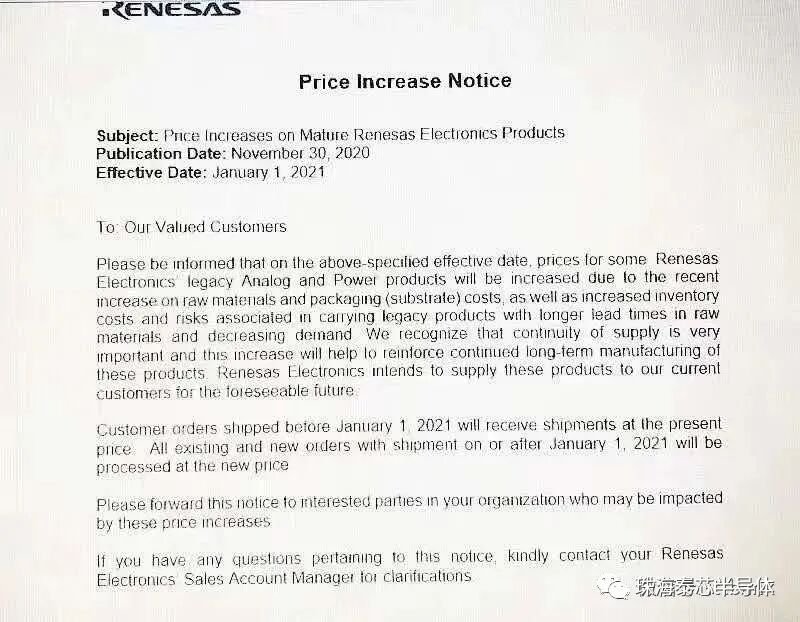
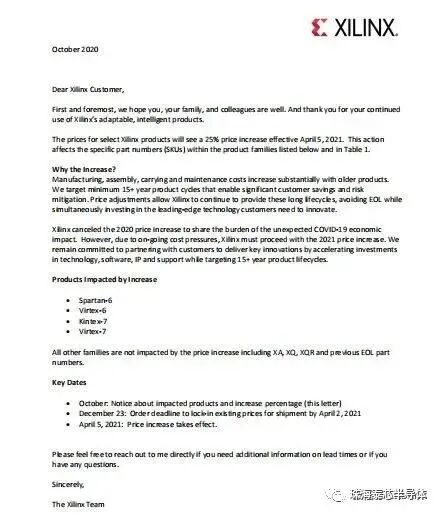
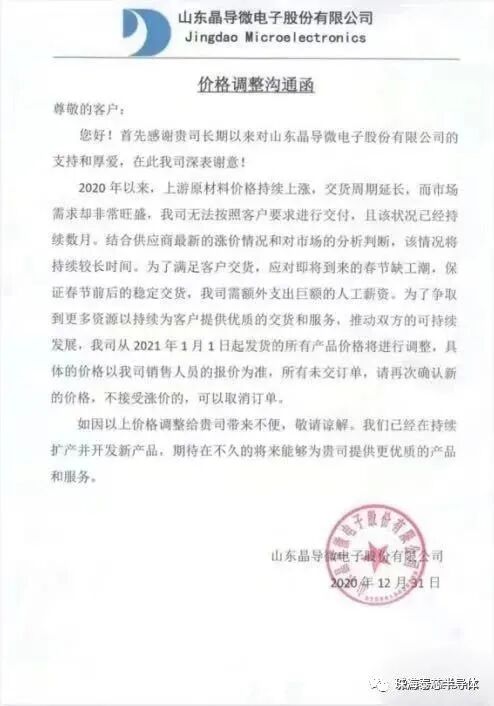
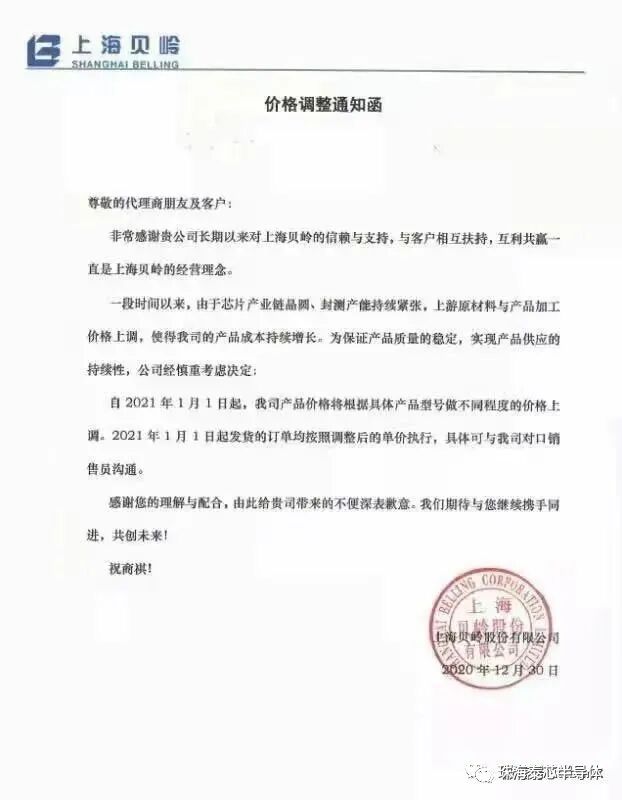
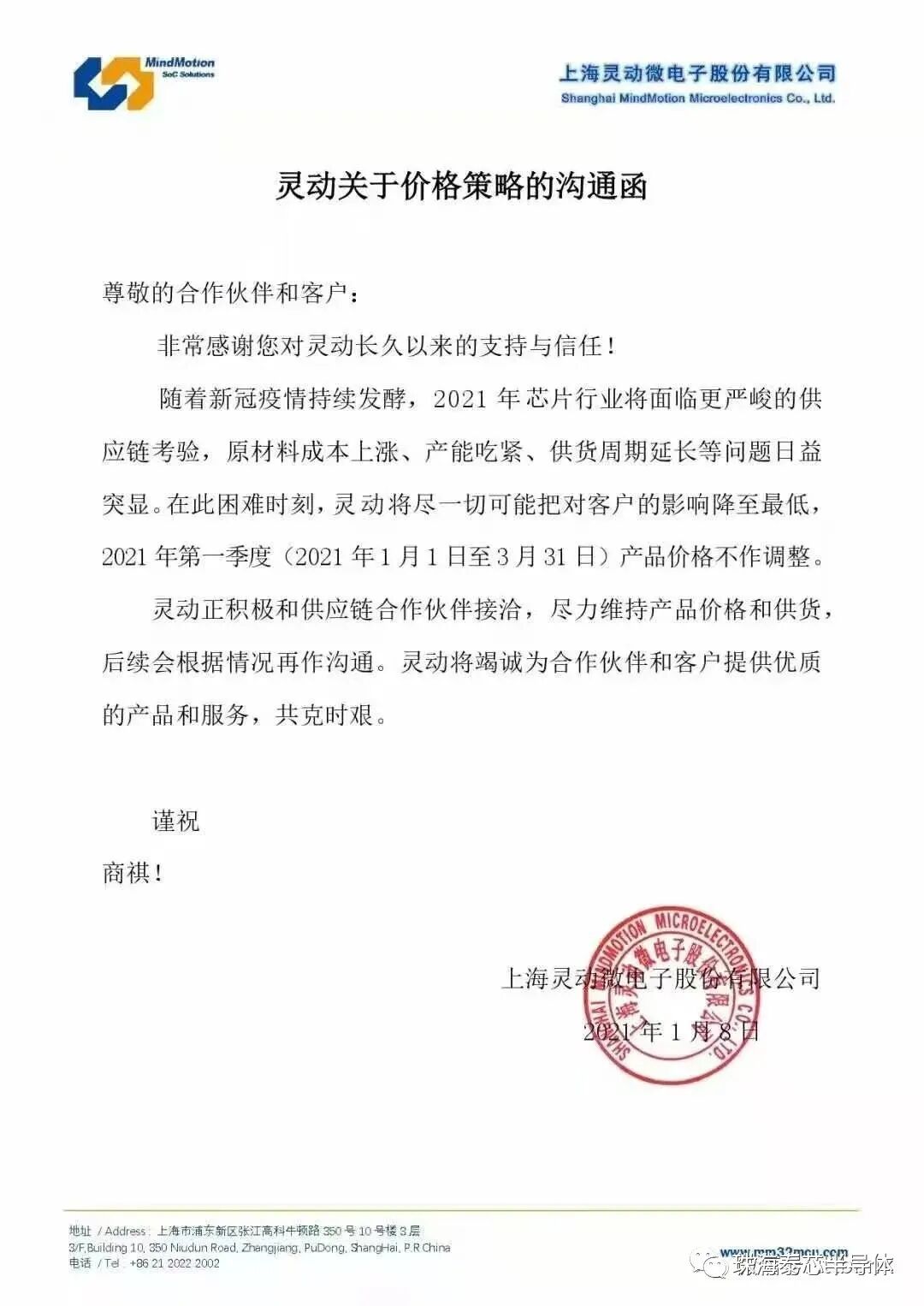
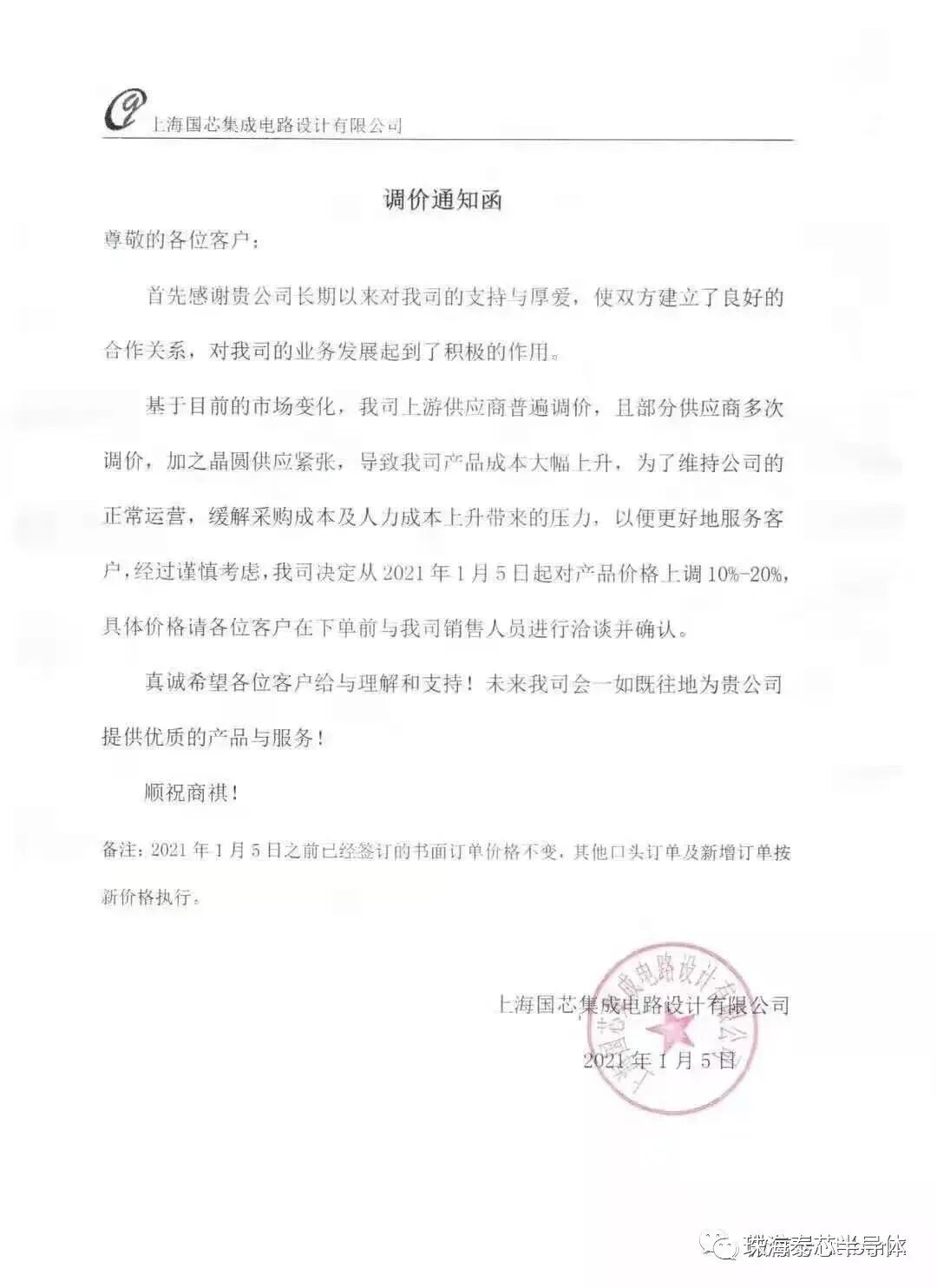
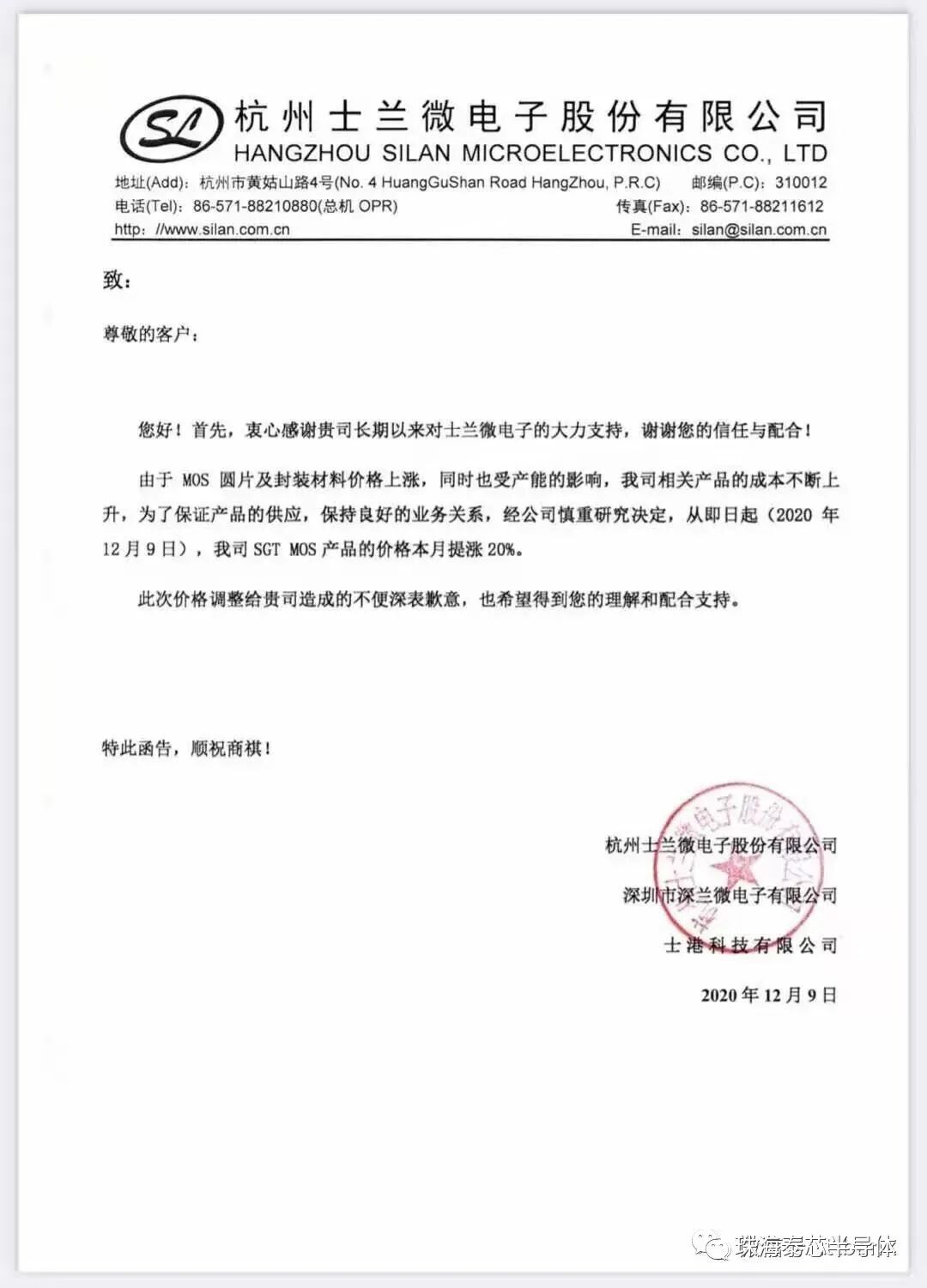
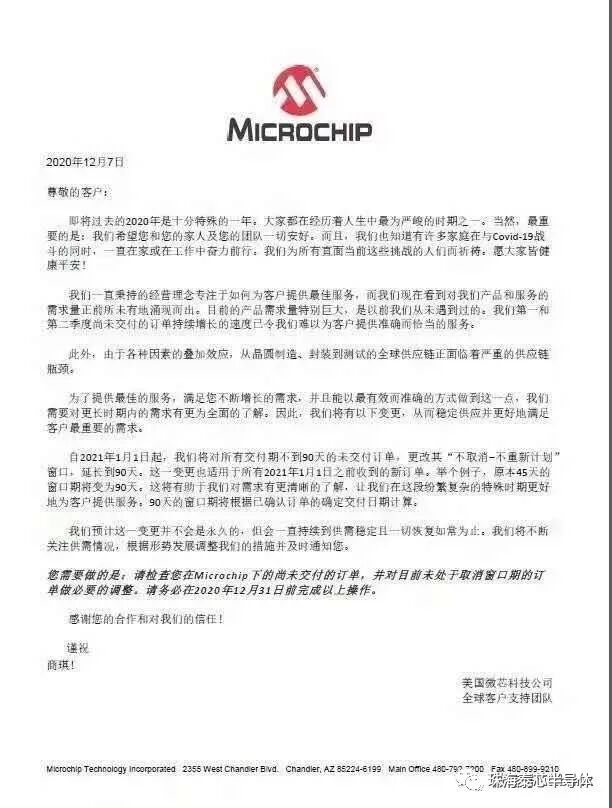
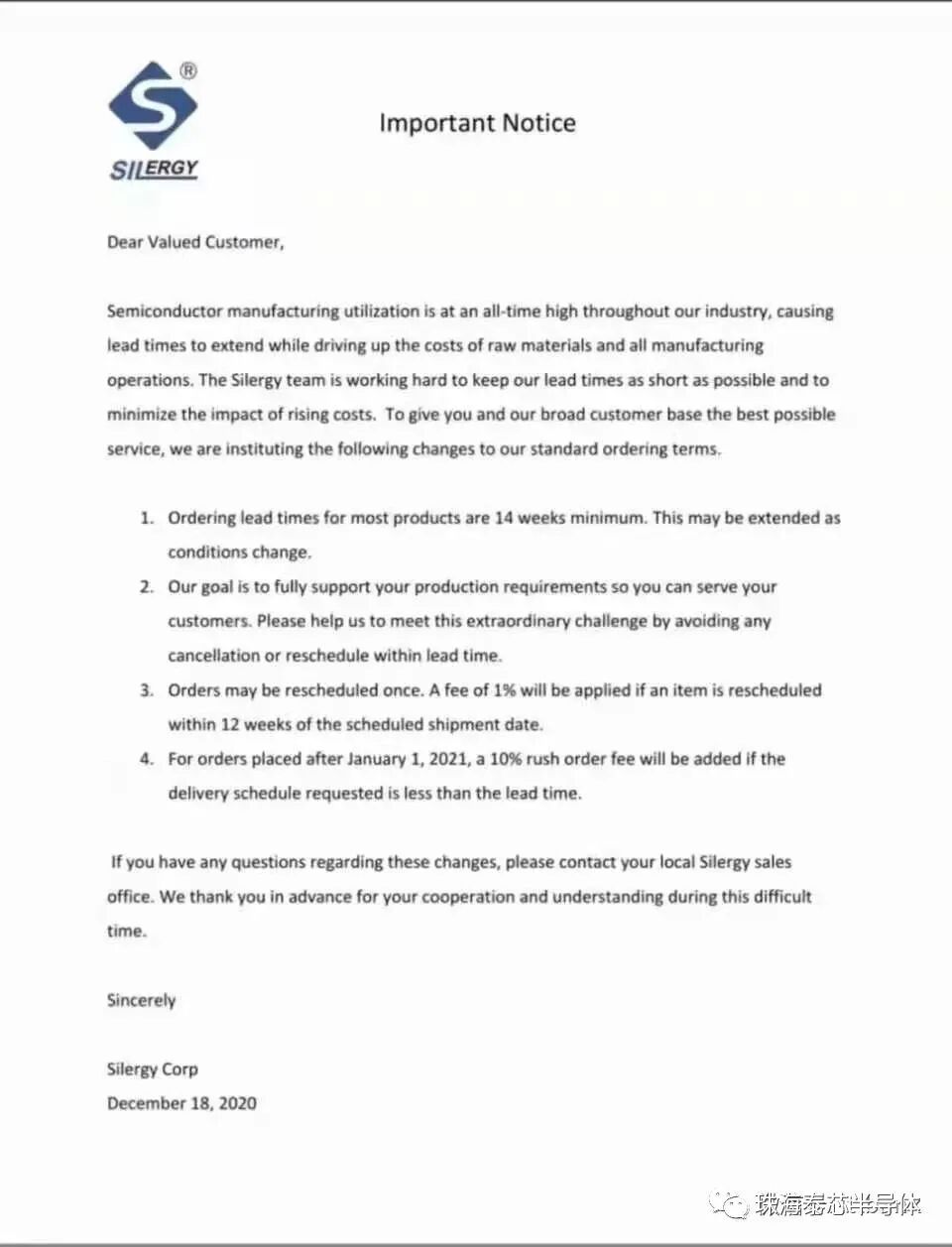
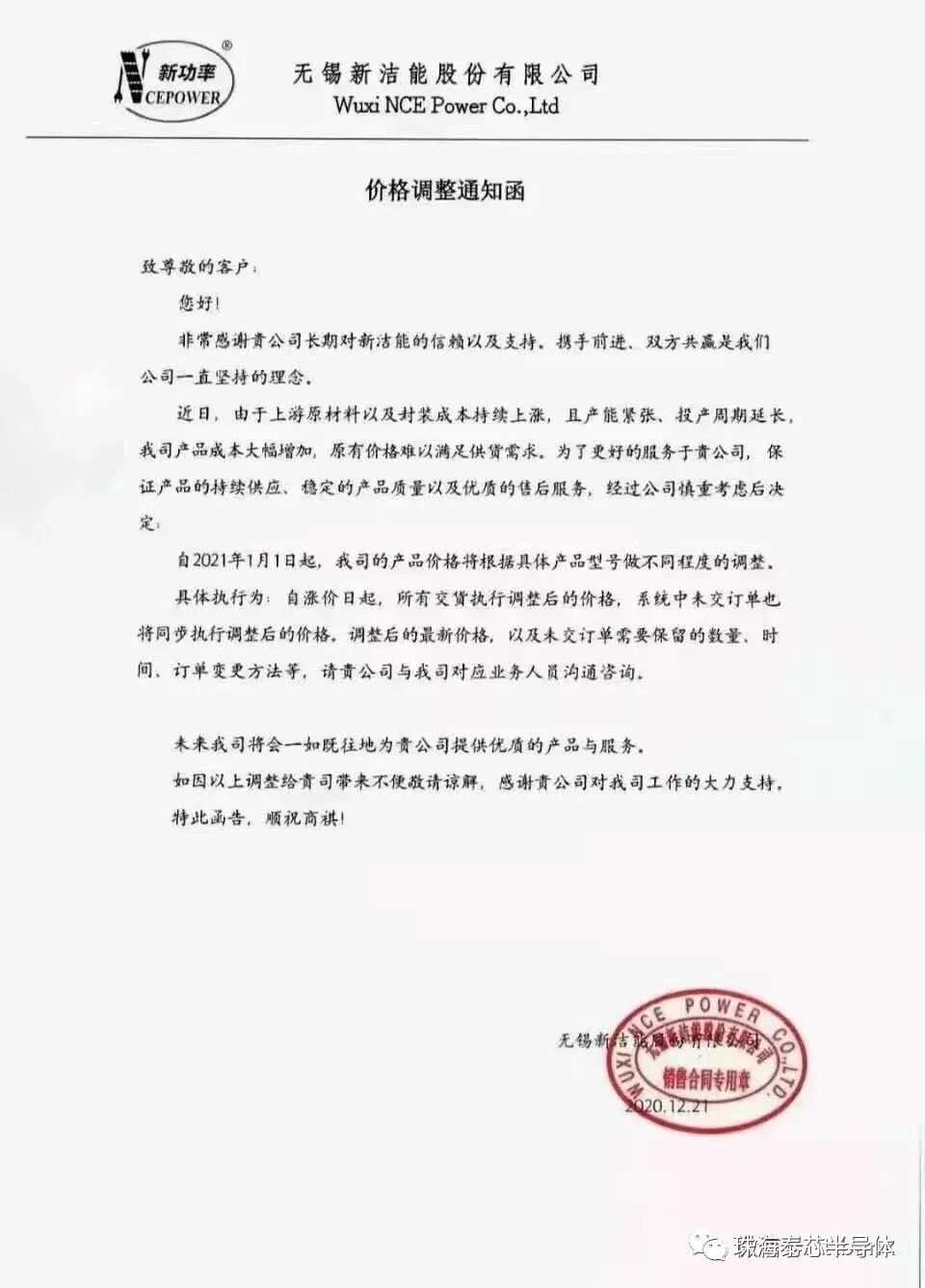
As market demand for chips continues to rise, chip companies have had to raise product prices due to rising raw material costs, longer production cycles, and other reasons.
2020in the4thquarter, capacity at TSMC, UMC, Vanguard International Semiconductor, and other 8 -inch wafer foundries has been in short supply; some manufacturers have raised foundry prices by 10-20%, and lead times have extended from the normal two months to four months.
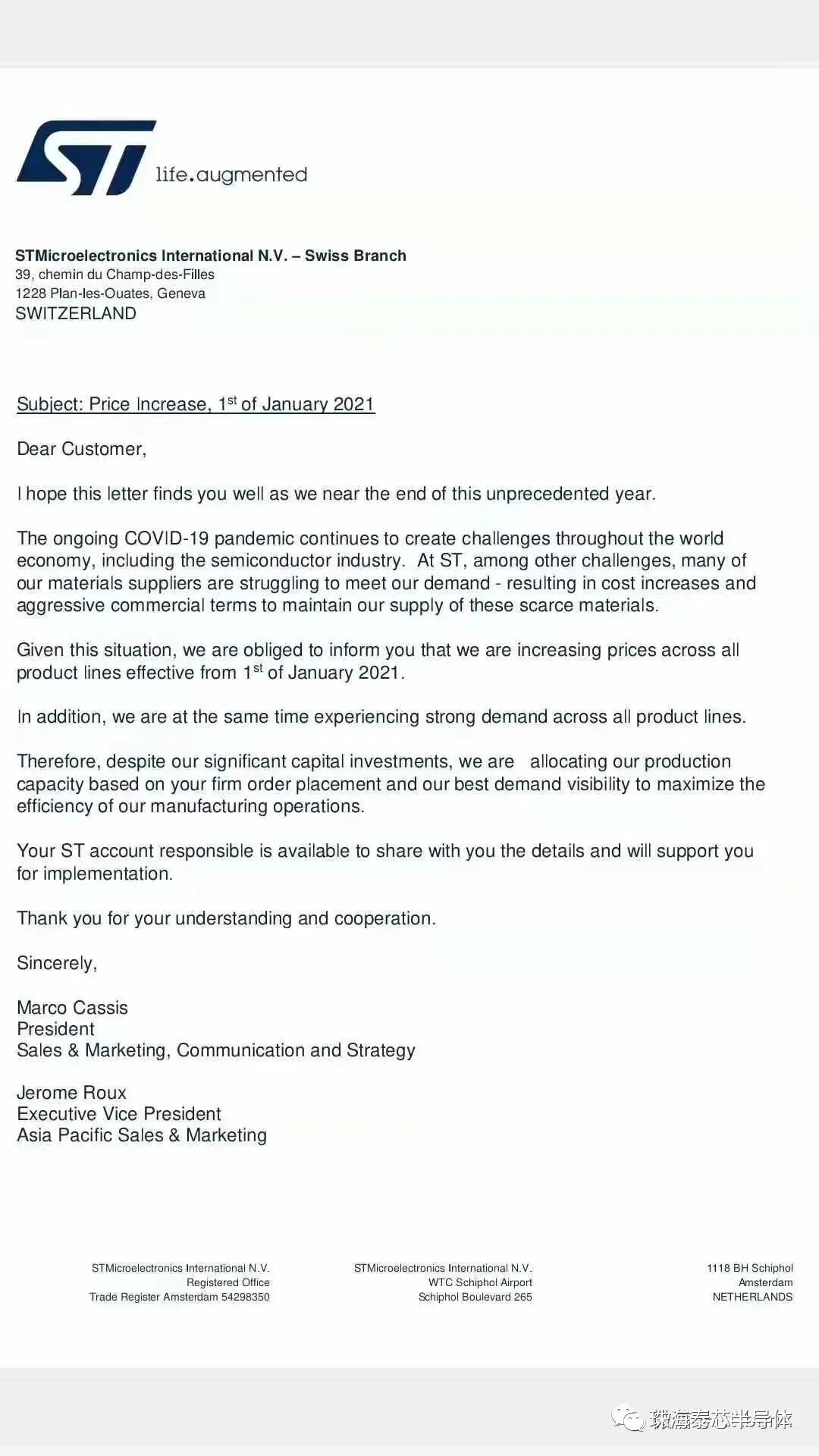
Reuters also reported that Dutch automotive chip supplier NXP Semiconductors has told customers that, due to“sharp increases”in material costs and“severe shortages”of chips, it must raise prices for all products.
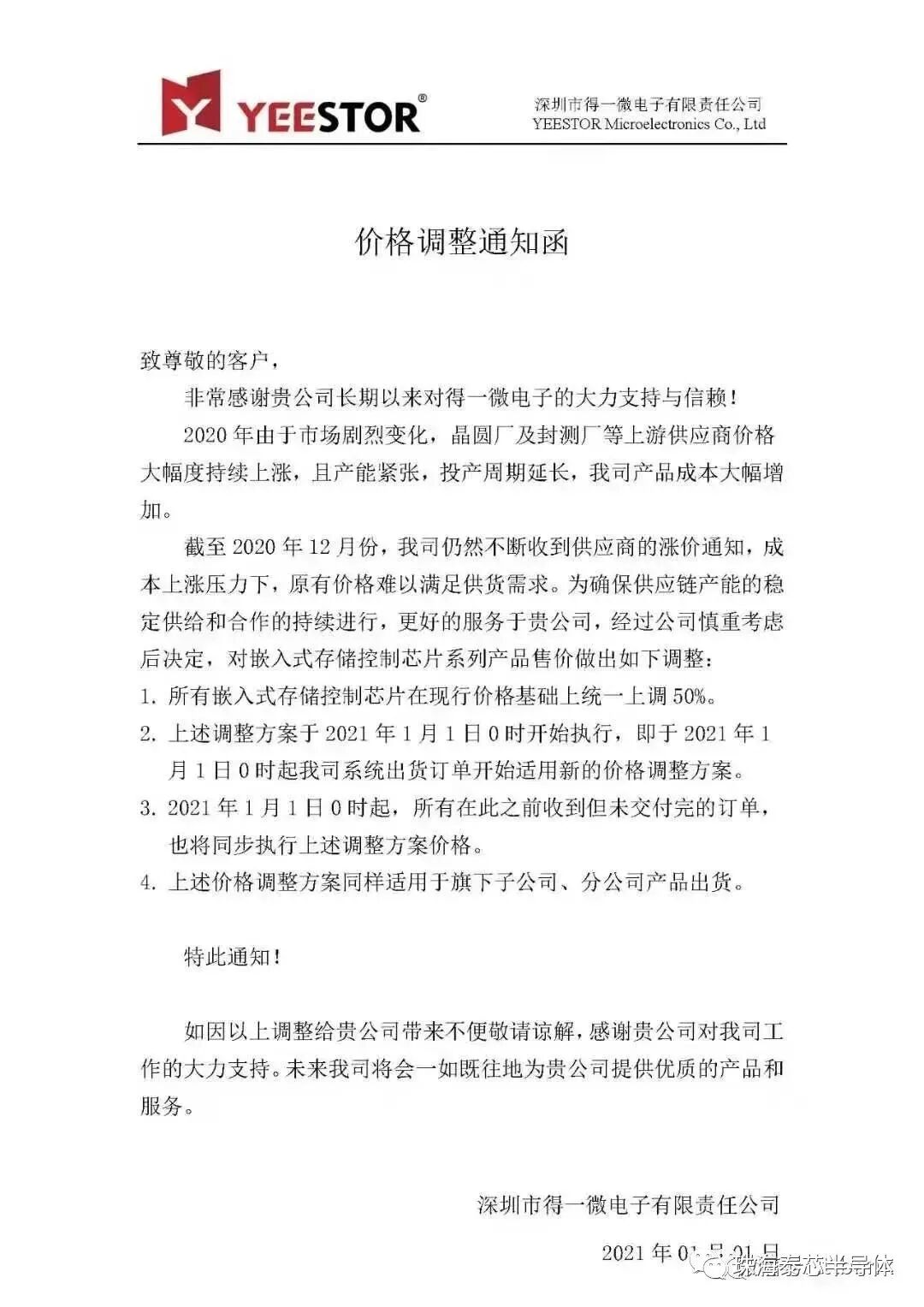
According to incomplete statistics from Jiwei.com, as of now, more than21chip companies have issued price-increase notices. According to disclosures, the average price increase is10%–20%range. Some companies, such as Yeestor Microelectronics, raised prices for their embedded storage controller chips by50%, making this one of the products with a relatively large price increase.
Soochow Securities found in a chip market survey that shortages and price increases in the semiconductor supply chain are gradually spreading to8-inch wafer manufacturing, packaging and testing, and MCU, power semiconductors, and other segments of the industry chain.
As for how long this chip shortage will last, industry insiders say that the pandemic is not over yet, so it will certainly not ease in the short term. Once the pandemic ends in the future,8-inch wafer production lines increase, the chip capacity problem will only gradually ease.