
News detail
[Industry News] “Industry Deep Dive”: In-Depth Report on the Semiconductor Industry (Chips, Equipment, and Materials in Segmented Fields)
I. Overview of the Semiconductor Industry: China's semiconductor market is growing rapidly, but supply and demand are severely imbalanced; the industry is highly dependent on impo…
I. Overview of the Semiconductor Industry
China's semiconductor market is growing rapidly, but supply and demand are severely imbalanced. The industry is highly dependent on imports, and the self-sufficiency rate of domestic core chips is less than 10%.
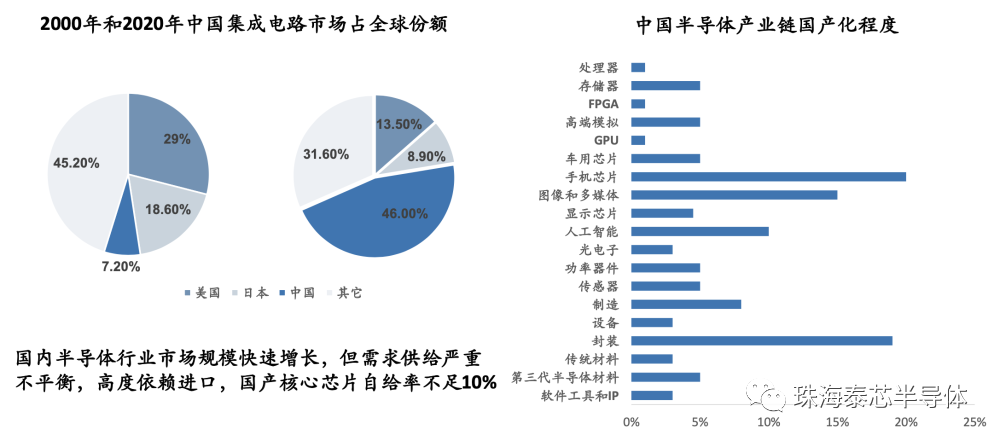
China's share of the global integrated circuit market in 2000 and 2020
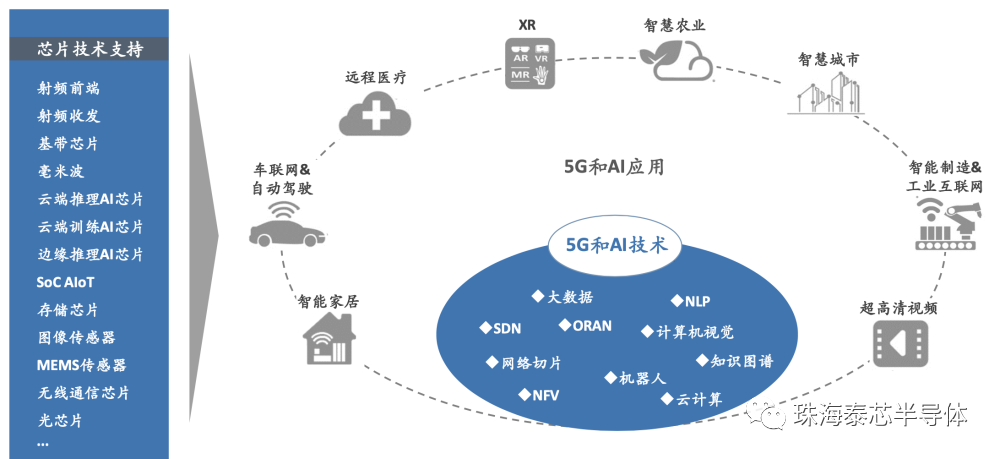
5G and AI technologies
The STAR Market provides exit channels for investments in hard-tech companies, and the capital market is actively positioning itself in hot STAR Market sectors, including semiconductors
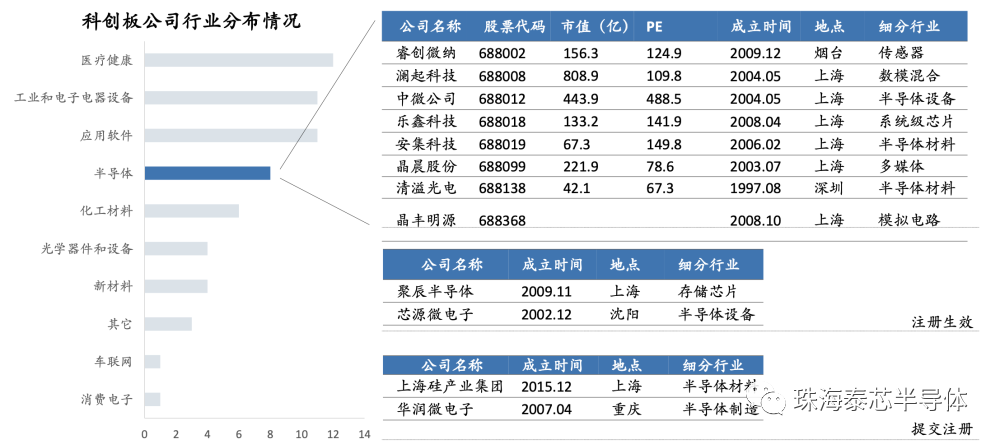
STAR Market industry distribution
II. Semiconductor Industry Value Chain Structure
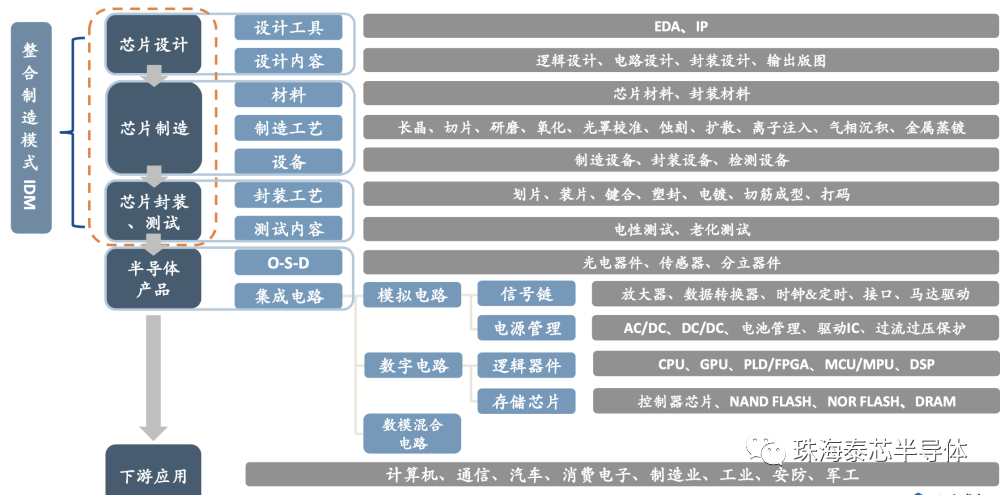
Semiconductor industry value chain
III. AI Chip Industry
AI chips mainly include three technology routes: GPU, FPGA, and ASIC, and are divided into cloud training chips, cloud inference chips, and edge inference chips
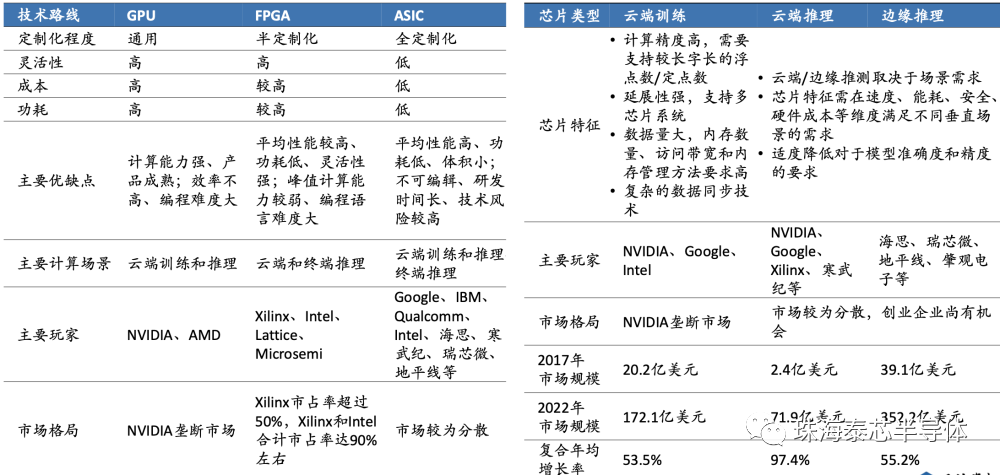
Downstream applications of AI chips
On the edge side, AI chips mainly cover four application scenarios: IoT, mobile Internet, intelligent security, and autonomous driving
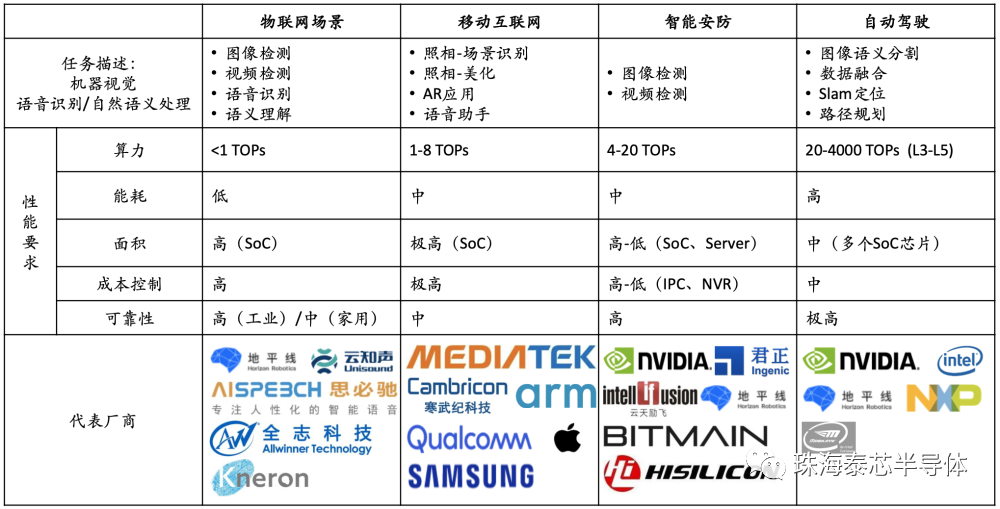
Downstream applications of AI chips
IV. 5G Chips
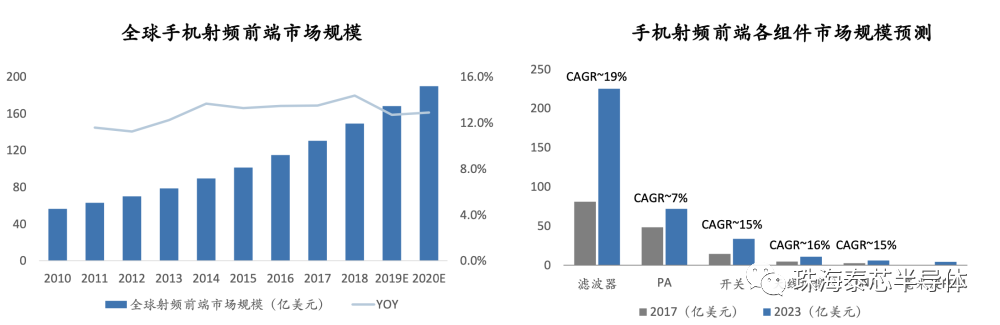
The market size of mobile phone RF front-end chips is driven by the increase in RF chip value per handset
Against the backdrop of stable shipments of mobile terminal devices, as communication networks upgrade to 5G, both the quantity and value of RF components are increasing. The market size of the RF front-end chip industry will continue to grow rapidly. From 2010 to 2018, the global RF front-end market grew at an annual rate of approximately 13.10%, and by 2020 it will approach USD 19 billion
The growth rates of RF front-end components vary. As the largest segment of the RF front-end market, filters will expand from USD 8 billion in 2018 to USD 22.5 billion in 2023, an annual growth rate of 19%; this growth mainly comes from the penetration of high-quality BAW filters. The PA market will grow from USD 5 billion to USD 7 billion, an annual growth rate of 7%, mainly driven by growth in the high-end and ultra-high-frequency PA markets, which will offset the contraction of the 2G/3G market
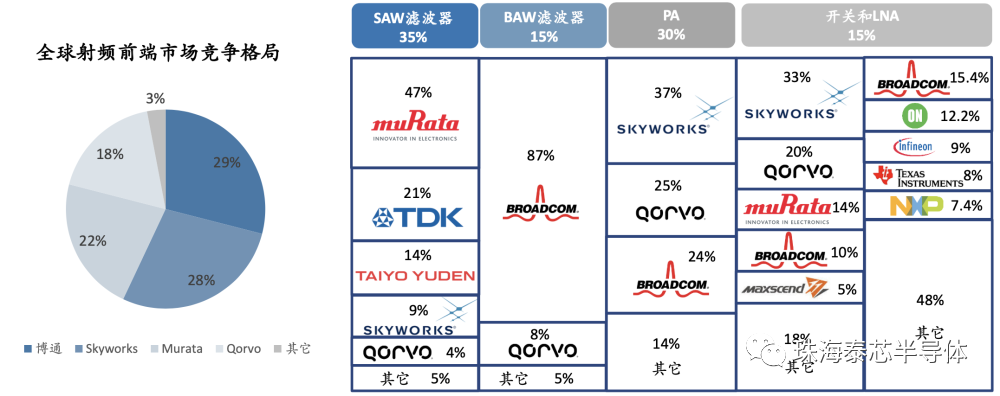
Global RF front-end chip market competitive landscape
Currently, the RF front-end market is highly concentrated, with foreign vendors accounting for the vast majority of market share. The demand for domestic substitution brought about by the trade war is the biggest opportunity for domestic RF vendors
The integration of RF front ends makes future acquisitions and mergers an important exit route for capital; acquisitions and mergers are also one of the paths for chip companies to grow larger and stronger
V. IoT Chips
With the rapid development of IoT, upstream industries that are general-purpose and related to IoT connectivity will benefit first
With the implementation of relevant communication standards and the development of communication and cloud computing technologies, the IoT has moved from its initial introduction stage to its current growth stage
From the perspective of value chain transmission, the IoT will evolve from 'rapid connectivity' to 'large-scale connectivity + application services'; upstream value chain links that are general-purpose and related to IoT connectivity will benefit first, including communication chips, sensors, and wireless modules
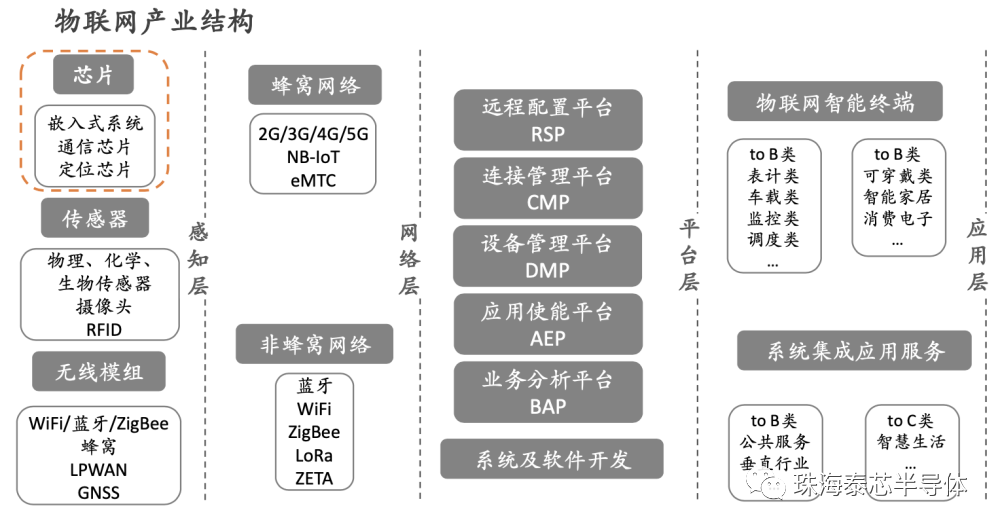
IoT industry structure
VI. Memory Chips
In 2018, the memory market exceeded USD 160 billion, making it the largest segment of the semiconductor industry with a 30% share; international giants dominate the market
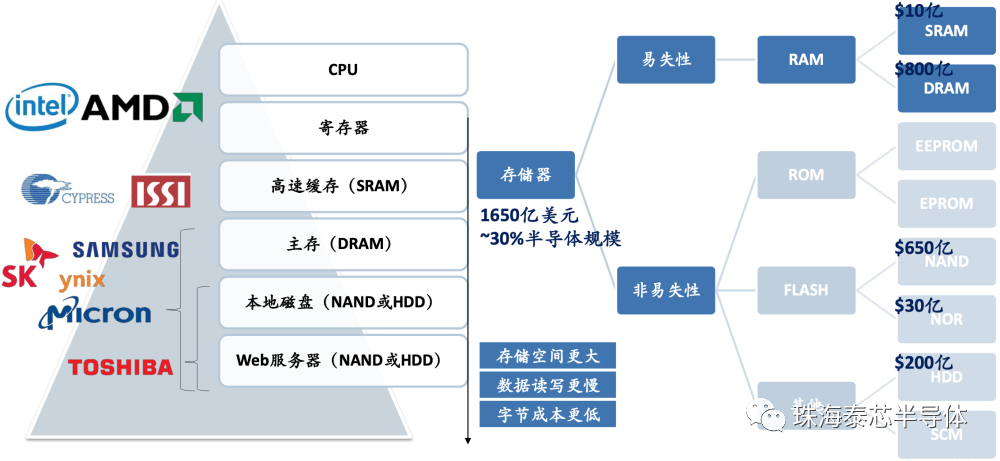
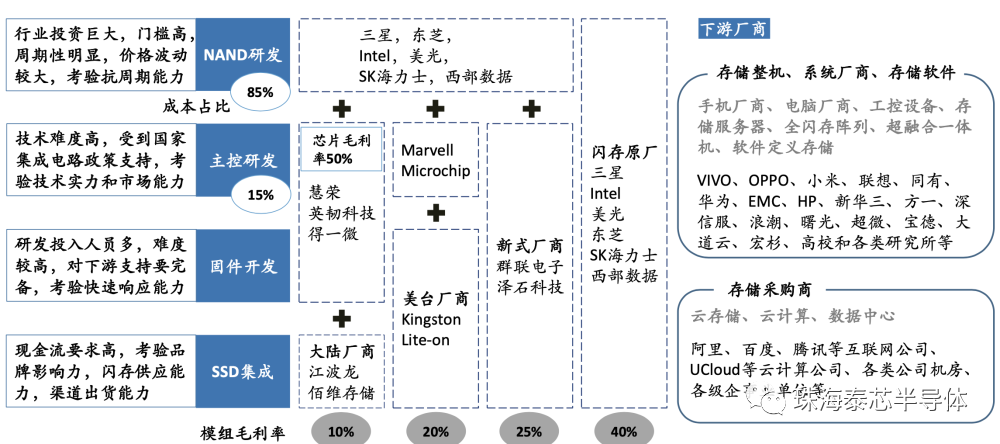
Memory chip industry landscape
VII. Optical Chips
The domestic localization rate of high-speed optical chips is low, and high-power laser chips are almost entirely dependent on imports
The high-end (high-speed, high-power) optical chip industry has high entry barriers, large investment requirements, long cycles, and significant difficulty. In particular, chip material growth, chip design, chip process manufacturing, and chip packaging are the core of optical chip R&D and manufacturing.
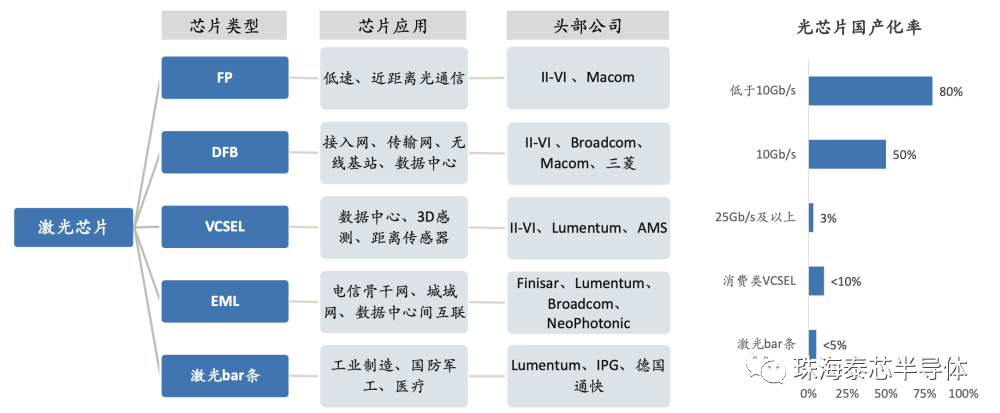
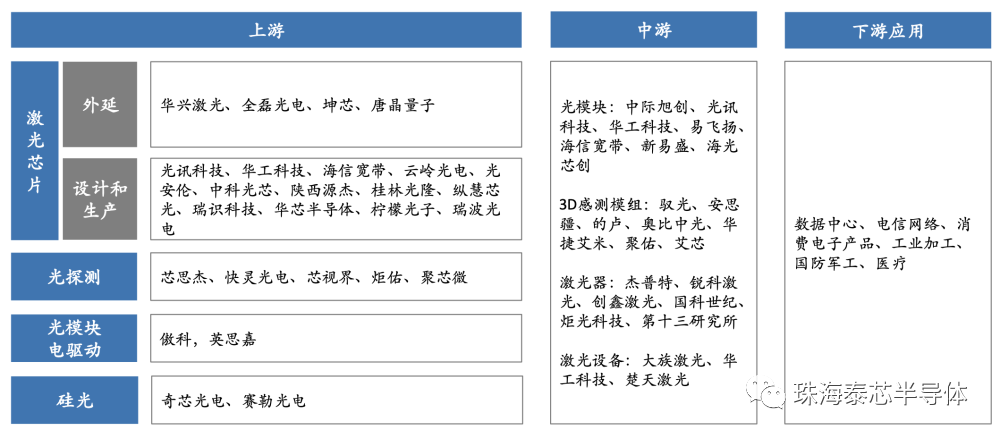
Optical Chip Industry Landscape
VIII. Automotive Chips
The trends toward connected, intelligent, and electrified vehicles are driving automotive chips toward high frequency, monolithic integration, and low power consumption.
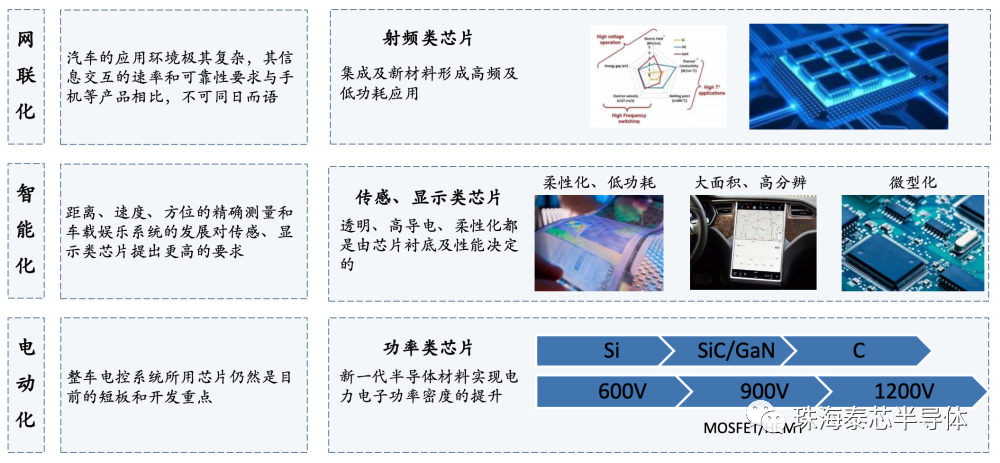
IX. Third-Generation Semiconductors
Third-generation semiconductor materials feature high-voltage, high-frequency, and high-temperature performance, and are widely used in optoelectronics, RF, and power fields.
Third-generation semiconductor materials mainly include SiC, GaN, diamond, etc. Because their bandgap is ≥2.3 electron volts (eV), they are also called wide-bandgap semiconductor materials. Third-generation semiconductor materials offer advantages such as high thermal conductivity, high breakdown field strength, high saturated electron drift velocity, and high bonding energy, meeting the new requirements of modern electronic technologies for harsh conditions such as high temperature, high power, high voltage, high frequency, and radiation resistance.
5G base station construction drives rapid growth in the GaN RF market
RF devices are fundamental components of wireless communication equipment. In wireless communications, they are responsible for converting between electromagnetic and digital signals as well as receiving and transmitting, making them the core of wireless connectivity.
Over the past decade, defense applications have been the main driver of GaN technology development, and these technologies are now shifting from military to commercial use. Due to excellent high-frequency performance, most future sub-6 GHz macro base stations will adopt GaN devices. 2019 to 2021 is a critical period for 5G infrastructure construction and will also be a critical period for GaN devices to replace LDMOS.
X. MEMS Chips
MEMS chips are the perception element of the new generation of information technology.
MEMS (Micro Electromechanical System) refers to micro-electromechanical systems. It is an engineering technology developed by combining microelectronics and precision machinery, with dimensions ranging from 1 micrometer to 100 micrometers. It adopts advanced integrated circuit manufacturing processes. Compared with traditional products, MEMS offers advantages such as miniaturization, high production capacity, mass producibility, and low cost.
MEMS technology is widely used in various sensor chips. Its core function is to convert physical signals into electrical signals that electronic devices can recognize. It is the perception foundation and data source for new-generation information technologies such as artificial intelligence, the Internet of Things, and big data. MEMS also has important applications in fields such as biology, optics, RF, and mechanics.
The United States, Europe, and Japan divide the global MEMS landscape, while China's domestic MEMS industry is still in its infancy.
China's domestic MEMS industry chain layout is complete, but overall the industry is still in the initial stage of development.
The design and foundry segments need strengthening. Foundry manufacturing is mainly based on 6-inch and 8-inch production lines, while the packaging and testing segment has certain competitiveness.
Products still lag far behind foreign products in performance indicators such as accuracy and sensitivity. Application areas are shifting from mobile phones and automobiles to VR/AR and the Internet of Things.
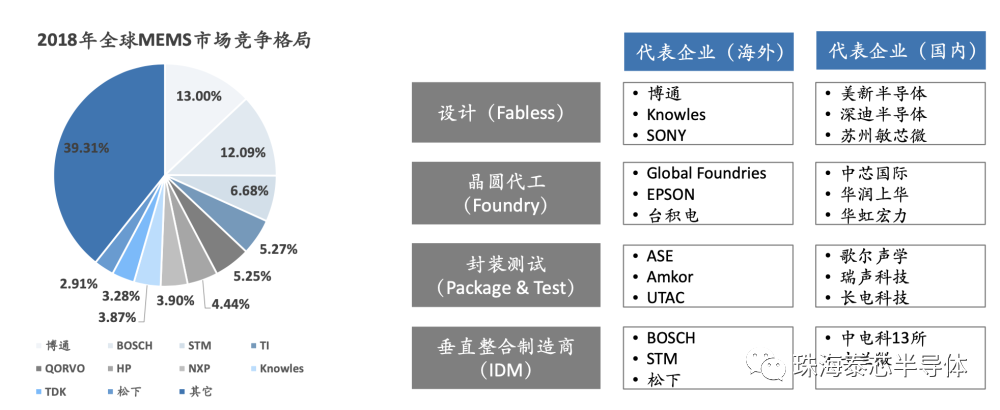
Global MEMS Market Competitive Landscape in 2018
XI. Semiconductor Equipment
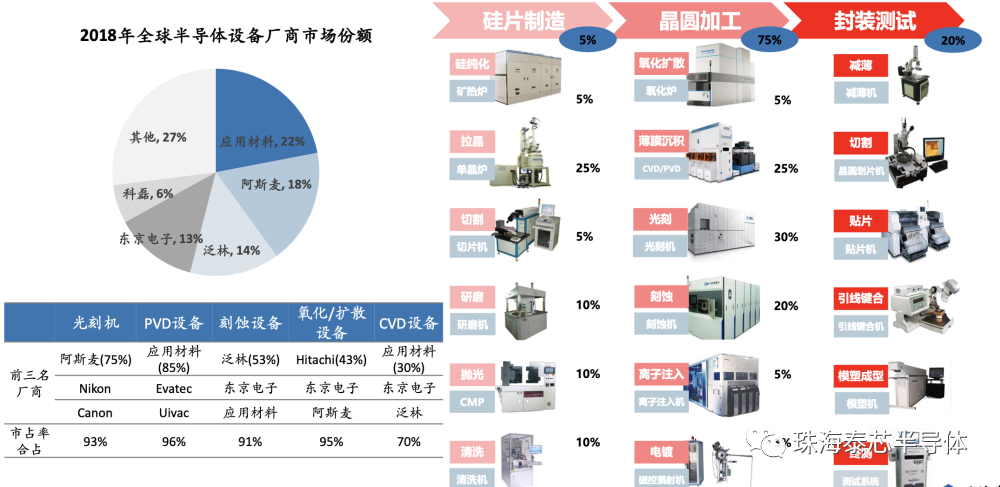
Wafer manufacturing is the segment with the largest share of equipment, with lithography, etching, and thin-film deposition accounting for the largest proportions, and the industry is dominated by giants.
XII. Semiconductor Materials
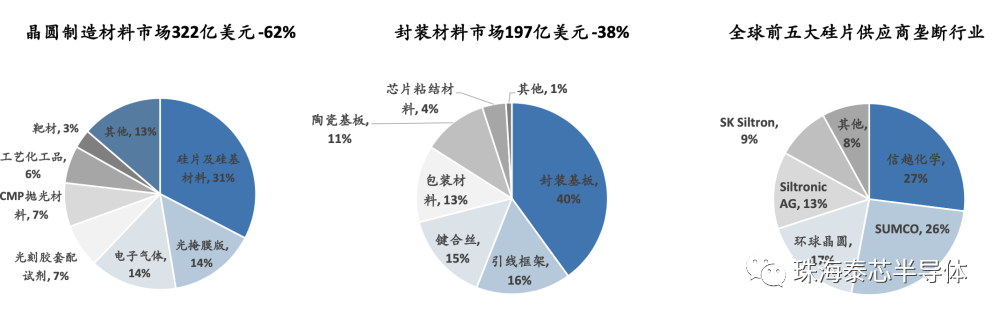
The wafer manufacturing and packaging materials markets are highly segmented, with small scale for individual segments and concentration among industry giants.
The semiconductor materials market is more segmented, and the market space for a single product is very small; there are few pure-play semiconductor materials companies. Semiconductor materials are often only a small part of the business of certain large materials manufacturers, such as Dow Chemical, DuPont, Mitsubishi Chemical, and Sumitomo Chemical. Their semiconductor materials business is merely a branch under their electronic materials division. Nevertheless, due to the stringent material requirements of semiconductor processes, only a few suppliers can provide products for a single semiconductor chemical.
Silicon wafer giants are concentrated in Japan, South Korea, Germany, and Taiwan, China; mainland China has only a few companies with 8-inch semiconductor silicon wafer production capacity, while 12-inch semiconductor silicon wafers mainly rely on imports.
This article is reproduced from the Internet.