News detail
Industry News | China General-Purpose Microcontroller (MCU) Market Brief (2020)
Since microcontrollers emerged in the 1970s, more than four decades of development have brought them into products across all industries, and a wide variety of intelligent products
Since microcontrollers emerged in the 1970s, more than four decades of development have seen them widely applied in products across industries, and various intelligent products have greatly facilitated people's production and daily life.With the popularization and development of microcontrollers, as well as the ubiquity of computing and networking, the application fields of microcontrollers will become increasingly broad.
Microcontroller Overview
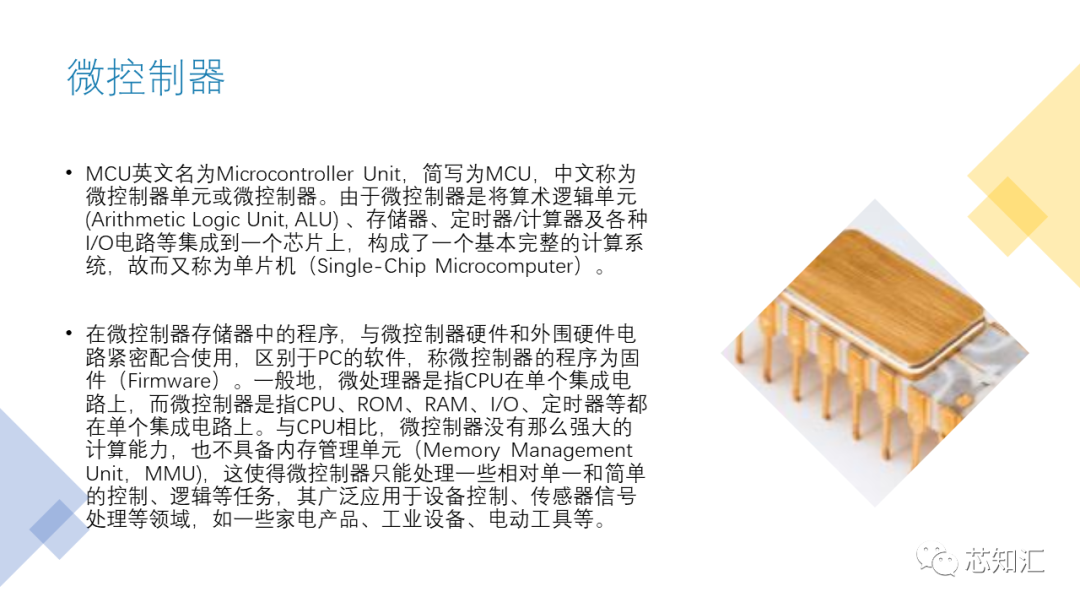
MCU stands for Microcontroller Unit, abbreviated as MCU, and is called a microcontroller unit or microcontroller in Chinese. Because a microcontroller integrates an arithmetic logic unit (ALU), memory, timer/counter, and various I/O circuits onto a single chip to form a basically complete computing system, it is also called a single-chip microcomputer (Single-Chip Microcomputer).
The programs stored in microcontroller memory work closely with the microcontroller hardware and peripheral hardware circuits. Unlike PC software, microcontroller programs are called firmware. Generally, a microprocessor refers to a CPU on a single integrated circuit, while a microcontroller refers to a CPU, ROM, RAM, I/O, timer, etc., all on a single integrated circuit. Compared with a CPU, a microcontroller does not have such strong computing power and does not have a memory management unit (MMU), which means a microcontroller can only handle relatively simple and limited control, logic, and other tasks. It is widely used in device control, sensor signal processing, and other fields, such as some home appliances, industrial equipment, and power tools.
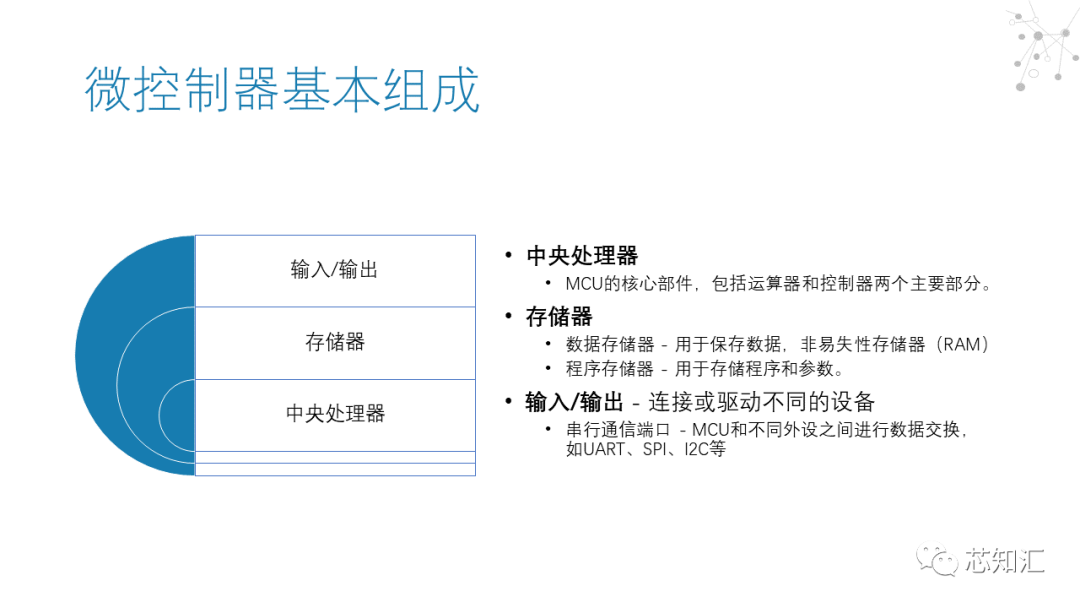
Generally, a microcontroller consists of a CPU, memory (Memory), input/output (I/O), and other parts. Advances in integrated circuit technology have enabled current microcontrollers to integrate more functions than early products.
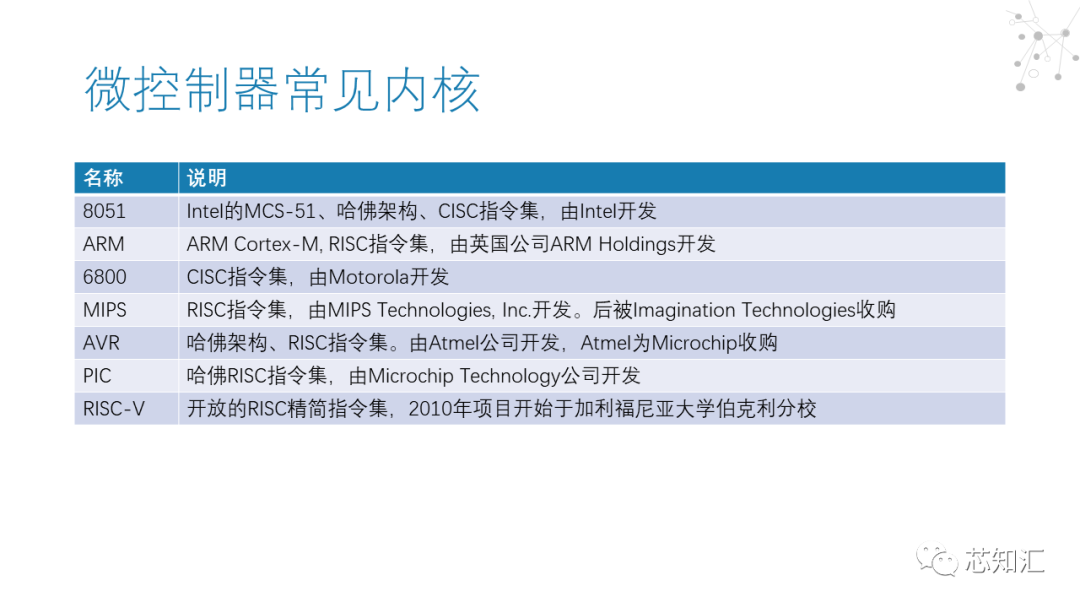
Common microcontroller cores include: 8051, Arm Cortex-M series, MIPS, AVR, PIC, RISC-V, etc.
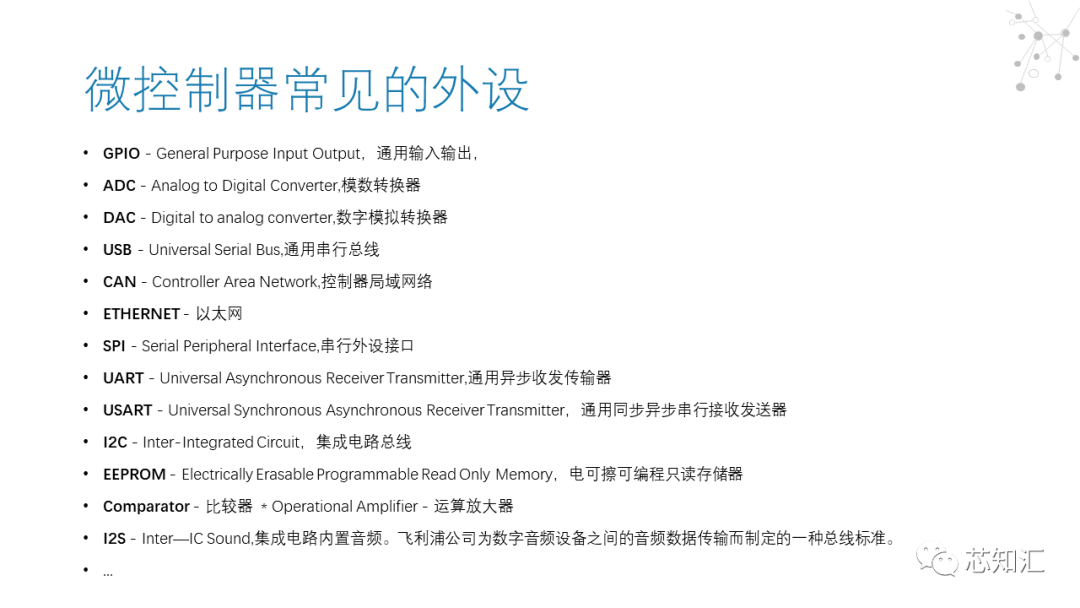
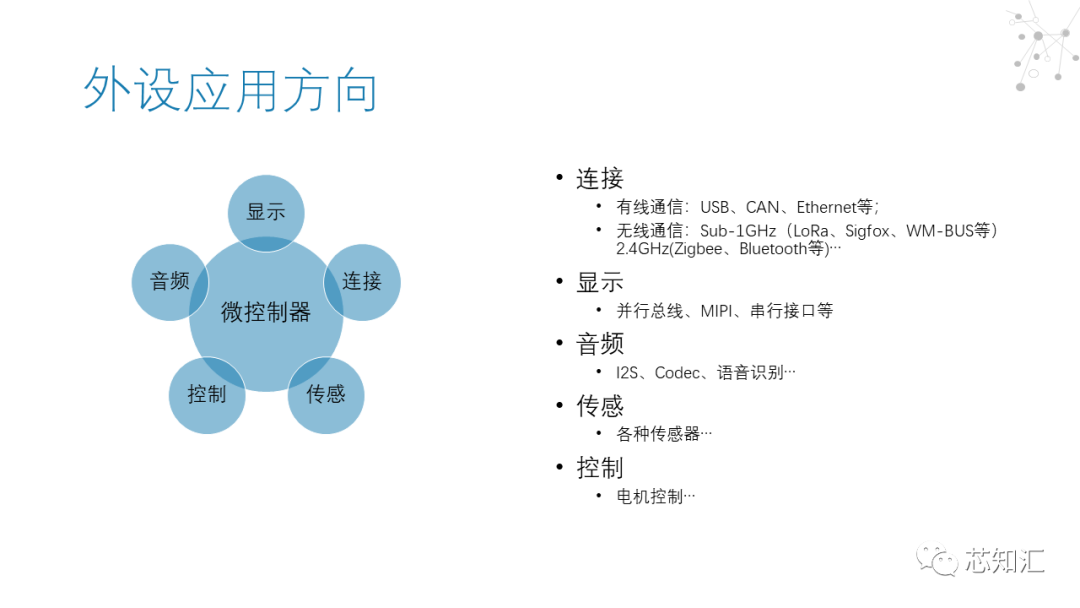
The main peripherals of microcontrollers include: ADC, DAC, USB, CAN, Ethernet, SPI, USART, I2C, EEPROM, comparators, I2S, etc. In the future, microcontroller peripherals will continue to integrate and develop in application directions such as display, audio, connectivity, sensing, and control, enriching the functionality of microcontroller products and broadening their applications.
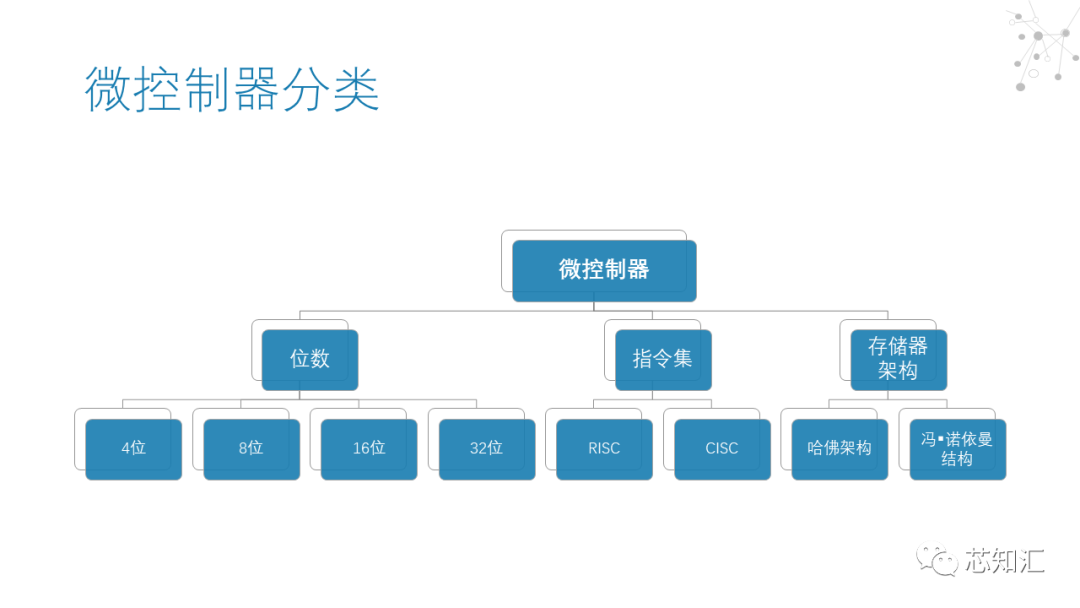
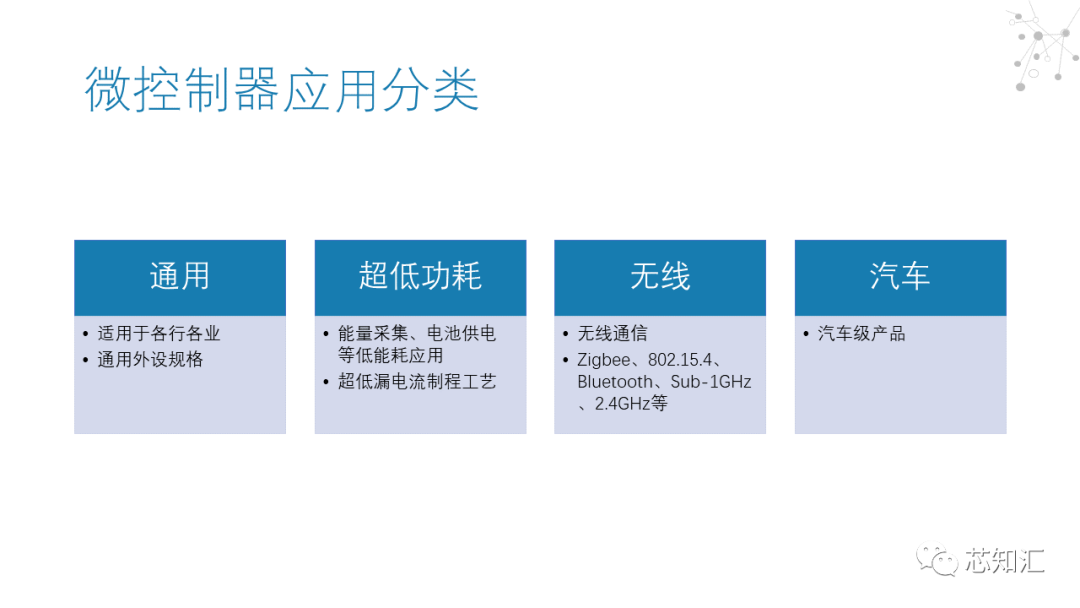
Microcontrollers can generally be classified by their structural characteristics. According to the bit width of the bus or data registers, they can be divided into 4-bit, 8-bit, 16-bit, and 32-bit microcontrollers. According to their instruction sets, they can also be divided into RISC and CISC microcontrollers. According to their memory architecture, they can be divided into Harvard architecture and von Neumann architecture. If classified by application, they can be divided into general-purpose microcontrollers, ultra-low-power microcontrollers, wireless microcontrollers, and automotive microcontrollers, etc.
Microcontroller Applications
Basic Application System
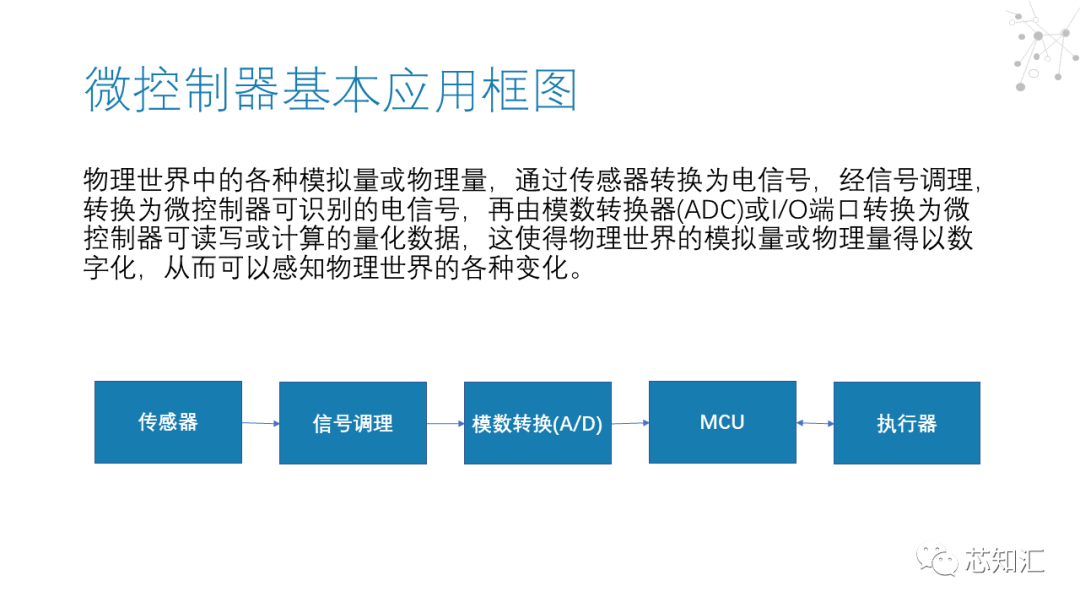
Various analog quantities or physical quantities in the physical world are converted into electrical signals by sensors, conditioned through signal conditioning, and converted into electrical signals recognizable by the microcontroller. They are then converted by analog-to-digital (A/D) conversion or I/O ports into quantified data that the microcontroller can read, write, or compute. This enables analog quantities or physical quantities in the physical world to be digitized, thereby sensing various changes in the physical world.
Development of Microcontroller Product Forms
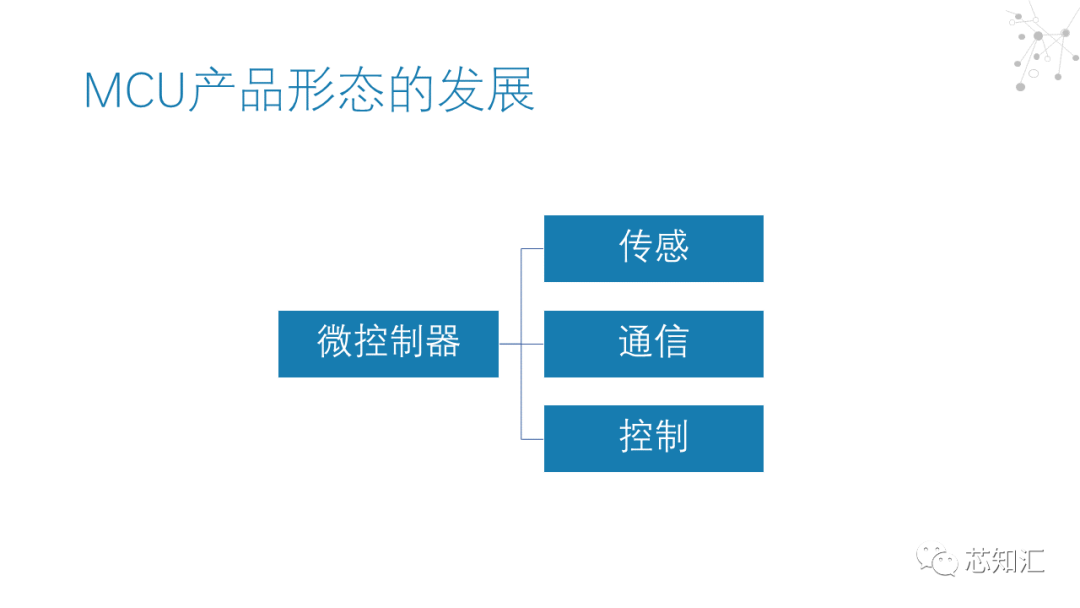
With the development of integrated circuit technology and changes in market demand, microcontroller integration has continued to increase, and product resources and functions have become increasingly rich. In recent years, microcontroller products have achieved certain development in sensor, control, and communication applications.
Products that integrate microcontrollers with sensors are intelligent sensors. According to the definition of intelligent sensors in the national standard "Intelligent Sensors—Part 3: Terminology" (GB/T 33905.3-2017), an intelligent sensor is a sensor that has bidirectional communication with external systems and is used to send measurement and status information and to receive and process external commands.
Products that integrate microcontrollers with certain control functions are products targeted at specific applications, such as remote controls, touch control, and motor control.
Products that integrate microcontrollers with communication functions are microcontrollers for communication applications. Communication includes wired and wireless parts: wired such as Ethernet, and wireless such as LoRa, Bluetooth, and NB-IoT.
The application and development of microcontroller products in various aspects have enabled product intelligence.
Microcontroller Market Overview
Based on the current microcontroller companies and their released products, a brief overview of the microcontroller market is provided below.
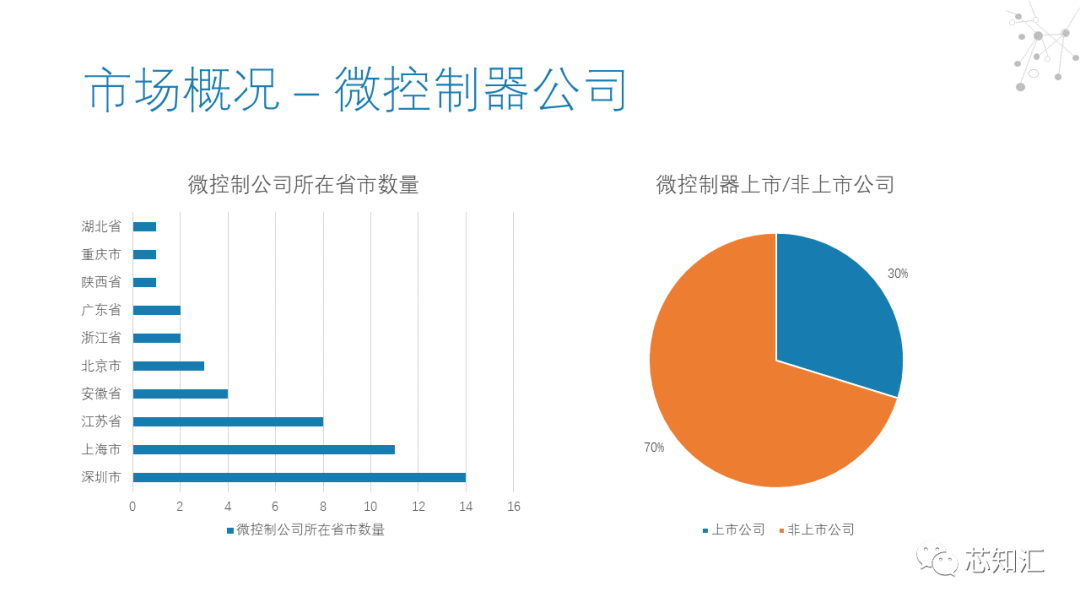
From the perspective of the provinces and cities where microcontroller companies are located, microcontroller companies are mainly concentrated in Shenzhen, Shanghai, and Jiangsu, with the three locations accounting for 70% in total.
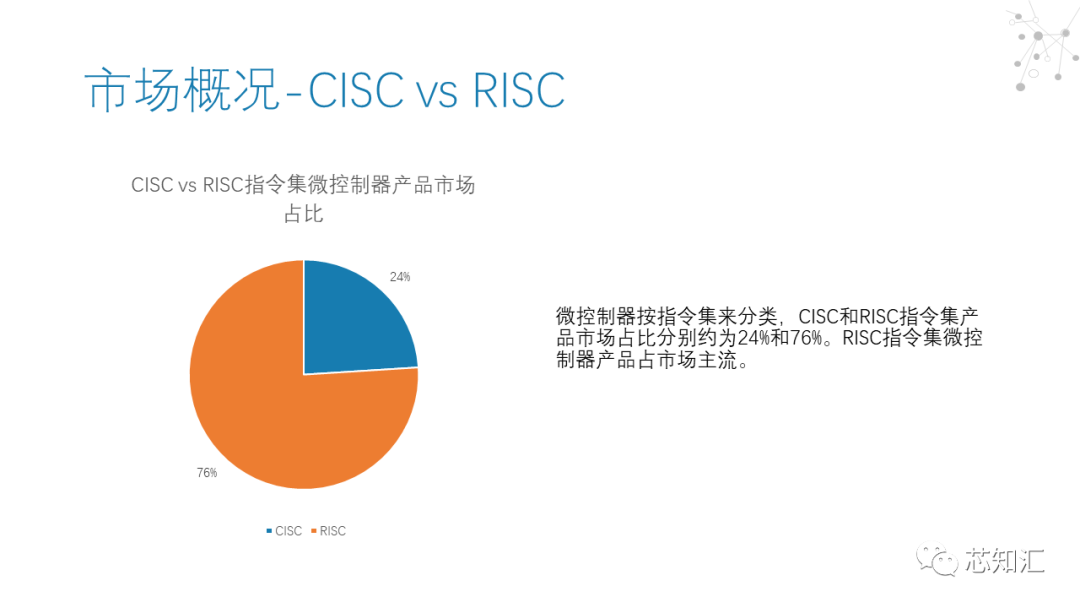
From the perspective of microcontroller instruction sets, CISC and RISC instruction set microcontroller products account for approximately 24% and 76% of the market, respectively. RISC instruction set microcontroller products are the market mainstream.
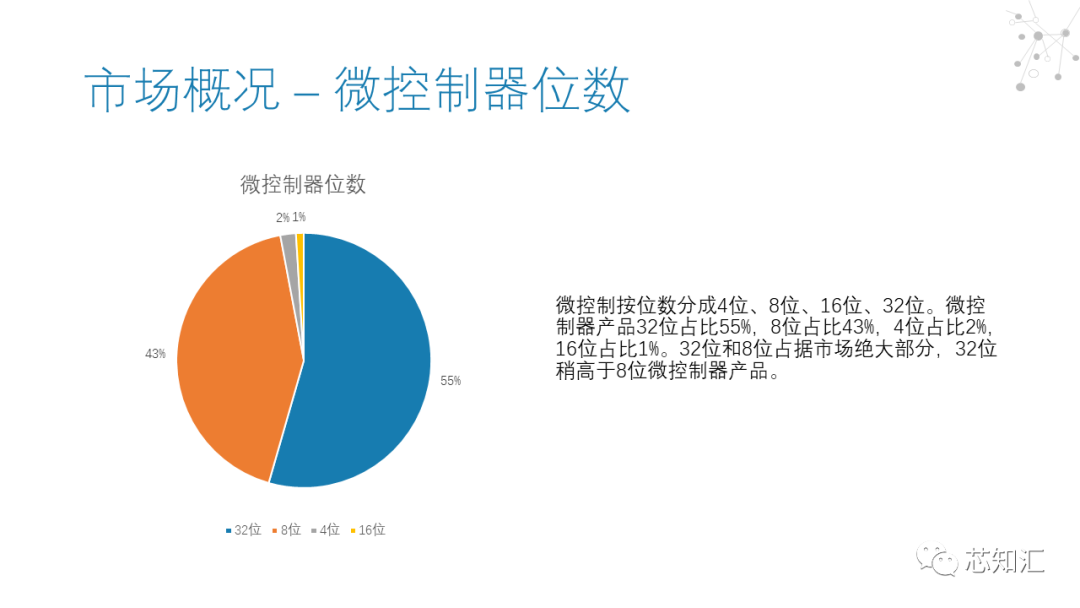
From the perspective of microcontroller bit width, microcontrollers can be divided into 4-bit, 8-bit, 16-bit, and 32-bit. 32-bit microcontroller products account for 55%, 8-bit for 43%, 4-bit for 2%, and 16-bit for 1%. 32-bit and 8-bit products account for the vast majority of the market, with 32-bit slightly higher than 8-bit microcontroller products.
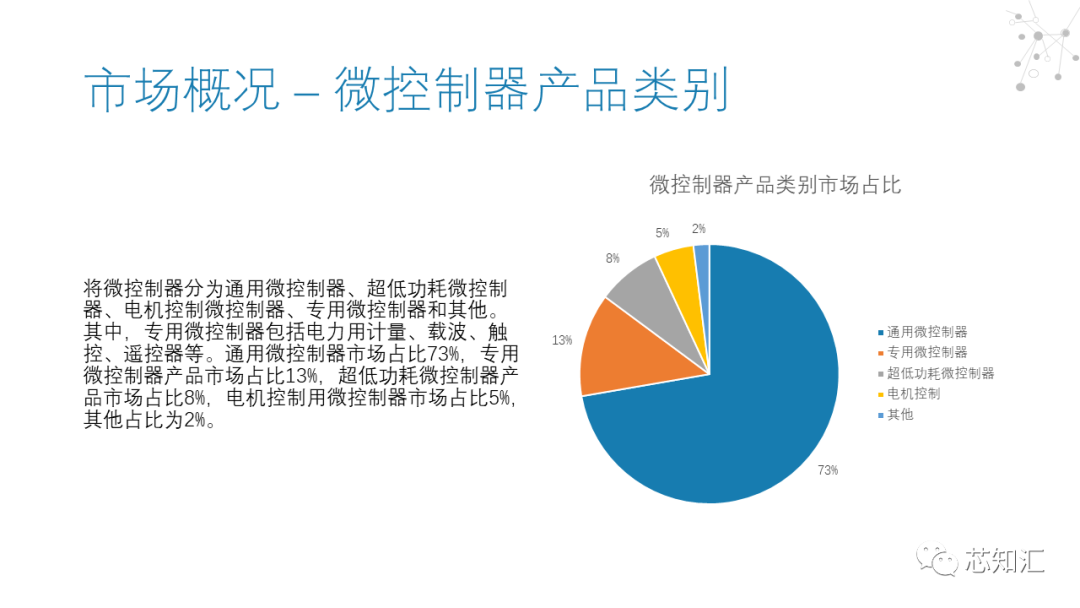
From the perspective of microcontroller categories, microcontrollers are divided into general-purpose microcontrollers, ultra-low-power microcontrollers, motor control microcontrollers, dedicated microcontrollers, and others. Among them, dedicated microcontrollers include those for power metering, power line carrier, touch control, remote controls, etc. General-purpose microcontrollers account for 73% of the market, dedicated microcontroller products for 13%, ultra-low-power microcontroller products for 8%, motor control microcontrollers for 5%, and others for approximately 2%.
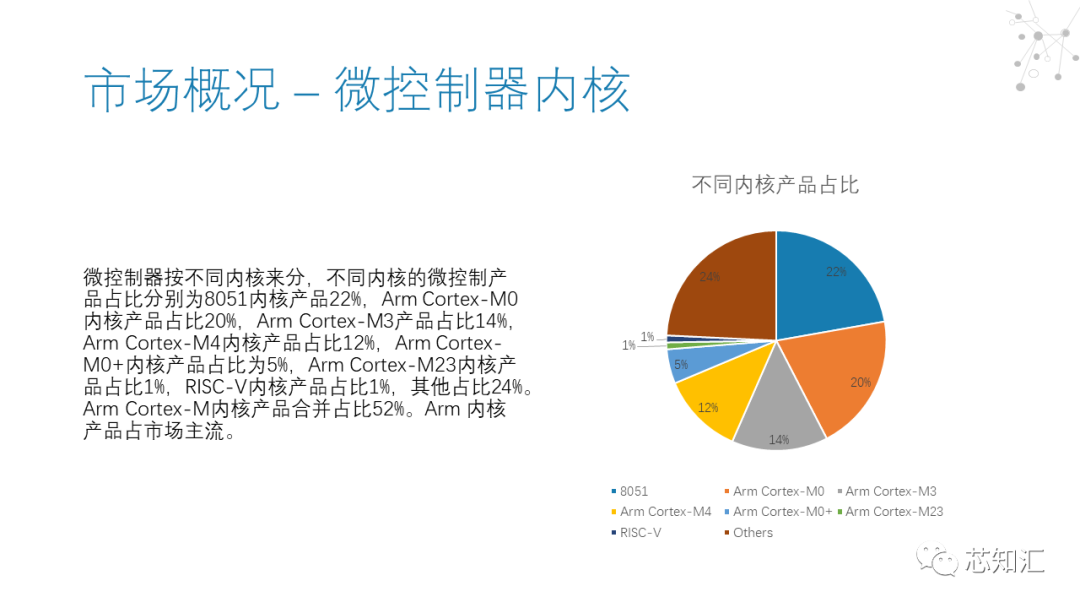
From the perspective of microcontroller cores, the proportions of microcontroller products are: 8051-core products 22%, Arm Cortex-M0-core products 20%, Arm Cortex-M3-core products 14%, Arm Cortex-M4-core products 12%, Arm Cortex-M0+-core products 5%, Arm Cortex-M23-core products 1%, RISC-V-core products 1%, and others 24%. Arm Cortex-M core products together account for 52%. Arm core products are the market mainstream.
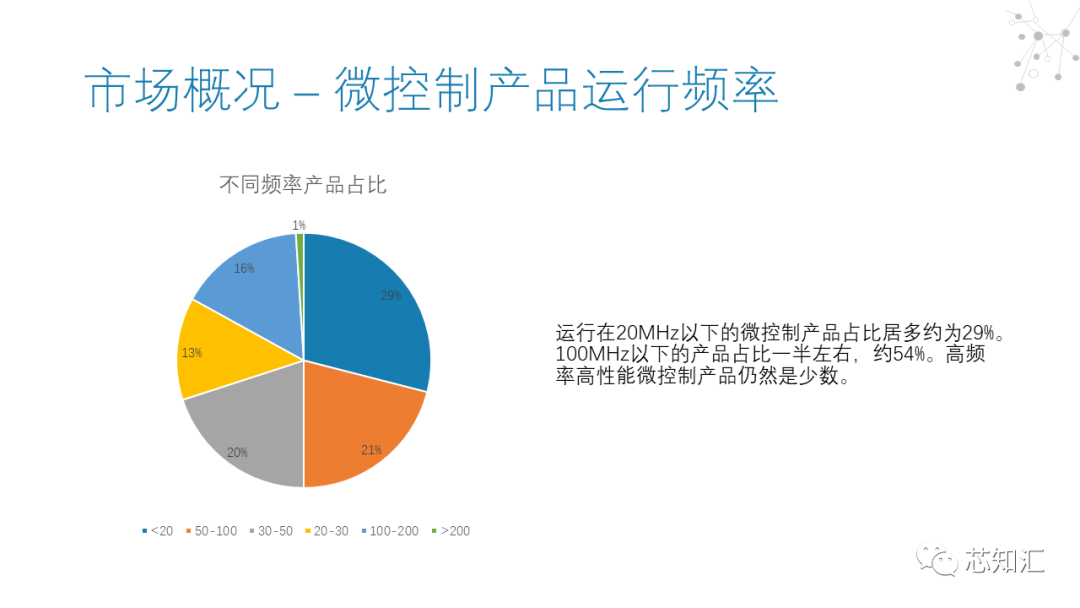
From the perspective of the operating frequency of microcontroller products, microcontroller products operating below 20 MHz account for the largest share, about 29%. Products below 100 MHz account for about half, approximately 54%. High-frequency, high-performance microcontroller products remain a minority.
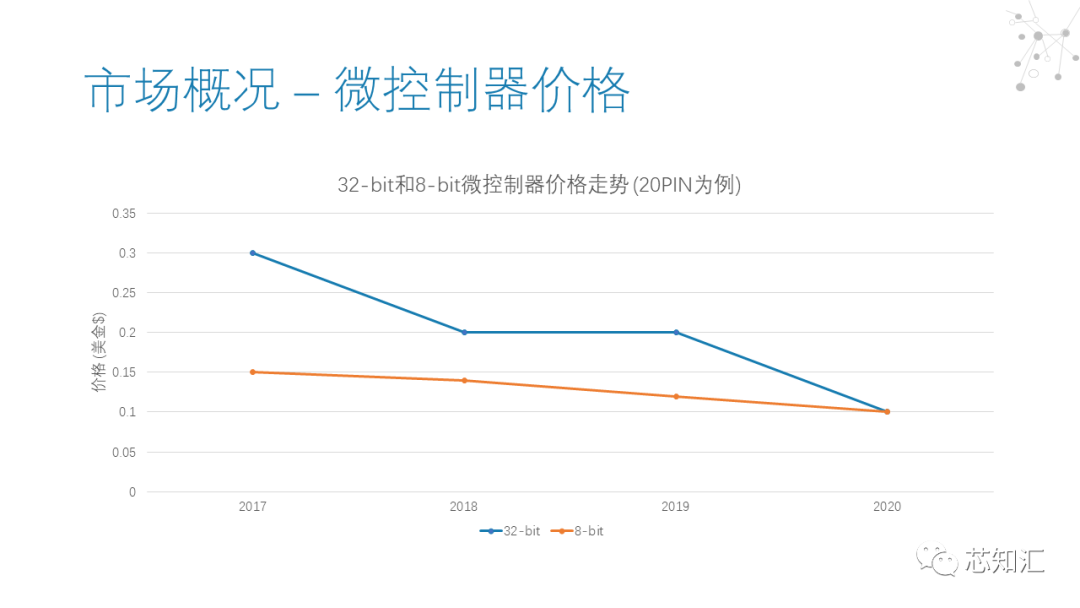
From the perspective of microcontroller product prices, based on product and price information released by some companies as well as information from online media channels, the prices of 8-bit and 32-bit microcontrollers were compiled. The PPT data takes the market-mainstream 20-pin package as an example; in 2020, the prices of both 8-bit and 32-bit microcontrollers were around US$0.1.
Microcontroller Market Size
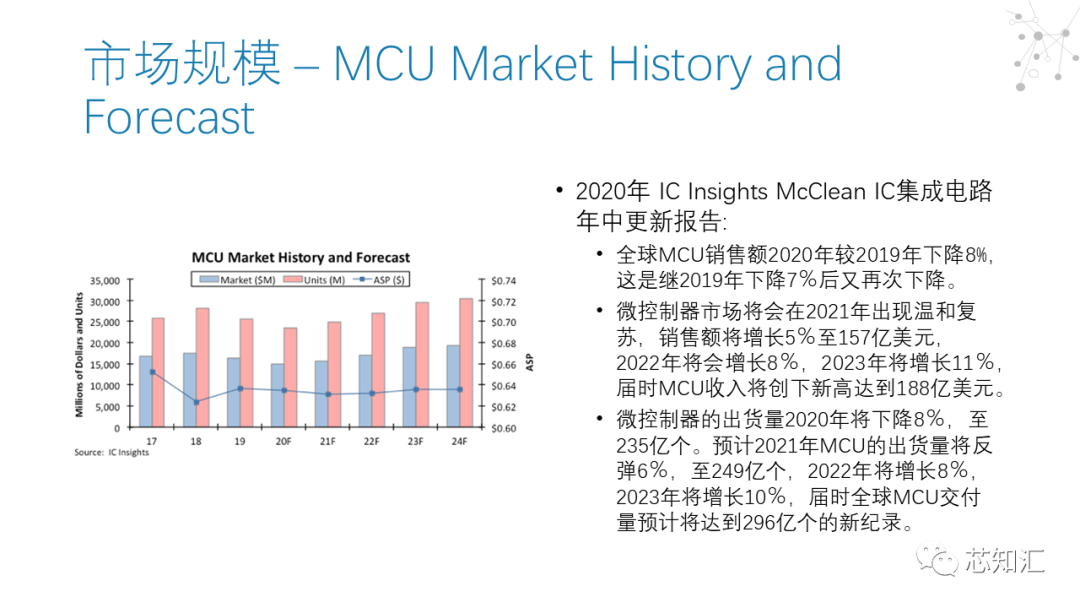
According to the 2020 IC Insights McClean IC Integrated Circuit Mid-Year Update Report:
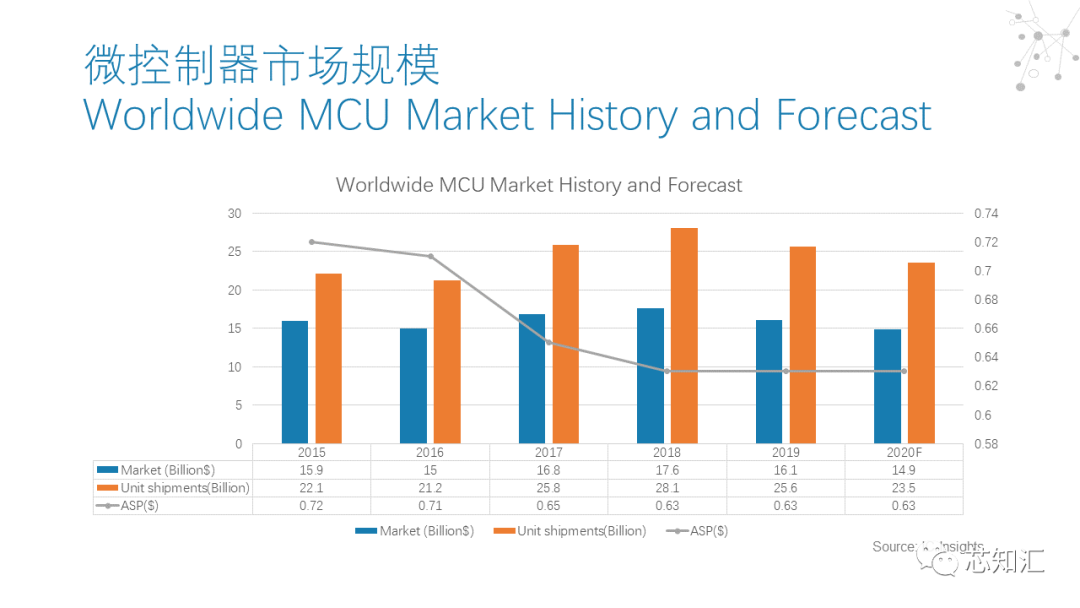
Global MCU sales in 2020 fell 8% compared with 2019, a further decline after a 7% drop in 2019.
The microcontroller market will see a modest recovery in 2021, with sales increasing 5% to US$15.7 billion, growing 8% in 2022 and 11% in 2023, when MCU revenue will reach a new high of US$18.8 billion.
Microcontroller shipments will decline 8% in 2020 to 23.5 billion units.
MCU shipments are expected to rebound 6% in 2021 to 24.9 billion units, grow 8% in 2022 and 10% in 2023, when global MCU deliveries are projected to reach a new record of 29.6 billion units.
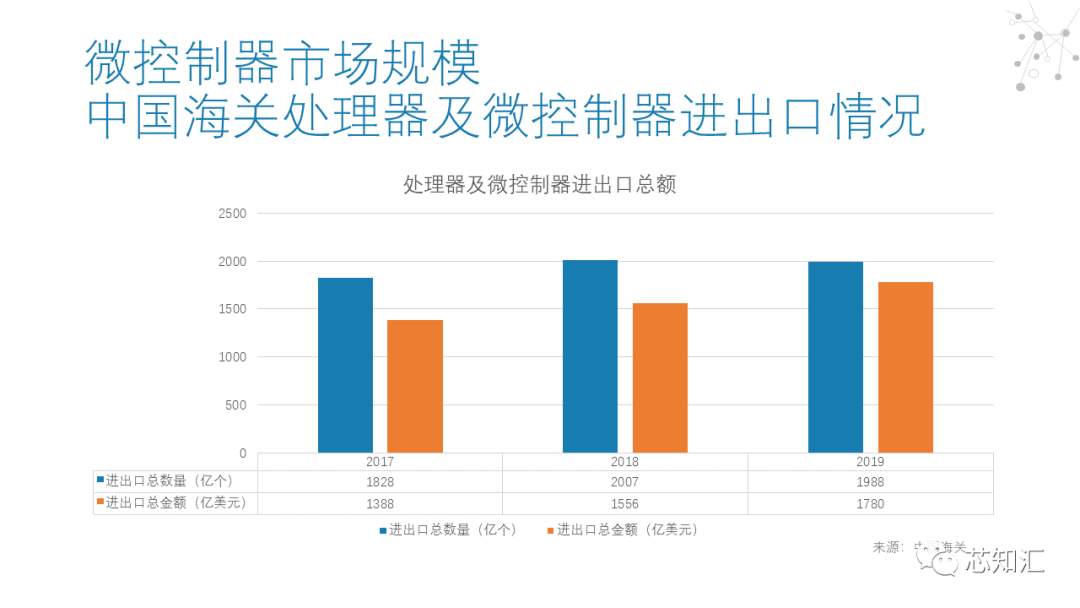
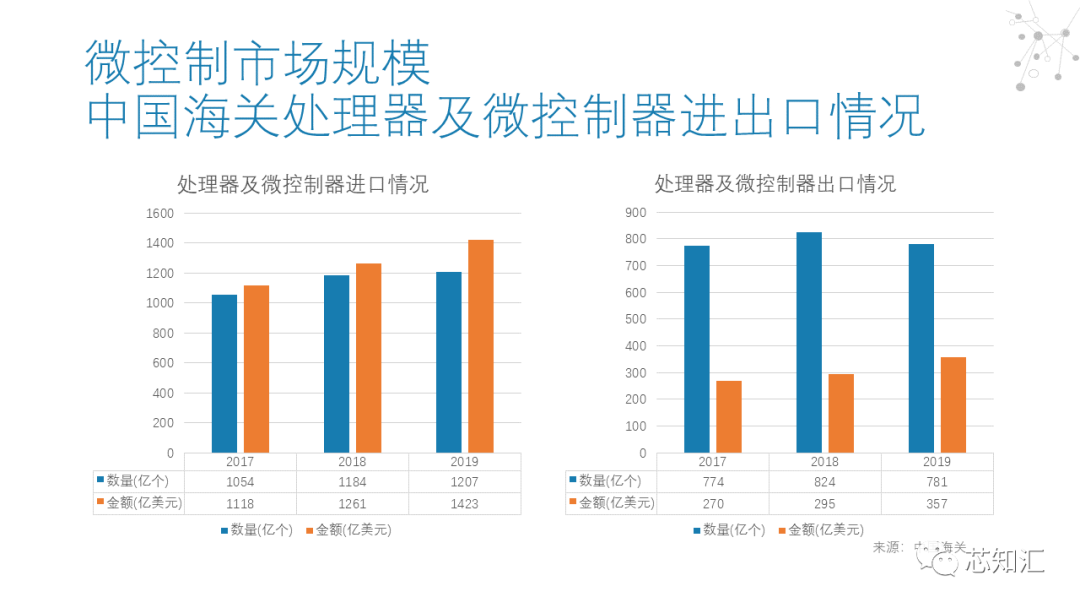
According to China Customs data on imports and exports of processors and microcontrollers, total import and export volume in 2019 was 198.8 billion units, down 0.95% year on year; total import and export value in 2019 was US$178.0 billion, up 14.40% year on year. In 2019, processor and microcontroller imports totaled 120.7 billion units, up 1.94% year on year; import value of processors and microcontrollers in 2019 was US$126.1 billion, up 12.85% year on year. In 2019, processor and microcontroller exports totaled 78.1 billion units, down 5.22% year on year; export value of processors and microcontrollers in 2019 was US$35.7 billion, up 21.02% year on year.
Microcontroller development trends
The development of computing
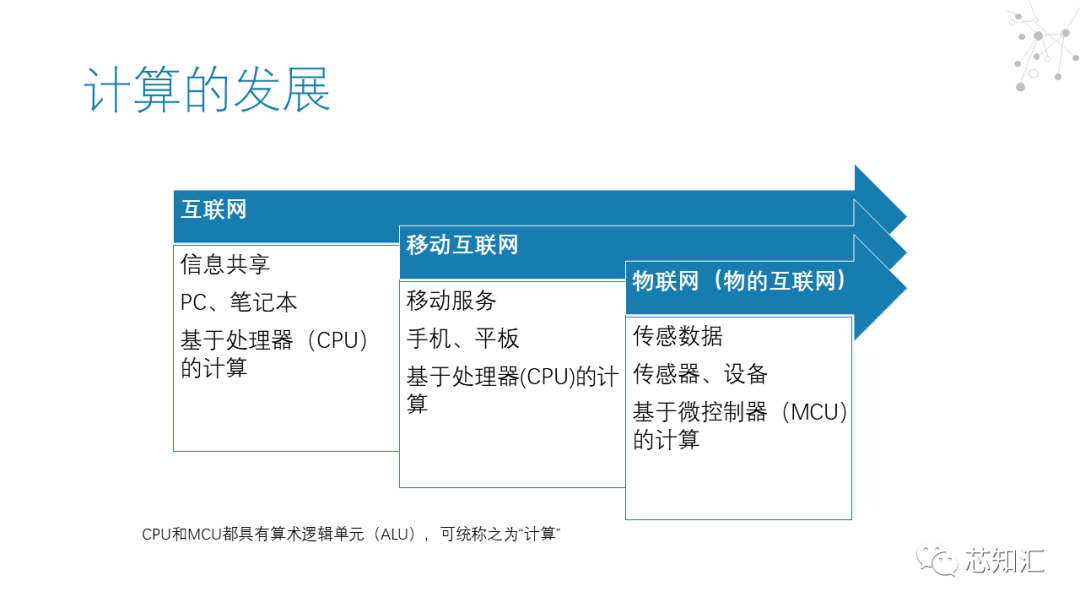
Both processors (CPUs) and microcontrollers (MCUs) have core arithmetic logic units (ALUs), and together they can be collectively referred to as computing.
The development of computing can be broadly divided into the Internet, mobile Internet, and Internet of Things. PCs/laptops are computing based on processors (CPUs), providing information sharing and giving rise to the Internet; mobile devices such as phones/tablets are also CPU-based computing, providing mobile services and enabling the mobile Internet; sensors/devices are MCU-based computing, sensing data and enabling more analog or physical quantities in the physical world to be digitized or quantified, connecting to the Internet via communication technologies and promoting the development of the IoT. In fact, the IoT is the Internet of things. Microcontrollers will provide foundational and widespread computing for the IoT.
Evolution of computing
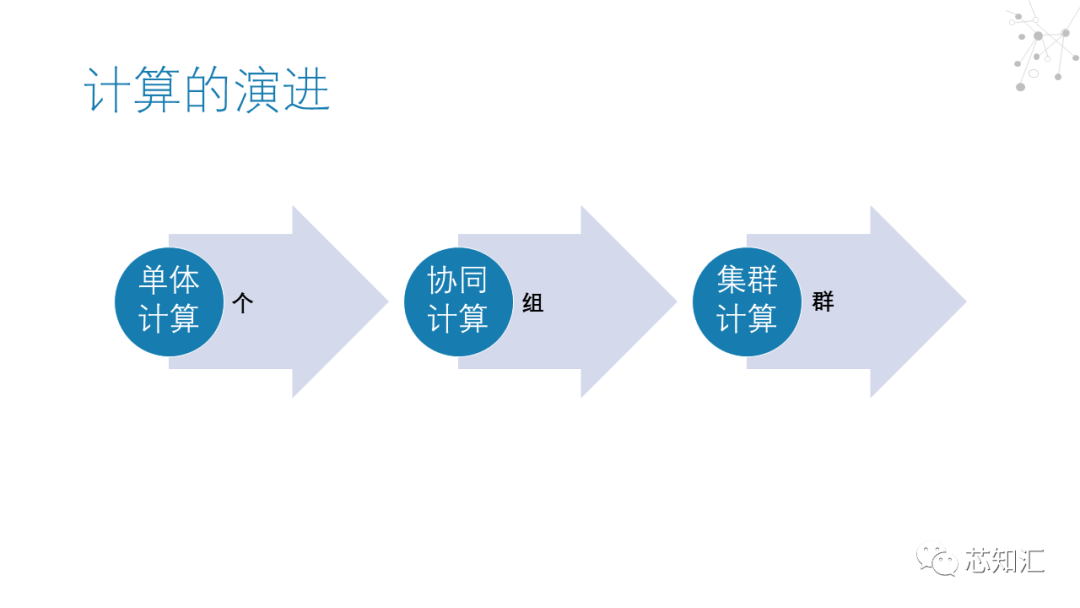
The development of computing is moving from individual computing to group computing and then to cluster computing. Individual computing refers to the intelligentization of traditional products, or smart hardware, which has data collection and processing capabilities and can perform control. Collaborative computing uses communication technology to connect individual devices together, enabling data exchange and collaborative computing processing, or computing combined with cloud computing. Cluster computing connects a group of software or hardware to work closely together to complete computing tasks, providing more computing functions.
Chinese microcontroller manufacturers
For a list of Chinese general-purpose microcontroller companies, please refer to the PPT below.
This article is reposted from Xinzhihui.

Zhuhai Taixin Semiconductor Co., Ltd.
Zhuhai Taixin Semiconductor Co., Ltd. was founded in 2016 and is a high-tech enterprise integrating IC design and wireless intelligent communication solutions. We have successively launched long-range, low-power IoT Wi-Fi chips, low-power motor controller chips, and product solutions. The company adheres to a market-oriented and technology-centered approach, providing customers with high-quality chips and product technical solutions.
The company's core product is a long-range, low-power IoT Wi-Fi communication chip. This chip can be used in product fields such as smart home, security surveillance, UAV image transmission, smart meter reading, smart door locks, smart grids, smart hospitals, and logistics robots.