
News detail
AI Lobster · OpenClaw × AIoT Chip | Unlocking New IoT Perception and Execution Scenarios with a Low-Latency Neural Hub
On March 26, the theme salon "AI Lobster · OpenClaw Unlocks IoT Innovation Scenarios," hosted by the Zhuhai Internet of Things Industry Association, was successfully held in Zhuha…

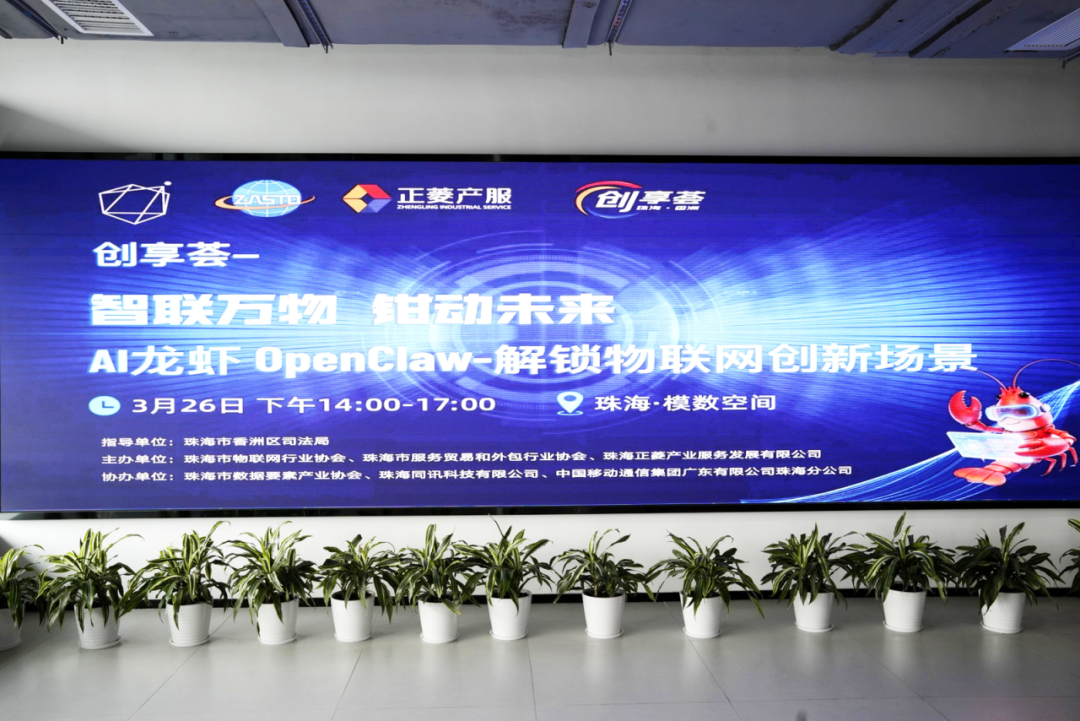
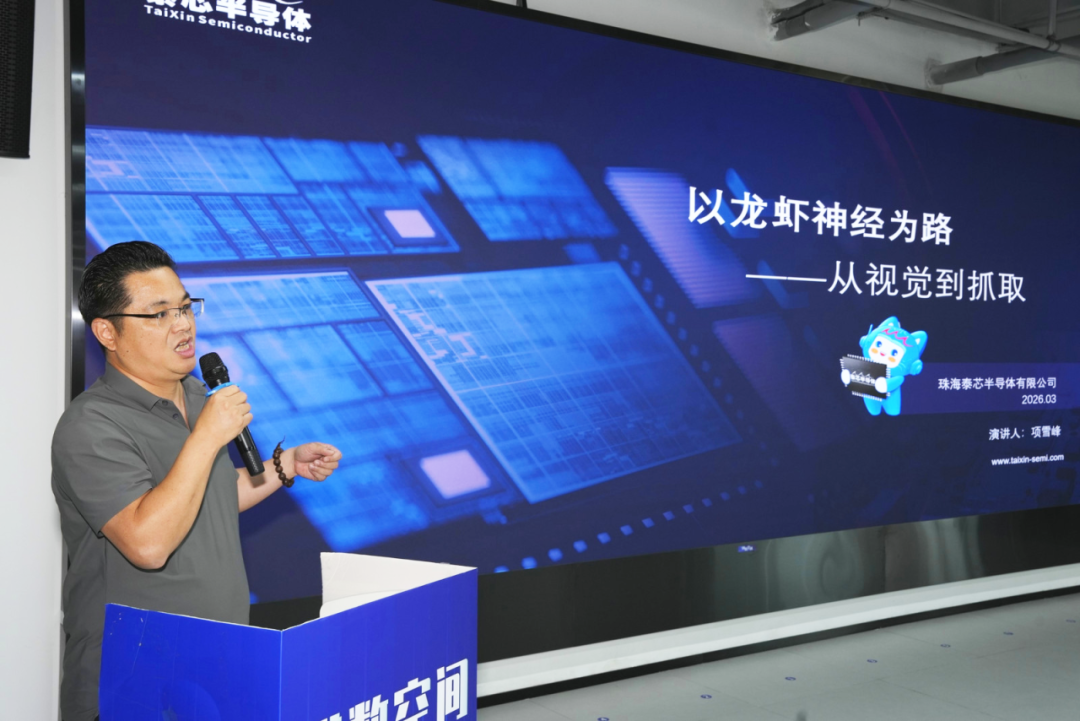
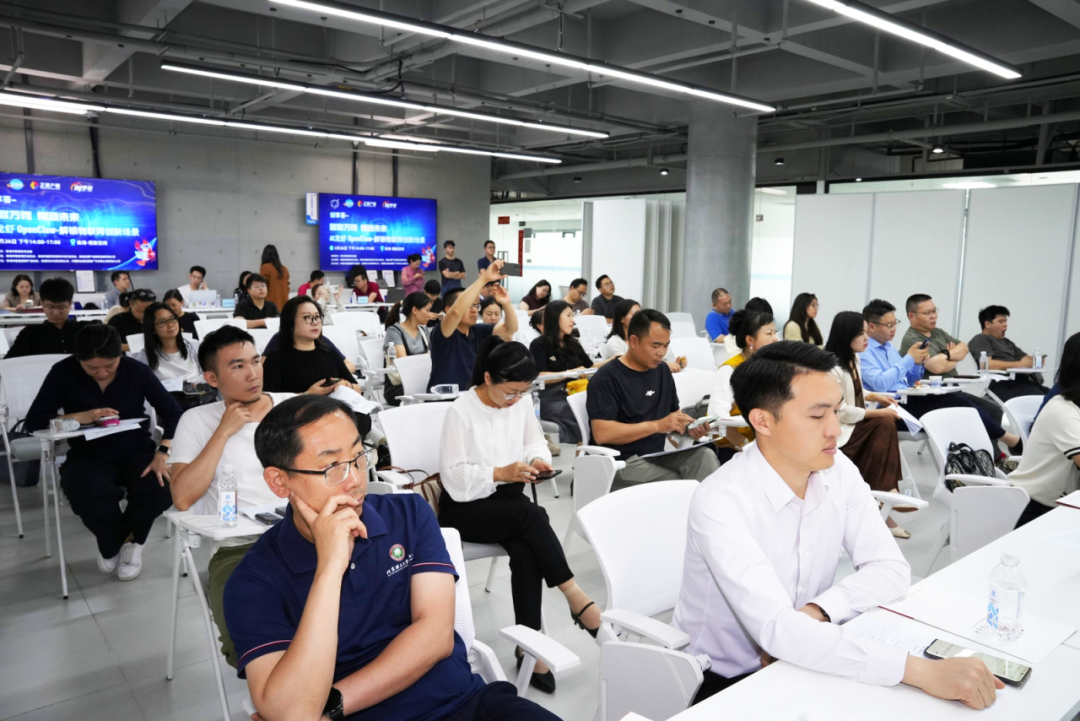
On March 26, hosted by the Zhuhai Internet of Things Industry Association,the theme salon "AI Lobster · OpenClaw Unlocks IoT Innovation Scenarios"was successfully held in Zhuhai.Zhuhai Taixin Semiconductor was invited to participate in this event and, centering on the core technical concepts of AI Lobster · OpenClaw, delivered a thematic presentation titled "Via Lobster Nerves — From Vision to Grasping",showcasing a chip-level low-latency AIoT overall solution on-site and jointly exploring the implementation path for the intelligent upgrade of the IoT industry with industry experts and enterprise representatives.

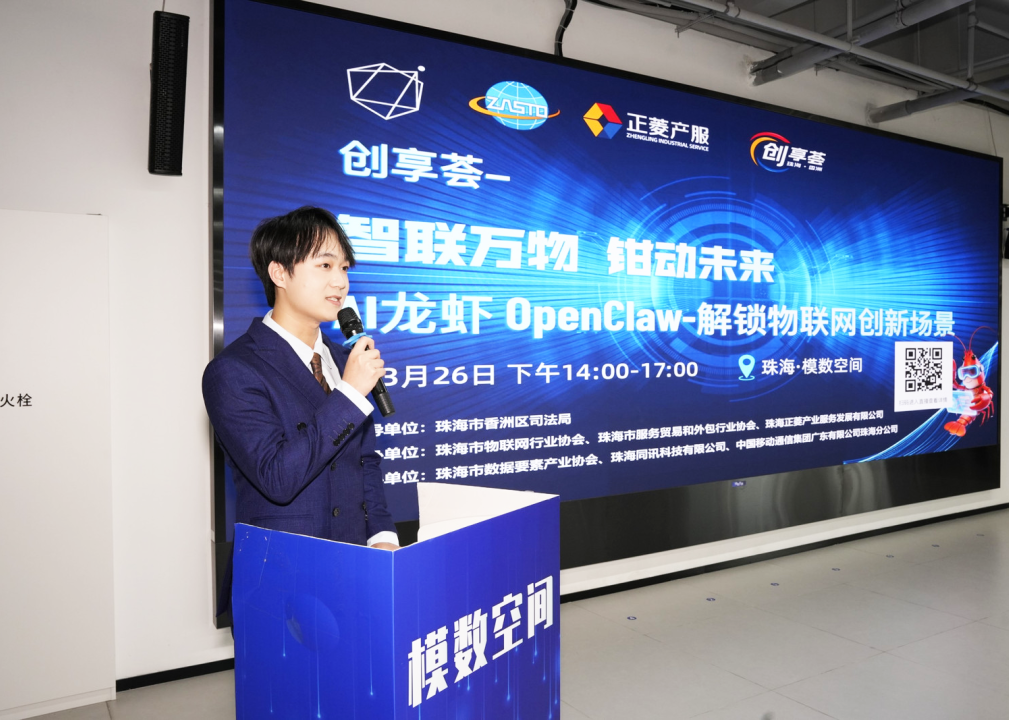

Taixin Semiconductor Marketing Director Xiang Xuefeng mentioned in the sharing session that AI is the "brain" of intelligent systems, the OpenClaw actuator is the "hands and feet," and low-latency, high-reliability AIoT chips are the critical "neural hub" connecting perception and execution. Currently, complex scenarios such as smart manufacturing, marine economy, and special operations are continuously raising requirements for device real-time performance.
Currently, the industry generally faces three major challenges:
❎ Visual perception lacks precision
❎ Data transmission lacks stability
❎ Motion control response lags
Traditional solutions are limited by chip architecture and communication protocols, making it difficult to achieve end-to-end low latency and failing to meet the stringent requirements of real-time control.
. 01
Chip-Level Low-Latency Architecture
Connecting the Full Link from Perception to Execution
Taixin Semiconductor builds a complete low-latency solution through chip-level underlying innovation, precisely addressing industry pain points.
Audio-Video AIoT SoC ChipTXW81X/TXW82X:
Creating the Robot's "Smart Eye"
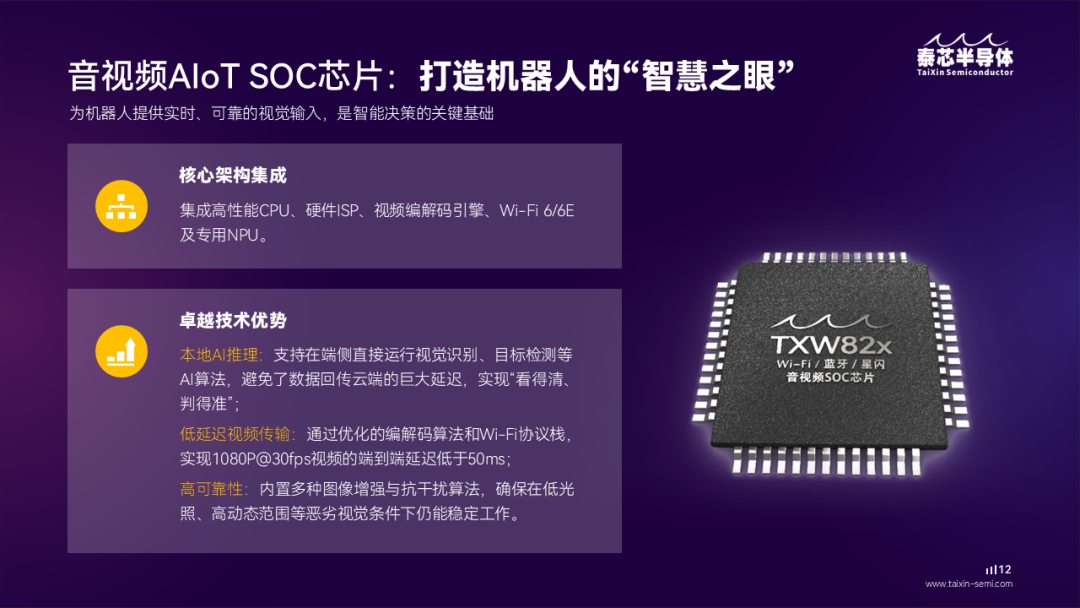
Integrating high-performance CPU, hardware ISP, video codec, Wi‑Fi6/6E, and dedicated NPU, supporting edge-side local AI inference. 1080P@30fps video transmission latency is under 50ms, stably outputting clear visual data even in low-light and high-interference environments.
Wi‑Fi HaLow™ Chip TXW8301:
Building a Stable "Neural Network"
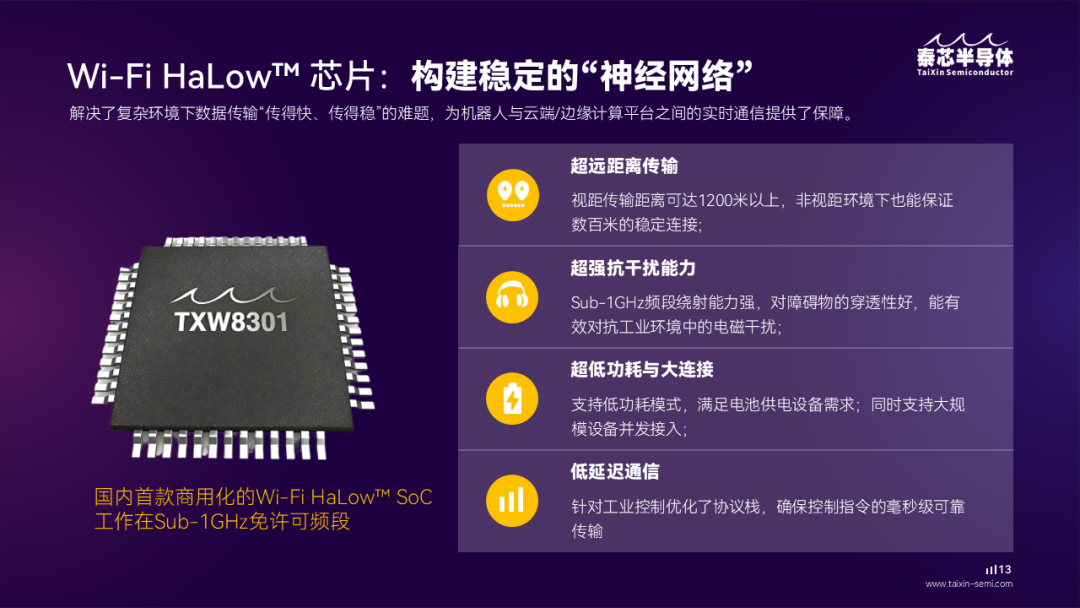
As China's first commercialized Wi‑Fi HaLow™ SoC, operating in the Sub‑1GHz frequency band with a transmission distance exceeding 1200 meters, featuring strong anti-interference, large connection capacity, and ultra-low power consumption characteristics, enabling millisecond-level command transmission in complex industrial and marine environments.
End-to-End Low-Latency Closed Loop
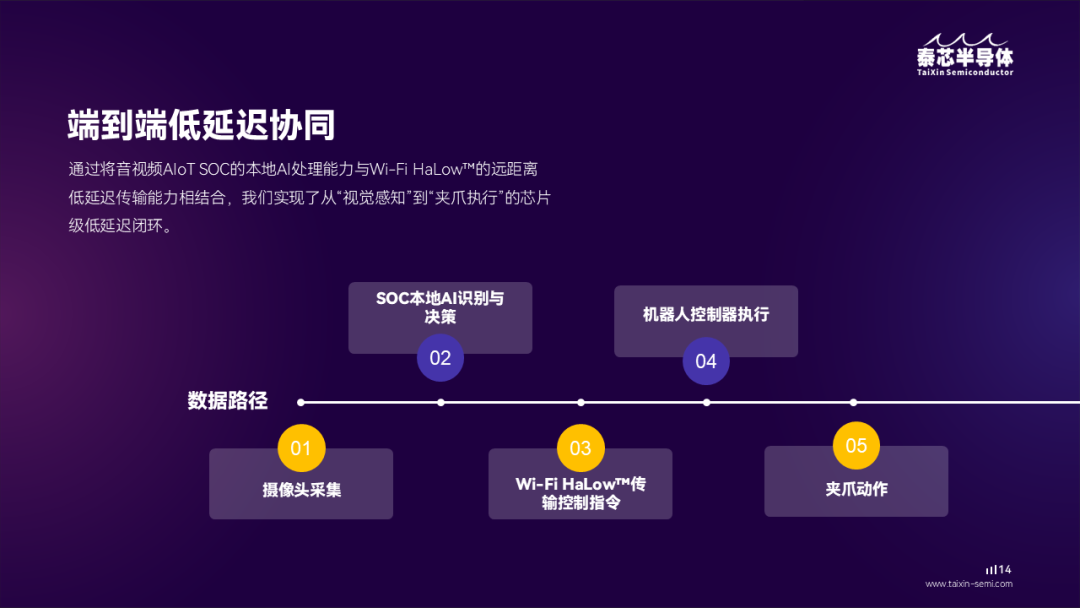
Fusing visual AI processing and long-distance low-latency communication capabilities to complete the full process from camera collection → local AI decision-making → wireless command transmission → controller execution → gripper action, reducing latency to within 100 milliseconds and achieving precise response of "see and act."
. 02
Multi-Scenario Implementation
Empowering Industrial Digital-Intelligent Upgrade
Relying on the low-latency AIoT chip solution, Taixin Semiconductor has achieved scaled application in multiple fields, providing a solid chip foundation for the Internet of Everything.
IoT Sector:
Provide a low-latency, high-reliability chip foundation for diverse smart hardware and intelligent terminals, accelerating the deployment of the Internet of Everything.
Smart Manufacturing Field:
Deliver low-latency visual guidance for robotic arms and AGV vehicles, enhancing production line flexibility and automation capabilities.
Marine Economy Field:
Encompassing smart aquaculture, underwater robot exploration, and marine environmental monitoring, breaking through communication and control bottlenecks in marine scenarios.
Specialized Operations Field:
Targeting power grid inspection, security surveillance, and warehousing logistics, providing stable wireless connectivity and AI visual analytics to enhance operational efficiency and safety.
At this event, Taixin Semiconductor’s technical philosophy and chip solution, "Using Lobster Neural Networks as the Path," received high recognition from on-site guests, aligning closely with the event theme of "Unlocking IoT Innovation Scenarios."
. 03
Driving Continuous Technological Innovation to Build an IoT Industry Ecosystem Together
Taixin Semiconductor has consistently focused on low-latency AIoT chip R&D, committed to becoming a globally leading solutions provider. By leveraging technological innovation to provide underlying chip support for the deep integration of AI and OpenClaw, we empower industrial upgrading in IoT, smart manufacturing, and marine economies across Zhuhai and nationwide.
In the future, Taixin Semiconductor will continue to deepen its focus on the AIoT chip sector, continuously optimizing the product portfolio. Joining hands with upstream and downstream partners along the industry chain, we will drive the implementation of low-latency technologies in more IoT scenarios, jointly promoting high-quality industrial development.